✧ Blood pressure is measured so routinely that it can seem unremarkable, yet it remains one of the most important indicators of overall health. In a GP surgery, hospital ward or home setting, those familiar numbers can reveal how hard the heart is working and whether the blood vessels are under strain. Often, serious problems develop quietly, without pain or obvious warning signs. That is why blood pressure has attracted such sustained attention in medicine and public health.
In simple terms, blood pressure is the force exerted by circulating blood against the walls of the arteries. It is recorded as systolic pressure over diastolic pressure, measured in millimetres of mercury (mmHg). The systolic figure reflects pressure when the heart contracts, while the diastolic figure shows pressure when the heart relaxes between beats (Porth, 2011). When these readings remain too high for too long, the risk of stroke, heart disease, kidney damage and vision problems rises significantly (Carretero and Oparil, 2000). Understanding blood pressure, therefore, is essential for prevention as well as treatment.
1.0 What Blood Pressure Means and How It Is Measured
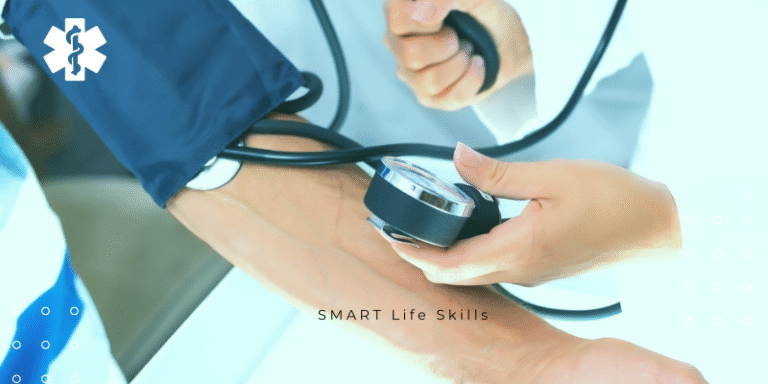
Blood pressure is usually measured with a sphygmomanometer, either manually with a stethoscope or by using an automated monitor. In manual measurement, the cuff is placed around the upper arm and inflated to restrict blood flow temporarily. As the cuff deflates, the first Korotkoff sound marks the systolic reading, while the disappearance of the sound indicates the diastolic reading (Bickley and Szilagyi, 2017). Digital devices use oscillometric techniques to detect changes in arterial wall pressure and produce readings automatically (Pickering et al., 2005).
For accuracy, the person being tested should be seated comfortably, with the arm supported at heart level, feet flat on the floor and no recent intake of caffeine or strenuous exercise. Anxiety, movement and poor positioning may distort results, which is why repeated readings are often recommended (NICE, 2019). For example, an isolated reading taken immediately after climbing stairs may not reflect usual cardiovascular status.
2.0 Blood Pressure Ranges: Normal, High and Low
The American Heart Association (AHA) and NICE categorize BP as follows (Whelton et al., 2018; NICE, 2019):
Normal: Systolic <120 mmHg and Diastolic <80 mmHg
Elevated: Systolic 120–129 mmHg and Diastolic <80 mmHg
Hypertension Stage 1: Systolic 130–139 mmHg or Diastolic 80–89 mmHg
Hypertension Stage 2: Systolic ≥140 mmHg or Diastolic ≥90 mmHg
Hypertensive Crisis: Systolic >180 mmHg and/or Diastolic >120 mmHg
Hypotension: Systolic <90 mmHg or Diastolic <60 mmHg
High blood pressure (hypertension) increases the risk of heart disease, stroke, kidney damage, and vision loss. It is often asymptomatic, earning the name “silent killer” (Carretero & Oparil, 2000). In contrast, low blood pressure (hypotension), while less common, can cause dizziness, fatigue, and fainting. In some individuals, particularly young adults or athletes, it may be normal if asymptomatic (Mayo Clinic, 2023).
3.0 Causes of High Blood Pressure
The causes of raised blood pressure are varied and often overlapping. In many cases, there is no single obvious cause. This is known as primary hypertension, and it tends to develop gradually over time. Factors that contribute include ageing, family history, excess body weight, physical inactivity, a high-salt diet, smoking and excessive alcohol intake (Carretero and Oparil, 2000; He and MacGregor, 2009).
Secondary hypertension, by contrast, results from an identifiable underlying condition. Examples include kidney disease, certain endocrine disorders and some medications. Stress may also play an indirect role by influencing sleep, alcohol use, eating habits and sympathetic nervous system activity (Chobanian et al., 2003). In everyday life, this means that an office worker with poor sleep, a high intake of processed foods and limited exercise may gradually develop high blood pressure without noticing any immediate change in wellbeing.
4.0 Symptoms of Blood Pressure Problems
One of the greatest difficulties with blood pressure disorders is that symptoms are often absent. Hypertension is frequently described as a silent condition because serious damage can occur before it is detected (Carretero and Oparil, 2000). Many people with high blood pressure feel entirely well and discover the problem only during a routine check.
When symptoms do occur, they may include headaches, shortness of breath, dizziness or blurred vision, though these signs are not specific and may arise from other causes. In cases of very low blood pressure, symptoms are more commonly noticeable and may include light-headedness, fatigue, fainting and weakness (Mayo Clinic, 2023). A useful example is a person who feels dizzy upon standing quickly; this may reflect a temporary drop in blood pressure rather than sustained hypertension. For this reason, symptoms alone are never enough to confirm diagnosis.
5.0 Preventing Blood Pressure Problems
Prevention is central to long-term cardiovascular health. Evidence shows that lifestyle measures can significantly reduce the likelihood of developing abnormal blood pressure and may also improve readings in those already diagnosed. Weight management is particularly important. Even a modest reduction in body weight can help lower blood pressure and improve overall metabolic health (Appel et al., 2003).
Diet also has a major influence. The DASH diet emphasises fruit, vegetables, whole grains, low-fat dairy products and reduced saturated fat. Research has shown that this approach can lower blood pressure meaningfully, especially when combined with reduced sodium intake (Sacks et al., 2001). Salt reduction is especially important because excess sodium encourages fluid retention and raises arterial pressure (He and MacGregor, 2009).
Regular exercise offers additional protection. Aerobic activity such as walking, cycling or swimming for at least 150 minutes each week can reduce systolic pressure and improve cardiovascular fitness (Pescatello et al., 2015). Smoking cessation, moderation in alcohol use and effective stress management further support prevention (Benowitz, 2010; American Heart Association, 2024). Together, these habits form the foundation of cardiovascular risk reduction.
6.0 Blood Pressure Management in Everyday Practice
When prevention is no longer enough, blood pressure management becomes essential. Lifestyle measures remain the first line of treatment for many individuals, especially in cases of elevated blood pressure or early hypertension. However, medication may be required when readings remain persistently high or when additional risk factors are present.
Common treatments include diuretics, which reduce fluid volume; ACE inhibitors, which relax blood vessels; calcium channel blockers, which reduce vascular resistance; and beta-blockers, which lower heart rate and cardiac output (Whelton et al., 2018; NICE, 2019). The choice of medication depends on age, ethnicity, co-existing conditions and tolerance of side effects.
Importantly, medication works best when combined with healthy routines rather than used as a substitute for them. For instance, a person prescribed amlodipine may still be advised to reduce salt intake, maintain a healthy weight and monitor blood pressure at home. This combined approach offers the greatest chance of long-term control.
7.0 Monitoring Blood Pressure at Home
Home monitoring has become an important part of blood pressure care, particularly for those with white coat hypertension, where clinic readings are temporarily raised by anxiety. Automated monitors usually display the systolic reading, diastolic reading and often the pulse rate. To improve reliability, readings should be taken at the same time each day, after sitting quietly for five minutes, and averaged over several attempts (Stergiou et al., 2018).
For example, a repeated home reading of 135/85 mmHg may suggest early hypertension if seen consistently, whereas a single unusual reading may be less meaningful. Monitoring trends over time is more useful than focusing on one isolated result.
∎ Blood pressure is a small measurement with enormous clinical importance. It reflects the condition of the cardiovascular system, often signals future health risk and can guide both prevention and treatment. Because abnormal blood pressure may develop without clear symptoms, accurate measurement and regular monitoring are essential. Equally, prevention through diet, exercise, weight control, smoking cessation and reduced salt intake remains one of the most effective health strategies available. When necessary, medication can provide additional control and reduce the risk of major complications. A clear understanding of blood pressure, therefore, supports earlier action, better management and stronger long-term health outcomes.
References
American Heart Association (2024) What is High Blood Pressure? Available at: https://www.heart.org/en/health-topics/high-blood-pressure (Accessed: 21 May 2025).
Appel, L.J., Moore, T.J., Obarzanek, E., et al. (2003) ‘A clinical trial of the effects of dietary patterns on blood pressure’, New England Journal of Medicine, 336(16), pp. 1117–1124.
Benowitz, N.L. (2010) ‘Nicotine addiction’, New England Journal of Medicine, 362(24), pp. 2295–2303.
Bickley, L.S. and Szilagyi, P.G. (2017) Bates’ Guide to Physical Examination and History Taking. 12th edn. Philadelphia: Wolters Kluwer.
Carretero, O.A. and Oparil, S. (2000) ‘Essential hypertension: Part I: definition and etiology’, Circulation, 101(3), pp. 329–335.
Chobanian, A.V. et al. (2003) ‘Seventh report of the Joint National Committee on Prevention, Detection, Evaluation, and Treatment of High Blood Pressure’, Hypertension, 42(6), pp. 1206–1252.
He, F.J. and MacGregor, G.A. (2009) ‘A comprehensive review on salt and health and current experience of worldwide salt reduction programmes’, Journal of Human Hypertension, 23(6), pp. 363–384.
Mayo Clinic (2023) Low blood pressure (hypotension). Available at: https://www.mayoclinic.org/diseases-conditions/low-blood-pressure (Accessed: 21 May 2025).
National Institute for Health and Care Excellence (NICE) (2019) Hypertension in adults: diagnosis and management (NG136). Available at: https://www.nice.org.uk/guidance/ng136 (Accessed: 21 May 2025).
Pescatello, L.S., MacDonald, H.V., Lamberti, L. and Johnson, B.T. (2015) ‘Exercise for hypertension: a prescription update integrating existing recommendations with emerging research’, Current Hypertension Reports, 17(11), pp. 87.
Pickering, T.G., Hall, J.E., Appel, L.J., et al. (2005) ‘Recommendations for blood pressure measurement in humans’, Hypertension, 45(1), pp. 142–161.
Porth, C.M. (2011) Essentials of Pathophysiology: Concepts of Altered Health States. 3rd edn. Philadelphia: Lippincott Williams & Wilkins.
Sacks, F.M., Svetkey, L.P., Vollmer, W.M., et al. (2001) ‘Effects on blood pressure of reduced dietary sodium and the Dietary Approaches to Stop Hypertension (DASH) diet’, New England Journal of Medicine, 344(1), pp. 3–10.
Stergiou, G.S., Palatini, P., Parati, G., et al. (2018) ‘European Society of Hypertension guidelines for blood pressure monitoring at home’, Journal of Hypertension, 36(9), pp. 1723–1738.
Whelton, P.K., Carey, R.M., Aronow, W.S., et al. (2018) ‘2017 ACC/AHA/AAPA/ABC/ACPM/AGS/APhA/ASH/ASPC/NMA/PCNA guideline for the prevention, detection, evaluation, and management of high blood pressure in adults’, Journal of the American College of Cardiology, 71(19), pp. e127–e248.