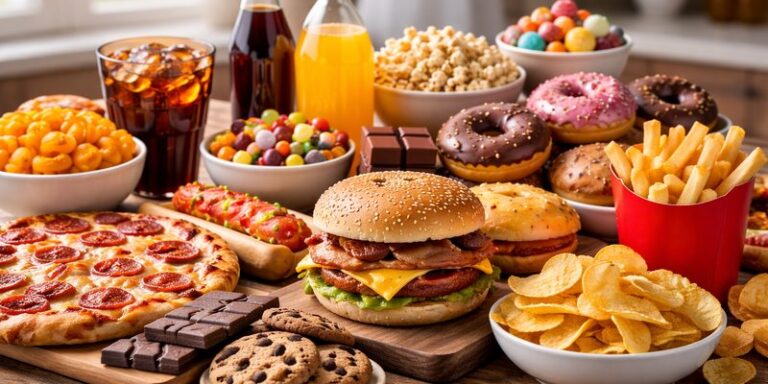
Processed food is a major part of modern diets, yet the term is often used loosely and sometimes unfairly. In practice, food processing covers a wide range of methods, from simple actions such as washing, freezing, pasteurising and canning, to more complex industrial manufacturing. This means that not all processed food is unhealthy. For example, frozen vegetables, plain yoghurt, tinned beans and wholemeal bread are processed foods, but they can still support a balanced diet. The greater concern usually lies with highly processed or ultra-processed foods, which often contain added sugar, salt, unhealthy fats, flavourings, emulsifiers and other ingredients designed to improve shelf life, convenience and taste (Jones, 2019; Dwyer et al., 2012).
Recent research has drawn attention to the possible links between high intake of ultra-processed foods and poor health outcomes, including obesity, cardiovascular disease and type 2 diabetes (Elizabeth et al., 2020; Lane et al., 2024). However, the subject is more nuanced than simply labelling all processed food as harmful. This article explains what processed food is, why foods are processed, the difference between helpful and harmful processing, and the health issues associated with excessive consumption of highly processed products.
1.0 Understanding Processed Food
1.1 What Is Processed Food?
A processed food is any food that has been changed from its original state before being eaten. This change may be minimal or extensive. Minimal processing includes practical and often beneficial steps such as chopping vegetables, freezing peas or pasteurising milk. These methods can improve safety, storage and convenience without necessarily reducing nutritional value (Henry and Chapman, 2002).
More substantial processing may involve refining grains, adding sweeteners, flavourings or preservatives, and combining multiple ingredients into ready-made products. A plain baked potato is close to its natural form, but a packet of potato crisps has been altered much more through frying, flavouring and packaging.
1.2 Categories of Processing
A useful distinction is between minimally processed, processed and ultra-processed foods. Minimally processed foods still resemble the original food, such as frozen spinach or rolled oats. Processed foods include products such as cheese, bread or canned fish. Ultra-processed foods are industrial products made largely from extracted ingredients and additives, such as fizzy drinks, confectionery, instant noodles and many packaged snack foods (Monteiro et al., 2018).
This distinction matters because processing itself is not automatically harmful. It is often the degree and purpose of processing that affects nutritional quality.
2.0 Why Foods Are Processed
2.1 Safety and Preservation
One major reason for processing food is food safety. Pasteurising milk reduces harmful bacteria, while canning and freezing help prevent spoilage. Without processing, many foods would not remain safe or available for long. In this sense, processing plays an important role in food security and public health (Dwyer et al., 2012).
2.2 Convenience and Accessibility
Processing also increases convenience. Busy households may rely on foods such as frozen vegetables, tinned tomatoes or pre-cooked grains to prepare meals quickly. These foods can make healthy eating more realistic, especially for people with limited time, mobility or cooking skills.
2.3 Palatability and Commercial Appeal
At the more industrial end, food is often processed to improve taste, texture and marketability. Extra sugar, salt and fats can make products more appealing and encourage overconsumption. For instance, a plain bowl of oats is nutritious and filling, whereas a sugary breakfast cereal may be easier to overeat and less satisfying nutritionally.
3.0 Nutritional Effects of Processed Food
3.1 Potential Benefits
Some processed foods can support good nutrition. Fortified breakfast cereals, for example, may provide iron and B vitamins. Wholegrain bread offers fibre and energy. Yoghurt can provide calcium and protein. Therefore, processed food should not be judged only by the fact that it has been processed, but by its overall nutritional profile (Tapsell et al., 2016).
A good example is tinned beans. They are processed, yet they remain rich in fibre, protein and minerals, and they are affordable and practical for many people.
3.2 Potential Drawbacks
Problems arise when processing removes beneficial components or adds excessive amounts of ingredients associated with poor health. Refining grains can reduce fibre, while adding sugar and salt can increase energy intake without improving nutritional value. Many highly processed foods are also easy to eat quickly and in large quantities, which may reduce natural appetite control (Poti, Braga and Qin, 2017).
For example, eating an orange provides fibre and chewing satisfaction, whereas drinking a sweetened orange-flavoured beverage provides sugar with far less fullness.
4.0 Health Concerns Linked to Highly Processed Foods
4.1 Obesity and Weight Gain
High consumption of ultra-processed foods has been associated with weight gain and obesity. These foods are often energy-dense, heavily marketed and designed for convenience, making them easy to consume in excess. A person who regularly eats pastries, crisps, sweetened drinks and ready-made desserts may consume far more calories than someone eating mostly home-prepared meals based on vegetables, grains and protein foods (Chen et al., 2020).
4.2 Cardiovascular and Metabolic Health
Research also suggests links between ultra-processed foods and cardiovascular disease, high blood pressure and type 2 diabetes. This may partly be due to high intakes of sodium, added sugars and unhealthy fats, but there is continuing debate about whether the industrial processing itself also contributes to risk (Juul, Vaidean and Parekh, 2021; Lawrence and Baker, 2019).
4.3 Diet Quality
Diets high in highly processed foods often displace more nutritious foods such as fruit, vegetables, legumes and whole grains. Over time, this can lower diet quality and reduce intake of important nutrients. For example, replacing a lunch of soup, wholegrain bread and fruit with a packaged pastry and fizzy drink may reduce fibre, vitamins and satiety while increasing sugar and salt.
5.0 Debates and Misunderstandings
5.1 Not All Processed Food Is Unhealthy
One of the biggest misconceptions is that all processed food is harmful. This is not supported by nutrition science. Many processed foods remain valuable parts of a healthy eating pattern. Public health guidance focuses more on overall dietary patterns than on avoiding every processed item (Herforth et al., 2019).
5.2 The Importance of Balance
It is more useful to ask whether a food is nutrient-dense, high in fibre, low in excess sugar and salt, and suitable within the wider diet. A bowl of plain yoghurt with berries is processed, but clearly different from a heavily sweetened dessert product. The issue is not simply processing, but what has been done to the food and how often it is eaten.
6.0 Managing Processed Food in Everyday Life
6.1 Practical Healthier Choices
A realistic approach is to reduce reliance on highly processed foods without expecting perfection. Helpful strategies include choosing:
6.2 More Minimally Processed Staples
Such as oats, rice, potatoes, beans, eggs and frozen vegetables.
6.3 Fewer Sugary Drinks and Snack Foods
Such as fizzy drinks, sweets and heavily salted crisps.
6.4 Simple Ingredient Products
For example, plain yoghurt instead of dessert-style yoghurts with multiple additives.
6.5 Balanced Meals
Such as grilled chicken, brown rice and vegetables instead of frequent takeaway meals.
These small substitutions can improve diet quality significantly over time.
Processed food is a broad category that includes both useful everyday staples and less healthy industrial products. Processing can improve safety, shelf life, availability and convenience, and many processed foods fit well within a healthy diet. The main concern is the frequent intake of highly processed or ultra-processed foods, which are often high in sugar, salt, unhealthy fats and refined ingredients. Evidence increasingly links heavy consumption of these foods with poorer health outcomes, although debate continues over the exact mechanisms involved. Overall, the most sensible approach is not to fear all processed food, but to focus on a balanced dietary pattern built mainly around whole and minimally processed foods, while limiting products that offer convenience at the expense of nutritional quality.
References
Chen, X., Zhang, Z., Yang, H., Qiu, P., Wang, H. and Wang, F. (2020) ‘Consumption of ultra-processed foods and health outcomes: a systematic review of epidemiological studies’, Nutrition Journal, 19, Article 86. Available at: https://doi.org/10.1186/s12937-020-00604-1.
Dwyer, J.T., Fulgoni, V.L., Clemens, R.A., Schmidt, D.B. and Freedman, M.R. (2012) ‘Is “processed” a four-letter word? The role of processed foods in achieving dietary guidelines and nutrient recommendations’, Advances in Nutrition, 3(4), pp. 536–548. Available at: https://doi.org/10.3945/an.112.002659.
Elizabeth, L., Machado, P., Zinöcker, M., Baker, P. and Lawrence, M. (2020) ‘Ultra-processed foods and health outcomes: a narrative review’, Nutrients, 12(7), p. 1955. Available at: https://doi.org/10.3390/nu12071955.
Henry, C.J.K. and Chapman, C. (2002) The Nutrition Handbook for Food Processors. Cambridge: Woodhead Publishing.
Herforth, A., Arimond, M., Álvarez-Sánchez, C., Coates, J., Christianson, K. and Muehlhoff, E. (2019) ‘A global review of food-based dietary guidelines’, Advances in Nutrition, 10(4), pp. 590–605. Available at: https://doi.org/10.1093/advances/nmy130.
Jones, J.M. (2019) ‘Food processing: criteria for dietary guidance and public health?’, Proceedings of the Nutrition Society, 78(1), pp. 4–18. Available at: https://doi.org/10.1017/S0029665118002513.
Juul, F., Vaidean, G. and Parekh, N. (2021) ‘Ultra-processed foods and cardiovascular diseases: potential mechanisms of action’, Advances in Nutrition, 12(5), pp. 1673–1680. Available at: https://doi.org/10.1093/advances/nmab049.
Lane, M.M., Gamage, E., Du, S., Ashtree, D.N., McGuinness, A.J., Gauci, S., Baker, P., Lawrence, M. and Marx, W. (2024) ‘Ultra-processed food exposure and adverse health outcomes: umbrella review of epidemiological meta-analyses’, BMJ, 384, e077310. Available at: https://doi.org/10.1136/bmj-2023-077310.
Mahan, L.K. and Raymond, J.L. (2016) Krause’s Food & the Nutrition Care Process. 14th edn. St Louis, MO: Elsevier.
Monteiro, C.A., Cannon, G., Moubarac, J.-C., Levy, R.B., Louzada, M.L.C. and Jaime, P.C. (2018) ‘The UN Decade of Nutrition, the NOVA food classification and the trouble with ultra-processing’, Public Health Nutrition, 21(1), pp. 5–17. Available at: https://doi.org/10.1017/S1368980017000234.
Poti, J.M., Braga, B. and Qin, B. (2017) ‘Ultra-processed food intake and obesity: what really matters for health—processing or nutrient content?’, Current Obesity Reports, 6(4), pp. 420–431. Available at: https://doi.org/10.1007/s13679-017-0285-4.
Tapsell, L.C., Neale, E.P., Satija, A. and Hu, F.B. (2016) ‘Foods, nutrients, and dietary patterns: interconnections and implications for dietary guidelines’, Advances in Nutrition, 7(3), pp. 445–454. Available at: https://doi.org/10.3945/an.115.011718.
Whitney, E.N., Rolfes, S.R., Crowe, T. and Walsh, A. (2019) Understanding Nutrition. 3rd Australasian edn. Melbourne: Cengage.