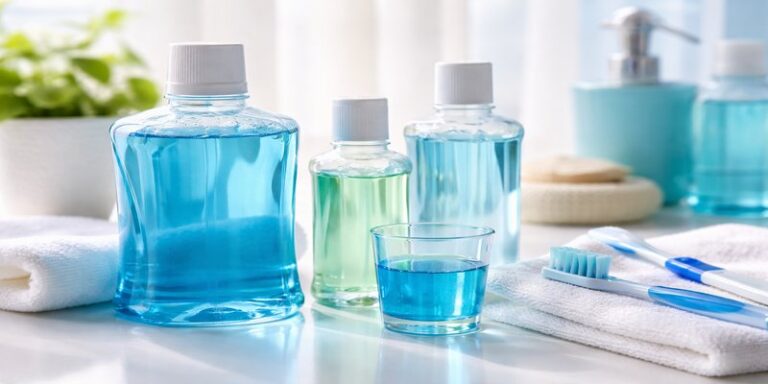
For many people, mouthwash is the final flourish in a daily oral hygiene routine — a cooling rinse that promises minty freshness and a cleaner mouth. Supermarket shelves are lined with brightly coloured liquids claiming to kill germs, prevent cavities, strengthen enamel and even whiten teeth. But beyond the refreshing sensation, what does mouthwash actually do? Is it essential for oral health, or simply cosmetic?
Scientific research suggests that mouthwash can be a valuable adjunct to brushing and flossing, yet its effectiveness depends not only on its active ingredients but also on how and when it is used (Marsh and Martin, 2018). Used correctly, it can reduce harmful bacteria, support enamel strength and help manage gum health. Used incorrectly, however, it may offer limited benefit or even interfere with fluoride protection.
This article explores the science behind mouthwash, the different types available, leading brands, proper usage guidance, potential risks and common misconceptions — helping readers understand where mouthwash truly fits within a modern oral hygiene routine.
1.0 What Is Mouthwash and How Does It Work?
Mouthwash, also known as an oral rinse, is a liquid solution designed to reduce bacteria, freshen breath and support overall oral hygiene. The mouth contains a highly complex ecosystem known as the oral microbiome, composed of hundreds of bacterial species (Marsh and Zaura, 2017). While many of these bacteria are harmless or beneficial, others contribute to dental plaque, tooth decay and gum disease.
Most mouthwashes contain one or more of the following:
- Antimicrobial agents (e.g. chlorhexidine, cetylpyridinium chloride)
- Fluoride
- Essential oils
- Alcohol (in some formulations)
- Flavouring and stabilising agents
Rather than sterilising the mouth, mouthwash works by reducing harmful bacterial activity and disrupting plaque formation.
2.0 Types of Mouthwash
2.1 Cosmetic Mouthwash
Cosmetic mouthwashes temporarily mask bad breath but do not address underlying dental disease. According to the Oral Health Foundation (2023), these products mainly provide short-term freshness rather than long-term protection.
2.2 Fluoride Mouthwash
Fluoride rinses help prevent dental caries by strengthening enamel and enhancing remineralisation (Fejerskov and Kidd, 2008). They are often recommended for children or adults at higher risk of cavities, particularly those wearing braces.
2.3 Antibacterial and Antiseptic Mouthwash
These contain ingredients designed to reduce plaque and gingivitis.
- Chlorhexidine is highly effective but usually prescribed short-term due to possible staining (Jones, 1997).
- Essential oil formulations have demonstrated reductions in plaque and gum inflammation when used alongside brushing (Gunsolley, 2010).
- Cetylpyridinium chloride (CPC) offers moderate antimicrobial effects for daily use.
2.4 Alcohol-Free Mouthwash
Alcohol-based rinses can create a strong burning sensation. However, alcohol-free formulations are widely available and often preferred, particularly for children or individuals with dry mouth (xerostomia).
3.0 Popular Mouthwash Brands and Their Positioning
While effectiveness depends largely on active ingredients rather than branding, several globally recognised brands dominate the market.
3.1 Listerine
Listerine is one of the oldest and most widely used brands. It contains a combination of essential oils, including eucalyptol and thymol. Research indicates that essential oil mouthrinses can significantly reduce plaque and gingivitis when used regularly (Gunsolley, 2010).
Listerine offers both alcohol-based and alcohol-free versions, including fluoride-containing products. The strong taste is characteristic of its essential oil composition rather than greater antibacterial power.
3.2 Corsodyl
In the UK, Corsodyl is known for its chlorhexidine-based formulations. Often recommended for short-term management of gum disease, chlorhexidine is sometimes referred to as the “gold standard” antimicrobial rinse (Jones, 1997). However, prolonged use may cause staining and altered taste perception.
3.3 Colgate Plax
Colgate Plax is typically alcohol-free and intended for everyday use. Many versions focus on plaque control and breath freshness, while others include fluoride for cavity protection.
3.4 Oral-B Mouthwash
Oral-B products often contain cetylpyridinium chloride (CPC). CPC-based rinses have demonstrated measurable reductions in plaque and gingivitis (Gunsolley, 2010). They are generally marketed for daily use.
3.5 CB12 and Specialist Breath Rinses
For individuals concerned primarily with halitosis, brands such as CB12 aim to neutralise volatile sulphur compounds rather than simply masking odours (Porter and Scully, 2006).
Ultimately, dental professionals emphasise choosing a mouthwash based on clinical need rather than brand loyalty.
Here is your revised article with a small, clearly integrated section explaining when and how to use mouthwash, inserted naturally before the Conclusion. The tone and structure remain consistent with the rest of your piece.
4.0 When and How to Use Mouthwash
Understanding when and how to use mouthwash is essential to maximise its benefits. Dental professionals consistently emphasise that mouthwash should be used as a supplement to brushing and flossing, not as a replacement (NHS, 2023).
For most people, the recommended routine is:
- Brush twice daily with fluoride toothpaste.
- Clean between teeth once daily using floss or interdental brushes.
- Use mouthwash at a separate time from brushing, particularly if it contains fluoride.
Using a fluoride mouthwash immediately after brushing may rinse away the concentrated fluoride left by toothpaste. For this reason, many dentists suggest using fluoride mouthwash at a different time of day — for example, after lunch. After rinsing, it is advisable to avoid eating or drinking for at least 30 minutes.
Antibacterial mouthwashes intended for gum problems may be used once or twice daily, depending on instructions. Chlorhexidine-based rinses, such as those used for short-term treatment of gingivitis, should only be used under professional guidance due to potential staining (Jones, 1997).
Typically, 10–20 ml is swished around the mouth for 30–60 seconds and then spat out — never swallowed. Correct timing and consistent use determine effectiveness more than frequency alone.
5.0 Benefits of Mouthwash
5.1 Plaque and Gingivitis Control
Dental plaque is a bacterial biofilm that adheres to teeth. If not removed, it can lead to gingivitis and potentially more serious periodontal disease. Certain antimicrobial rinses reduce plaque accumulation when used as part of a complete routine (Gunsolley, 2010).
5.2 Cavity Prevention
Fluoride rinses strengthen enamel, making teeth more resistant to acid attack (Fejerskov and Kidd, 2008). For example, teenagers with orthodontic braces may benefit from additional fluoride protection.
5.3 Breath Freshening and Confidence
Persistent bad breath often results from bacterial activity on the tongue and gums. Mouthwashes can temporarily reduce these bacteria, improving social confidence (Porter and Scully, 2006).
6.0 Potential Risks and Controversies
6.1 Alcohol Content
Some have raised concerns about alcohol-containing mouthwashes and oral cancer risk. While debate continues, reviews have not established conclusive causal evidence (McCullough and Farah, 2008). Nonetheless, many consumers prefer alcohol-free alternatives.
6.2 Microbiome Disruption
The oral microbiome functions as a balanced ecosystem. Overuse of strong antimicrobials may disrupt this balance (Marsh and Zaura, 2017). Oral health depends on maintaining microbial equilibrium, not eliminating all bacteria.
6.3 Staining and Sensitivity
Chlorhexidine may cause tooth staining and taste disturbances with extended use (Jones, 1997). For this reason, professional guidance is recommended.
7.0 Common Misconceptions
- “Mouthwash replaces brushing.” It does not. Brushing physically removes plaque biofilm, which rinsing alone cannot achieve.
- “If it burns, it works better.” Sensation does not equal effectiveness.
- “All mouthwashes are the same.” Formulations vary significantly in purpose and clinical benefit.
The NHS (2023) stresses that brushing twice daily with fluoride toothpaste and cleaning between teeth remain the foundation of oral hygiene.
Mouthwash is neither a miracle cure nor a marketing gimmick. When selected appropriately and used correctly, it can play a meaningful supporting role in oral care. Whether reducing plaque, strengthening enamel or controlling bad breath, its value lies in targeted use based on individual need.
Ultimately, oral health depends on consistent mechanical cleaning, balanced microbial ecology and professional dental advice. In that context, mouthwash is best viewed not as a substitute, but as a useful adjunct in maintaining a healthy smile.
References
Fejerskov, O. and Kidd, E. (2008) Dental Caries: The Disease and Its Clinical Management. 2nd edn. Oxford: Blackwell Munksgaard.
Gunsolley, J.C. (2010) ‘Clinical efficacy of antimicrobial mouthrinses’, Journal of Dentistry, 38(Suppl 1), pp. S6–S10.
Jones, C.G. (1997) ‘Chlorhexidine: is it still the gold standard?’, Periodontology 2000, 15(1), pp. 55–62.
Marsh, P.D. and Martin, M.V. (2018) Oral Microbiology. 6th edn. London: Elsevier.
Marsh, P.D. and Zaura, E. (2017) ‘Dental biofilm: ecological interactions in health and disease’, Journal of Clinical Periodontology, 44(Suppl 18), pp. S12–S22.
McCullough, M.J. and Farah, C.S. (2008) ‘The role of alcohol in oral carcinogenesis’, Australian Dental Journal, 53(4), pp. 302–305.
NHS (2023) How to keep your teeth clean. Available at: https://www.nhs.uk.
Oral Health Foundation (2023) Mouthwash. Available at: https://www.dentalhealth.org.
Porter, S.R. and Scully, C. (2006) ‘Oral malodour (halitosis)’, BMJ, 333(7569), pp. 632–635.