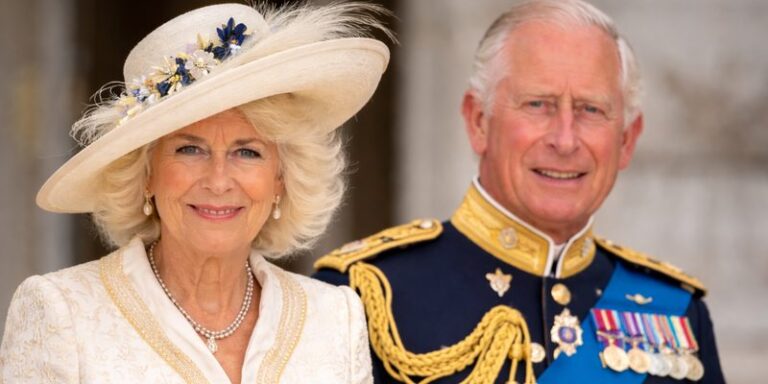
When people hear the word “Queen”, they often assume it means the person who rules. But in Britain’s monarchy, “queen” can mean two very different things. Queen Elizabeth II was a queen regnant: she reigned in her own right as the Sovereign. Camilla, by contrast, is a queen too—yet she is a queen consort, meaning she is queen by marriage to the King, not because she inherited the Crown. That single word, consort, does a lot of constitutional and cultural work. It tells us who holds the legal authority of the Crown, and who supports it (Blackburn, 2022; Turpin and Tomkins, 2011).
This article explains the difference in plain terms, shows why the distinction matters, and uses historical examples to make it feel less like court jargon and more like everyday sense.
1.0 The key distinction: Queen regnant vs Queen consort
1.1 Queen Regnant: The Monarch in Her Own Right
A queen regnant is the monarch—the person who inherits the throne and holds the constitutional position of the Sovereign. In the UK, the Sovereign is the legal “face” of the state: ministers govern, Parliament legislates, and courts interpret law, but many state actions are still done in the name of the Crown as a constitutional concept (Turpin and Tomkins, 2011; Barber, 2021).
A classic modern example is Queen Elizabeth II. She was not queen because she married a king; she became queen because she was next in the line of succession.
1.2 Queen Consort: Queen by Marriage, Not by Inheritance
A queen consort is the wife of the reigning king. She holds the title “Queen” through marriage and takes on an important public role, but she does not become the Sovereign and does not exercise the monarch’s constitutional powers (Blackburn, 2022).
That is why Camilla is described as Queen Camilla (title) and Queen Consort (role). The second phrase is a clarity label: it helps people avoid confusing “queen” with “the monarch”.
2.0 Why Camilla is “Queen Consort” specifically
2.1 The Crown Is Inherited, The Consort Role Is Attached to Marriage
When Charles III became King, Camilla became queen consort automatically because she was his wife. But the Crown—the role of Sovereign—passed to Charles through succession, not through marriage (Barber, 2021; Blackburn, 2022). In other words:
- Succession decides the monarch.
- Marriage shapes the consort’s position.
This also explains why the husband of a reigning queen is not automatically called “king”. The title King traditionally signals the reigning monarch, so giving it to a spouse could blur the constitutional picture. That’s why Queen Elizabeth II’s husband was Prince Philip, not “King Philip”.
2.2 The Monarchy Is Constitutional, and Titles Help Prevent Confusion
Modern British monarchy is often described as a constitutional monarchy: the monarch reigns but government is carried out by elected ministers under law and convention (Turpin and Tomkins, 2011; Blackburn, 2022). In such a system, language matters. If the public (or media) can’t easily tell who is the Sovereign, misunderstanding follows—especially when people assume “queen” equals “ruler”.
So, calling Camilla Queen Consort works like a neat label on a cupboard: it tells you what’s inside without you having to open it.
3.0 Why People Often Just Say “Queen Camilla”
3.1 Everyday Usage Vs Constitutional Precision
In daily life, many queen consorts are simply called “Queen [Name]”. That isn’t wrong. It’s shorthand. Over time, the “consort” part often gets dropped unless there’s a need to be precise—like in a classroom, a news explainer, or a discussion of the constitution.
You see similar shorthand in other settings. For instance, people might say “the Government” when they really mean “the Prime Minister and Cabinet”, or “Parliament” when they mean “the House of Commons and House of Lords”. Formal language is more exact; everyday language is more convenient (Turpin and Tomkins, 2011).
3.2 The “Role” Is Public-Facing, Even If The “Power” Is Not
A queen consort can be highly visible—hosting receptions, championing charities, attending state events—without holding sovereign authority. Historians of queenship point out that consorts have long exercised influence, soft power, and cultural leadership, even when they lacked formal constitutional authority (Orr, 2004; Harris, 2023). That blend—high visibility, limited formal power—is exactly why the label “consort” can be useful.
4.0 Helpful Historical Examples That Make It Click
4.1 Example 1: Queen Victoria (Regnant) and Prince Albert (Consort)
Queen Victoria was a queen regnant; she reigned as Sovereign. Her husband, Albert, became Prince Consort—a title that signalled support rather than shared sovereignty. Constitutional writers have long noted that the consort’s position can be symbolically powerful yet constitutionally delicate, because it sits close to the monarchy’s core without being part of the Crown itself (Bogdanor, 1995; Blackburn, 2022).
4.2 Example 2: Queen Elizabeth II (Regnant) and Prince Philip (Consort)
Elizabeth II’s husband was not called king for the same reason: “king” is usually understood as the reigning monarch in the British context. Philip’s role illustrates the principle that the spouse supports the Sovereign but does not become the Sovereign (Barber, 2021; Blackburn, 2022).
4.3 Example 3: How Succession Rules Shape Today’s Monarchy
The modern line of succession also helps explain why titles and categories matter. The Succession to the Crown Act 2013 changed the rules so that—among those born after 28 October 2011—birth order, not gender, determines place in the line (UK Parliament, 2013). This is why, for example, a younger brother does not automatically leapfrog an older sister in the succession. It shows the monarchy evolving through law while still relying on clear constitutional distinctions.
5.0 What the Queen Consort Does (And Doesn’t Do)
5.1 What She Does Do
A queen consort typically:
- supports the King in ceremonial and representative duties
- undertakes charitable patronage and public engagement
- contributes to the monarchy’s public image and continuity
Scholarly work on consorts emphasises that their “power” is often informal: shaping culture, supporting networks, and adding human connection to an institution that can otherwise feel abstract (Orr, 2004; Harris, 2023).
5.2 What She Doesn’t Do
A queen consort does not:
- hold the constitutional position of the Sovereign
- exercise royal powers in her own right as monarch
- inherit the Crown through the line of succession simply by marriage
Those constitutional functions belong to the monarch, and in modern practice are exercised according to ministerial advice and constitutional convention (Blackburn, 2022; Cox, 2020).
Camilla is called Queen because she is married to a King, but she is not the monarch. That’s the heart of it. A queen regnant reigns by inheritance and is the Sovereign; a queen consort is queen by marriage and supports the Sovereign without holding the Crown’s constitutional authority. The distinction can feel like etiquette, but it is really a piece of constitutional clarity—helping the public understand who represents the state in law, and who plays a vital supporting role in the monarchy’s public life (Blackburn, 2022; Turpin and Tomkins, 2011).
References
Barber, N.W. (2021) The United Kingdom Constitution: An Introduction. Oxford: Oxford University Press.
Blackburn, R. (2022) ‘The Constitutional Role and Working of the Monarchy in the United Kingdom’. Jahrbuch des öffentlichen Rechts der Gegenwart. Available at: https://kclpure.kcl.ac.uk/ws/portalfiles/portal/167996669/The_Constitutional_Role_and_BLACKBURN_2022_GREEN_AAM.pdf (Accessed: 4 March 2026).
Bogdanor, V. (1995) The Monarchy and the Constitution. Oxford: Clarendon Press. Available at: https://peacemaker.un.org/sites/default/files/document/files/2022/07/bogdanorthefutureofconstitutionalmonarchy1997_0.pdf (Accessed: 4 March 2026).
Cox, N. (2020) The Royal Prerogative and Constitutional Law: A Search for the Quintessence of Executive Power. Abingdon: Routledge.
Harris, C. (2023) ‘Hanoverian to Windsor Consorts: Power, Influence, Dynasty’. In: Hanoverian to Windsor Consorts: Power, Influence, Dynasty. Cham: Springer. Available at: https://link.springer.com/chapter/10.1007/978-3-031-12829-5_1 (Accessed: 4 March 2026).
Orr, C.C. (2004) Queenship in Europe 1660–1815: The Role of the Consort. Cambridge: Cambridge University Press. Available at: https://books.google.com/books?id=QORvlXsmsYQC (Accessed: 4 March 2026).
Turpin, C. and Tomkins, A. (2011) British Government and the Constitution: Text and Materials. 7th edn. Cambridge: Cambridge University Press.
UK Parliament (2013) Succession to the Crown Act 2013. Available at: https://www.legislation.gov.uk/ukpga/2013/20/contents/enacted (Accessed: 4 March 2026).