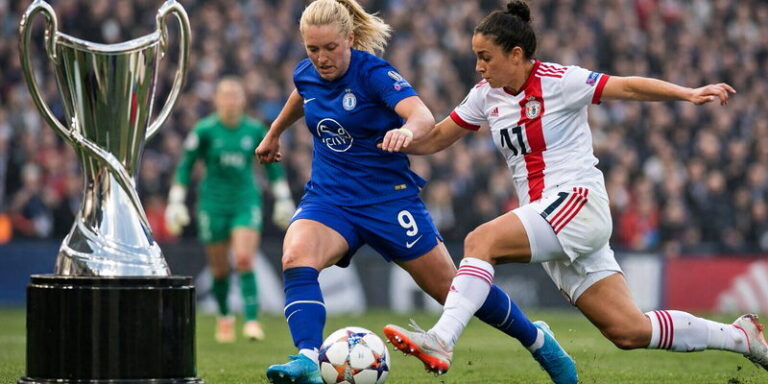
The UEFA Women’s Champions League matters because it brings together the highest level of club competition in women’s football and turns domestic excellence into a continental test. It is where elite clubs, world-class players, and big-match pressure meet. For supporters, it offers drama, rivalries, and moments that define careers. For clubs, it is a stage for prestige, development, and international recognition. For the wider football world, it has become one of the clearest signs of how rapidly the women’s game has grown in quality, visibility, and commercial value.
What makes the tournament especially compelling is that it sits at the crossroads of sporting ambition and social change. A successful run in the UEFA Women’s Champions League can raise a club’s profile, attract investment, and inspire new generations of players and fans. At the same time, the competition reflects broader developments in governance, professionalism, broadcasting, and gender equity in football (UEFA, no date a; FIFA, 2023). Over the years, it has become far more than a cup competition. It is now a symbol of the game’s growing confidence and global reach.
1.0 Overview of the Tournament
The UEFA Women’s Champions League is the premier European club tournament in women’s football, organised by UEFA. It brings together top clubs from domestic leagues across Europe, with entry determined by national league performance and UEFA’s access rules. In simple terms, it is the women’s equivalent of Europe’s highest club competition, designed to identify the strongest team on the continent through a structured series of qualifying, league or group-stage, and knockout matches (UEFA, no date a).
Its place within the sport is significant. Domestic leagues remain the foundation of club football, but the UEFA Women’s Champions League is where clubs test themselves against different playing cultures, tactical systems, and levels of experience. It is also the competition that often showcases the sport’s highest technical and strategic standards. As a result, it occupies a central place in debates about professionalisation, visibility, and competitive balance in women’s football (Fielding-Lloyd and Mean, 2011).
2.0 History and Evolution
The tournament began in 2001 as the UEFA Women’s Cup before being rebranded as the UEFA Women’s Champions League in 2009, a change that reflected both greater ambition and a desire to place the competition more clearly within European football’s broader elite framework (UEFA, no date b). That change was more than cosmetic. It signalled rising expectations around presentation, status, and growth.
Over time, the tournament has evolved in several important ways. Its format has changed to improve competitiveness and commercial appeal. Media coverage has expanded. Matches that once drew modest attention are now increasingly treated as major European occasions. Clubs have also become more professional in recruitment, coaching, sports science, and youth development, which has raised standards across the competition (FIFA, 2023; UEFA, no date a).
The tournament’s status has also grown because of the wider development of women’s football in Europe. Scholars have noted that women’s sport often gains legitimacy through stronger institutional support, improved media visibility, and sustained investment rather than through talent alone (Pfister, 2015). The UEFA Women’s Champions League is a clear example of that process in action.
3.0 Season, Final Venue, Host Country, and Winning Team
| Season | Final Venue / Host Country | Winning Team |
| 2001–02 | Frankfurt, Germany | 1. FFC Frankfurt, Germany |
| 2002–03 | Umeå, Sweden | Umeå IK, Sweden |
| 2003–04 | Umeå, Sweden | Umeå IK, Sweden |
| 2004–05 | Potsdam, Germany | Turbine Potsdam, Germany |
| 2005–06 | Frankfurt, Germany | 1. FFC Frankfurt, Germany |
| 2006–07 | Borehamwood/London area, England | Arsenal, England |
| 2007–08 | Frankfurt, Germany | 1. FFC Frankfurt, Germany |
| 2008–09 | Two-leg final: Duisburg, Germany / Umeå, Sweden | FCR 2001 Duisburg, Germany |
| 2009–10 | Getafe, Spain | Turbine Potsdam, Germany |
| 2010–11 | London, England | Olympique Lyonnais, France |
| 2011–12 | Munich, Germany | Olympique Lyonnais, France |
| 2012–13 | London, England | VfL Wolfsburg, Germany |
| 2013–14 | Lisbon, Portugal | VfL Wolfsburg, Germany |
| 2014–15 | Berlin, Germany | 1. FFC Frankfurt, Germany |
| 2015–16 | Reggio Emilia, Italy | Olympique Lyonnais, France |
| 2016–17 | Cardiff, Wales | Olympique Lyonnais, France |
| 2017–18 | Kyiv, Ukraine | Olympique Lyonnais, France |
| 2018–19 | Budapest, Hungary | Olympique Lyonnais, France |
| 2019–20 | San Sebastián, Spain | Olympique Lyonnais, France |
| 2020–21 | Gothenburg, Sweden | Barcelona, Spain |
| 2021–22 | Turin, Italy | Olympique Lyonnais, France |
| 2022–23 | Eindhoven, Netherlands | Barcelona, Spain |
| 2023–24 | Bilbao, Spain | Barcelona, Spain |
| 2024–25 | Lisbon, Portugal | Arsenal, England |
4.0 Format and Competition Structure
The UEFA Women’s Champions League has used different structures over time, but its core principle remains straightforward: clubs qualify through domestic success and then progress through European rounds to determine a champion. Depending on the era of the competition, this has included qualifying rounds, a group or league stage, and then knockout ties leading to the final (UEFA, no date a).
This structure matters because it rewards both consistency and adaptability. Clubs must first prove themselves at home before facing unfamiliar opponents from other leagues. Over two-legged ties and later-stage matches, the competition tests squad depth, tactical flexibility, and mental resilience. A champion is not simply the most talented team on paper, but the side best able to manage pressure, travel, fixture congestion, and tactical variation.
In football studies, tournament formats are often understood as shaping not only outcomes but also narratives. A strong structure creates anticipation, competitive stakes, and a sense of progression, all of which help sustain audience engagement (Giulianotti, 2012). The UEFA Women’s Champions League has increasingly benefited from this.
5.0 Importance of the Tournament
The UEFA Women’s Champions League is important because it gives women’s club football a premier international platform. For clubs, participation can improve reputation, attract sponsors, and justify further investment in facilities, academies, and staffing. For players, it offers the chance to compete at the highest continental level and build careers through performances on a major stage.
For supporters, the competition creates shared identity and memorable rituals. Fans follow not only results but also journeys, rivalries, and emotional turning points. This helps transform clubs into transnational sporting brands. More broadly, the tournament supports the growth of women’s football by proving that there is both quality on the pitch and demand off it (FIFA, 2023).
Its importance is also symbolic. In a sporting landscape historically shaped by unequal access and coverage, the UEFA Women’s Champions League represents recognition, visibility, and institutional commitment. That matters for the long-term development of the sport.
6.0 Teams and Competitive Strength
Certain types of clubs tend to do well in the UEFA Women’s Champions League. Usually, they combine financial backing, strong domestic structures, elite coaching, and deep squads. Successful teams are rarely built on individual brilliance alone. They depend on coherent planning, effective recruitment, youth pathways, and a culture that treats the women’s side as a serious strategic priority.
Clubs from stronger football systems often benefit from better training environments and more competitive domestic leagues. However, resources do not guarantee success. Teams must also show tactical maturity, injury management, and consistency in high-pressure matches. This is one reason the competition remains compelling: established powerhouses may dominate for periods, but challengers can still emerge through smart planning and collective organisation.
7.0 Players Who Shape the Competition
The UEFA Women’s Champions League has been shaped by star players, creative midfielders, reliable goalscorers, and leaders under pressure. Great players influence not only results but also the tournament’s identity. They create iconic moments, attract audiences, and raise the standard of the competition.
Equally important are emerging talents. A continental tournament gives younger players exposure to top-level football and accelerates development through elite opposition. Leadership is another key factor. In knockout football, calm decision-making, communication, and experience often matter as much as technical skill.
From a sociological perspective, standout players also function as public symbols. They help make women’s football more visible and relatable to fans, media, and aspiring athletes (Hjelm and Olofsson, 2003).
8.0 Tactics, Style, and Quality of Play
One of the most interesting features of the UEFA Women’s Champions League is the variety of tactical styles on display. Some teams rely on possession football, building patiently through midfield and controlling territory. Others prefer high pressing, direct transitions, or rapid wing play. These differences make matches tactically rich and often unpredictable.
Coaching quality has become increasingly important. Detailed video analysis, sports science, and specialised positional training have improved the overall standard of play. This has helped challenge outdated assumptions about women’s football and highlight its technical and strategic sophistication.
Quality of play in the tournament is shaped not only by talent but by structure. Better facilities, professional contracts, and stronger medical support all contribute to sharper performances and greater consistency.
9.0 Memorable Moments and Milestones
The history of the UEFA Women’s Champions League includes landmark finals, dramatic comebacks, and era-defining dynasties. Memorable moments matter because they create the stories through which fans remember a competition. A late winner, a giant-killing upset, or a record-breaking crowd can reshape public interest in a single evening.
Milestones also matter institutionally. Rebranding the competition, improving broadcast reach, and staging bigger finals have all helped strengthen its profile. These are not minor administrative details; they are part of how sporting prestige is built.
10.0 Records and Notable Achievements
Records give the UEFA Women’s Champions League a sense of continuity and historical depth. Title counts, winning streaks, top scorers, and repeated final appearances help define the tournament’s legacy. They also allow fans and journalists to compare eras and assess greatness.
Notable achievements are not only statistical. Reaching the latter stages from a less celebrated league, building a long-term competitive project, or producing generations of elite players can be just as significant as lifting the trophy. Success in this competition often reflects the wider health of a club’s sporting model.
11.0 Cultural and Sporting Impact
The UEFA Women’s Champions League has had a powerful cultural and sporting impact. It has helped normalise the idea of women’s club football as a major entertainment product and not a niche afterthought. Media coverage, improved broadcasting, and growing attendance have all played a role in shifting perceptions (UEFA, no date a; FIFA, 2023).
Culturally, the tournament helps expand representation in sport. It gives visibility to women athletes as professionals, leaders, and public figures. Sport scholars have long argued that visibility matters because it influences participation, identity, and social attitudes (Pfister, 2015). In that sense, the tournament shapes not only football but also wider sporting culture.
12.0 Challenges and Future Development
Despite progress, the UEFA Women’s Champions League still faces challenges. Competitive balance remains a concern when a small group of well-resourced clubs dominate for long periods. Visibility can still vary across markets. Investment remains uneven, and scheduling pressures can affect player welfare and audience growth.
Yet the future remains promising. Continued investment, better youth development, smarter broadcasting strategies, and stronger domestic leagues can all deepen the competition’s quality and reach. The key will be ensuring that growth is not only commercial but also sustainable and inclusive.
The UEFA Women’s Champions League endures because it captures what is best about elite sport: quality, drama, history, and meaning. It is a competition that rewards excellence while also driving the wider development of women’s football. Its history shows how far the game has come; its present shows how strong the standard has become; and its future points towards even greater influence.
For clubs, players, and supporters, the tournament is more than a European contest. It is a statement that women’s football belongs on the biggest stages and deserves to be studied, celebrated, and invested in for the long term.
References
Fielding-Lloyd, B. and Mean, L. (2011) ‘“I don’t think I can catch it”: Women, confidence and responsibility in football coach education’, Soccer & Society, 12(3), pp. 345–364.
FIFA (2023) Setting the Pace: FIFA Benchmarking Report on Women’s Football. Zurich: FIFA. Available at: https://www.fifa.com.
Giulianotti, R. (2012) Sociology of Sport and Social Theory. Basingstoke: Palgrave Macmillan.
Hjelm, J. and Olofsson, E. (2003) ‘A breakthrough: Women’s football in Sweden’, Soccer & Society, 4(2–3), pp. 182–204.
Pfister, G. (2015) ‘Assessing the sociology of sport: On women and football’, International Review for the Sociology of Sport, 50(4–5), pp. 563–569.
UEFA (no date a) UEFA Women’s Champions League. Available at: https://www.uefa.com/womenschampionsleague/.
UEFA (no date b) History of the UEFA Women’s Champions League. Available at: https://www.uefa.com/womenschampionsleague/history/.
Williams, J. (2021) A Contemporary History of Women’s Sport, Part One: Sporting Women 1850–1960. London: Routledge.
Woodhouse, J. and Williams, J. (2019) ‘Women’s football, commercial growth and media visibility in Europe’, in Routledge Handbook of the Business of Women’s Sport. London: Routledge, pp. 95–108.