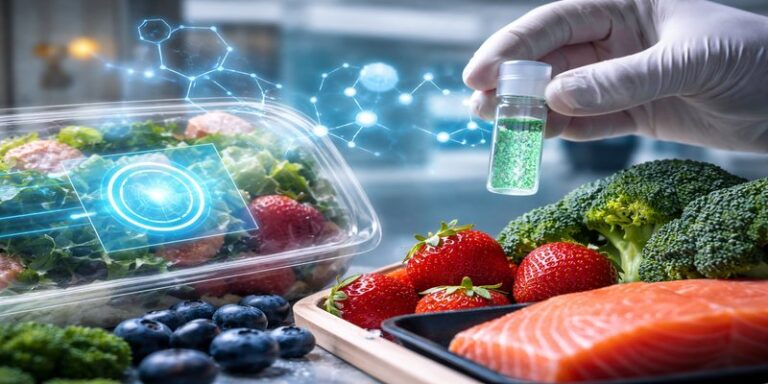
The rapid advancement of nanotechnology has significantly influenced a wide range of industries, including medicine, energy, electronics and, increasingly, the food sector. Commonly referred to as nanofood, the application of nanotechnology in the food industry involves the manipulation of materials at the nanoscale (1–100 nanometres) to enhance food quality, safety, nutritional value and shelf life. At this scale, materials often exhibit novel physical, chemical and biological properties that differ from their bulk counterparts (Roco, 2003).
Within food production systems, nanotechnology has introduced innovative tools such as nanosensors for freshness monitoring, nano-enabled packaging, nano-encapsulation of nutrients, and antimicrobial nanomaterials. As highlighted by Coles and Frewer (2013), nanosensors are increasingly used to monitor freshness, detect contamination and improve packaging performance. While nanofood presents significant opportunities, it also raises important questions regarding food safety, regulation and consumer acceptance. This article explores the key applications of nanotechnology in the food industry, supported by relevant examples and scholarly sources.
1.0 Understanding Nanotechnology in the Food Context
1.0 What is Nanotechnology?
Nanotechnology refers to the design, production and application of materials and devices at the nanoscale. At this scale, particles possess a high surface-area-to-volume ratio, increased reactivity and enhanced functional properties (Bhushan, 2017). These unique characteristics allow scientists to develop innovative solutions to longstanding challenges in food production and preservation.
1.2 Defining Nanofood
The term nanofood encompasses food products, ingredients, processing methods and packaging materials that involve nanotechnology. According to Cushen, Kerry and Morris (2012), nanofood applications generally fall into three categories:
- Nano-enabled food ingredients
- Nano-packaging systems
- Nano-sensing and diagnostic technologies
Each of these categories contributes to improving food safety, quality and sustainability.
2.0 Applications of Nanotechnology in Food Production
2.1 Nanosensors for Freshness and Contamination Detection
One of the most promising applications of nanotechnology in the food industry is the development of nanosensors. These devices can detect minute changes in chemical composition, microbial growth or gas production within food packaging.
2.1.1 Monitoring Freshness
Nanosensors embedded in packaging can detect gases such as ammonia or carbon dioxide, which are released when food begins to spoil. For example, meat packaging may contain nanoscale sensors that change colour when bacterial activity increases. This allows both retailers and consumers to monitor freshness in real time, reducing food waste and improving safety (Coles and Frewer, 2013).
2.1.2 Detecting Contamination
Nanotechnology also enhances the detection of pathogens such as Salmonella and E. coli. Gold nanoparticles and quantum dots can be engineered to bind specifically to bacterial cells, producing measurable optical or electrical signals (Cushen et al., 2012). This rapid detection method is faster and more sensitive than many traditional laboratory techniques, enabling quicker responses to contamination outbreaks.
2.2 Nano-Encapsulation of Nutrients and Flavours
Another important innovation in nanofood is nano-encapsulation, which involves enclosing nutrients, bioactive compounds or flavours within nanoscale carriers.
2.2.1 Improved Nutrient Delivery
Many essential nutrients, such as vitamins A, D, E and omega-3 fatty acids, are poorly soluble or unstable under normal processing conditions. Nano-encapsulation protects these compounds from degradation caused by light, oxygen or heat (McClements, 2018). Furthermore, nanoscale carriers can enhance bioavailability, meaning that the body absorbs nutrients more efficiently.
For instance, nano-emulsions are used in fortified beverages to ensure even dispersion of fat-soluble vitamins without affecting taste or texture. This technology supports the development of functional foods aimed at improving public health.
2.2.2 Controlled Release Mechanisms
Nanocarriers can also enable the controlled release of flavours or nutrients during digestion. This means that beneficial compounds are delivered at specific points in the gastrointestinal tract, maximising their effectiveness.
2.3 Nano-Enabled Food Packaging
Packaging plays a crucial role in maintaining food quality and preventing contamination. Nanotechnology has transformed conventional packaging into ‘smart’ and active packaging systems.
2.3.1 Improved Barrier Properties
Incorporating nanomaterials such as nanoclays or silica nanoparticles into plastic films enhances their resistance to oxygen, moisture and ultraviolet light (Cushen et al., 2012). This improves shelf life and reduces spoilage.
For example, nanocomposite packaging used in dairy products can significantly limit oxygen penetration, slowing down microbial growth and oxidation processes.
2.3.2 Antimicrobial Packaging
Silver nanoparticles are widely known for their antimicrobial properties. When integrated into food packaging materials, they can inhibit bacterial growth on food surfaces (Chaudhry and Castle, 2011). This application is particularly relevant in perishable products such as poultry and ready-to-eat meals.
However, the potential migration of nanoparticles into food has raised safety concerns, emphasising the need for rigorous risk assessment.
2.4 Enhancing Food Processing Techniques
Nanotechnology is also being used to improve food processing efficiency. For example:
- Nano-filters can remove contaminants or undesirable components from liquids such as milk or fruit juice.
- Nanocatalysts may increase the efficiency of chemical reactions during food manufacturing.
- Nano-structured surfaces in processing equipment can reduce microbial adhesion and improve hygiene.
These advancements contribute to more sustainable and efficient production systems.
3.0 Safety, Regulation and Ethical Considerations
While nanofood offers transformative potential, it also raises important safety and regulatory challenges.
3.1 Toxicological Concerns
The behaviour of nanoparticles within the human body is not yet fully understood. Due to their small size, nanoparticles may cross biological barriers and interact with cells in novel ways (Chaudhry and Castle, 2011). Long-term exposure effects remain an area of active research.
3.2 Regulatory Frameworks
In the United Kingdom and European Union, nanofood products are regulated under general food safety legislation, with additional scrutiny for engineered nanomaterials. The European Food Safety Authority (EFSA) requires detailed risk assessments before approval of nano-enabled ingredients (EFSA, 2018).
Clear labelling and transparent communication are essential to maintaining consumer trust.
3.3 Public Perception
Consumer acceptance plays a critical role in the success of nanofood technologies. Studies indicate that public attitudes depend on perceived benefits, transparency and trust in regulatory bodies (Siegrist, Cousin, Kastenholz and Wiek, 2007). Applications that directly improve food safety are generally more accepted than those perceived as unnecessary technological enhancements.
4.0 Future Prospects of Nanofood
Looking ahead, nanofood technologies are expected to support:
- Reduction of food waste through intelligent packaging
- Improved nutritional outcomes via enhanced bioavailability
- Sustainable production systems with lower energy and material inputs
- Precision agriculture integration, linking nanosensors from farm to fork
As research continues, interdisciplinary collaboration between food scientists, toxicologists, policymakers and social scientists will be essential to ensure responsible development.
The application of nanotechnology in the food industry—commonly known as nanofood—represents a significant technological advancement with the potential to transform food production, safety and nutrition. Innovations such as nanosensors for freshness monitoring, nano-encapsulation of nutrients, and nano-enabled packaging offer practical solutions to contemporary challenges, including food waste reduction and enhanced food safety.
However, alongside these benefits come legitimate concerns regarding toxicology, regulation and public acceptance. Robust scientific research, transparent governance and effective communication will be vital in ensuring that nanofood technologies are both safe and socially acceptable. When responsibly developed and regulated, nanotechnology has the capacity to contribute meaningfully to a more efficient, sustainable and secure global food system.
References
Bhushan, B. (2017) Springer Handbook of Nanotechnology. 4th edn. Berlin: Springer.
Chaudhry, Q. and Castle, L. (2011) ‘Food applications of nanotechnologies: An overview of opportunities and challenges for developing countries’, Trends in Food Science & Technology, 22(11), pp. 595–603.
Coles, D. and Frewer, L. (2013) ‘Nanotechnology applied to European food production – A review of ethical and regulatory issues’, Trends in Food Science & Technology, 34(1), pp. 32–43.
Cushen, M., Kerry, J. and Morris, M. (2012) ‘Nanotechnologies in the food industry – Recent developments, risks and regulation’, Trends in Food Science & Technology, 24(1), pp. 30–46.
European Food Safety Authority (EFSA) (2018) Guidance on risk assessment of the application of nanoscience and nanotechnologies in the food and feed chain. Parma: EFSA.
McClements, D. J. (2018) Nanoparticle- and Microparticle-based Delivery Systems: Encapsulation, Protection and Release of Active Compounds. Boca Raton: CRC Press.
Roco, M. C. (2003) ‘Nanotechnology: Convergence with modern biology and medicine’, Current Opinion in Biotechnology, 14(3), pp. 337–346. . and Wiek,
Siegrist, M., Cousin, M., Kastenholz, HA. (2007) ‘Public acceptance of nanotechnology foods and food packaging’, Appetite, 49(2), pp. 459–466.