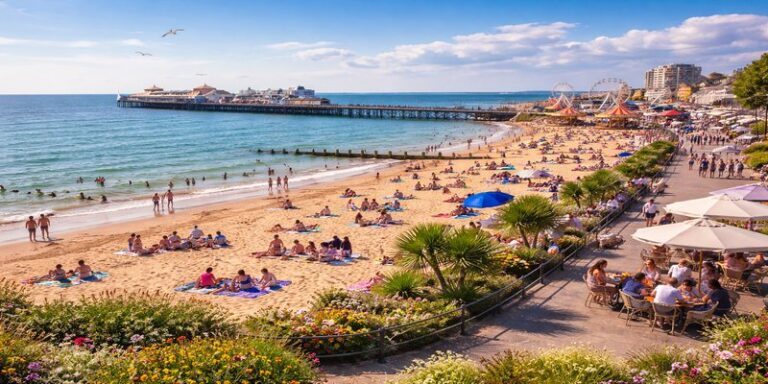
There is something reassuringly familiar about arriving in Clacton-on-Sea. The scent of salt lingers in the breeze, gulls circle lazily overhead, and the sound of laughter drifts from the pier arcades. Families unfold deckchairs along the promenade while children race towards the shoreline, eager to paddle in the North Sea. Located on the Essex Sunshine Coast, Clacton-on-Sea has long been a favourite destination for traditional British seaside holidays — a place where simplicity, affordability and enjoyment combine.
Unlike more cosmopolitan coastal resorts, Clacton retains a warm, approachable character. It offers visitors the chance to embrace classic seaside nostalgia, while still providing modern amenities and evolving attractions. For generations of holidaymakers, it represents the quintessential English coastal break.
1.0 Brief Background and History
Clacton-on-Sea emerged as a seaside resort in the late nineteenth century, following the expansion of railway lines that connected London and Essex’s coastal towns (Walton, 2000). Like many British seaside destinations, it flourished during the Victorian and Edwardian eras, when urban populations sought fresh sea air and restorative recreation.
The construction of Clacton Pier in 1871 was pivotal in shaping its tourism identity. The pier quickly became a centre of entertainment, offering concerts, amusements and seaside diversions. Hassan (2016) notes that such developments were integral to the growth of mass coastal tourism in Britain, democratising leisure for working- and middle-class visitors alike.
Throughout the twentieth century, Clacton evolved as a family-oriented resort. While some seaside towns struggled with decline during the late twentieth century, Clacton maintained steady domestic appeal, adapting attractions and infrastructure to meet contemporary expectations. This pattern reflects Butler’s (1980) Tourism Area Life Cycle, highlighting the importance of renewal and diversification.
2.0 Accommodation: Traditional Comfort by the Sea
Clacton-on-Sea offers a range of accommodation suited to families, couples and short-break visitors. Seafront hotels provide convenient access to the beach and pier, often featuring balconies overlooking the promenade. Many establishments combine period architecture with modern facilities.
Guesthouses and bed-and-breakfasts remain popular, offering personalised hospitality at reasonable prices. For larger families or extended stays, caravan parks and holiday parks along the Essex coast provide self-catering flexibility.
According to Cooper et al. (2018), destinations that maintain diverse accommodation options are better equipped to attract varied market segments. Clacton’s accessible pricing and range of choices reinforce its enduring family appeal.
3.0 Food and Drink: Seaside Classics and Local Flavours
No seaside visit is complete without traditional fish and chips, enjoyed on a breezy promenade bench. Clacton’s cafés and takeaway shops uphold this time-honoured ritual, alongside ice cream parlours and sweet shops that evoke childhood memories.
Yet beyond nostalgia, the town also features independent restaurants, traditional pubs and contemporary eateries serving global cuisines. Fresh seafood remains a highlight, reflecting the town’s maritime heritage.
Food tourism research emphasises the role of local cuisine in shaping visitor experience (Ellis et al., 2018). Clacton’s combination of comfort food and diverse dining options enhances its accessibility and appeal.
4.0 Things to Do: Pier Fun, Beaches and Family Attractions
Clacton Pier
The iconic Clacton Pier remains the resort’s central attraction. Today, it houses amusement arcades, thrill rides and entertainment venues, ensuring fun for visitors of all ages. Seasonal events and live performances contribute to a lively atmosphere during peak months.
The Beach and Promenade
Clacton’s sandy beach is one of its greatest assets. Awarded Blue Flag status for cleanliness and safety (Keep Britain Tidy, 2024), it offers ample space for sunbathing, paddling and sandcastle building. The gently sloping shoreline makes it particularly suitable for families with young children.
Gardens and Heritage
The beautifully maintained Clacton Seafront Gardens provide colourful floral displays and peaceful walking paths. Meanwhile, nearby Jaywick Sands and Holland-on-Sea offer quieter stretches of coastline for those seeking tranquillity.
Nature enthusiasts can explore the nearby Hamford Water National Nature Reserve, home to diverse birdlife and coastal ecosystems. Hall and Page (2014) highlight the growing importance of nature-based tourism in coastal regions — a trend Clacton increasingly embraces.
5.0 When to Visit
Summer (June to August) is peak season, with school holidays bringing lively crowds and extended entertainment programmes. Warm weather enhances beach experiences and pier activities.
Spring and early autumn offer milder temperatures and fewer visitors, ideal for relaxed walks along the promenade. Winter visits provide a quieter atmosphere, with bracing sea air and reflective coastal views.
Butler’s (1980) model suggests destinations that maintain appeal across seasons demonstrate stronger sustainability. Clacton’s blend of natural scenery and entertainment supports year-round interest.
6.0 Sample Three-Day Itinerary
Day One – Classic Clacton
Morning: Relax on the sandy beach.
Afternoon: Enjoy rides and arcades on Clacton Pier.
Evening: Fish and chips followed by a sunset stroll.
Day Two – Nature and Exploration
Morning: Visit Hamford Water National Nature Reserve.
Afternoon: Explore Holland-on-Sea’s quieter beach.
Evening: Dinner at a seafront restaurant.
Day Three – Leisure and Local Life
Morning: Walk through Clacton Seafront Gardens.
Afternoon: Browse independent shops and cafés.
Evening: Attend a seasonal event or show on the pier.
This itinerary balances relaxation, recreation and coastal discovery, reflecting Clacton’s enduring charm.
7.0 Travel Tips
- Getting There: Direct trains from London Liverpool Street reach Clacton in approximately 90 minutes.
- Peak Season Planning: Arrive early to secure beach space and parking.
- Weather Awareness: Even sunny days can feel cool by the sea — pack layers.
- Explore Nearby Villages: Holland-on-Sea offers a quieter alternative.
- Sustainability: Follow local beach-clean guidelines and support independent businesses.
8.0 Why Clacton-on-Sea Is Worth Visiting
Clacton-on-Sea remains one of Britain’s most recognisable seaside resorts because it honours its heritage while adapting to contemporary expectations. Its family-friendly beaches, iconic pier and accessible atmosphere make it an enduring favourite for domestic tourism.
As Walton (2000) observes, British seaside towns hold deep cultural resonance, representing shared leisure traditions and collective memory. Clacton continues to embody this spirit — a place where simple pleasures still define the holiday experience.
Whether you are seeking childhood nostalgia, relaxed coastal walks or affordable family fun, Clacton-on-Sea delivers a seaside escape that feels both timeless and welcoming.
References
Butler, R.W. (1980) ‘The concept of a tourist area cycle of evolution’, Canadian Geographer, 24(1), pp. 5–12.
Cooper, C., Fletcher, J., Fyall, A., Gilbert, D. and Wanhill, S. (2018) Tourism: Principles and Practice. 6th edn. Harlow: Pearson.
Ellis, A., Park, E., Kim, S. and Yeoman, I. (2018) ‘What is food tourism?’, Tourism Management, 68, pp. 250–263.
Hall, C.M. and Page, S.J. (2014) The Geography of Tourism and Recreation. 4th edn. London: Routledge.
Hassan, J. (2016) The Seaside, Health and the Environment in England and Wales Since 1800. London: Routledge.
Keep Britain Tidy (2024) Blue Flag Beach Awards. Available at: https://www.keepbritaintidy.org.
Walton, J.K. (2000) The British Seaside: Holidays and Resorts in the Twentieth Century. Manchester: Manchester University Press.