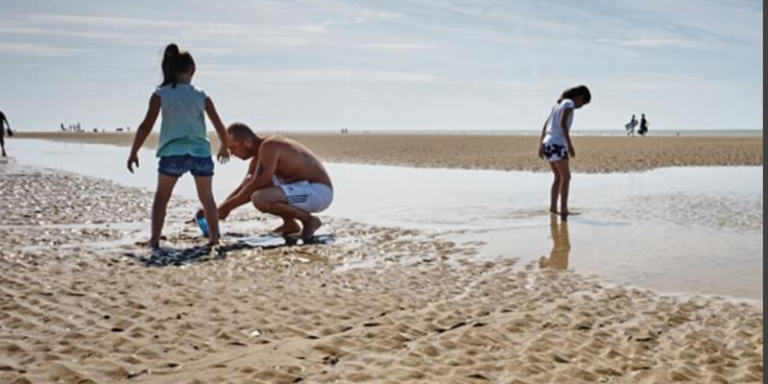
There are few places in southern England where the landscape opens so generously to the sea as it does at Camber Sands. Nestled along the Sussex coastline, this sweeping expanse of golden dunes and wide sandy beach feels almost continental in character. As the breeze lifts grains of sand into soft ripples and the horizon stretches uninterrupted across the Channel, visitors quickly understand why Camber Sands Holiday Resort has become a cherished coastal retreat.
Unlike many British beaches known for pebbles and steep drop-offs, Camber Sands offers seven miles of soft, fine sand, rare along the southern coast. It is a destination that balances relaxation, adventure and family-friendly charm, appealing equally to couples seeking quiet sunsets and families eager for seaside fun.
1.0 Brief Background and History
Camber Sands has long been valued for its natural beauty. The surrounding region of East Sussex is steeped in maritime history, with nearby Rye once thriving as a medieval port and later infamous for smuggling in the eighteenth century (Brooks, 2018). Over time, as coastal tourism expanded across Britain during the nineteenth and twentieth centuries, Camber developed as a leisure destination shaped by its distinctive dunes and accessible shoreline.
According to Walton (2000), the evolution of British seaside resorts reflects changing patterns of mobility and recreation. Camber Sands, unlike traditional pier-based resorts, developed around its natural landscape, reinforcing its appeal as a nature-oriented escape rather than a spectacle-driven resort.
Today, the resort continues to thrive under professional management, offering modern amenities while preserving its coastal character (Parkdean Resorts, 2024).
2.0 Accommodation: Comfort by the Coast
One of the resort’s greatest strengths is its diverse accommodation portfolio. Visitors can choose from luxury lodges with private decking, comfortable caravans and well-equipped chalets. Many properties overlook the dunes, allowing guests to wake to the sound of distant waves.
Family-friendly layouts provide spacious living areas and kitchen facilities, supporting both short stays and longer holidays. Cooper et al. (2018) emphasise that accommodation diversity enhances destination resilience by attracting multiple market segments. Camber Sands exemplifies this adaptability.
For those seeking tranquillity, premium lodges offer upgraded furnishings and quieter settings. Meanwhile, communal facilities — including indoor pools and activity centres — cater particularly well to families.
3.0 Food and Drink: Coastal Classics and Convenience
Dining at Camber Sands combines convenience with traditional seaside flavour. On-site restaurants serve classic British dishes, including fish and chips, hearty breakfasts and family-friendly menus. Casual cafés provide lighter options, ideal after a morning on the beach.
Food tourism research suggests that regional produce strengthens destination identity (Ellis et al., 2018). Visitors can sample fresh seafood in nearby Rye or enjoy a traditional Sussex cream tea in local tearooms.
For self-catering guests, on-site convenience stores stock essentials, making meal preparation straightforward. TripAdvisor (2023) highlights the resort’s dining variety as a consistent strength among visitors.
4.0 Things to Do: From Sandcastles to Surfboards
A Beach Lover’s Paradise
The beach remains Camber’s defining attraction. Its Blue Flag Award status underscores high environmental and safety standards (Blue Flag, 2022). Shallow waters and expansive sands make it particularly appealing to families with young children.
Sunbathing, sandcastle building and kite flying are simple pleasures that resonate across generations. Even during peak summer, the beach’s vastness ensures space to unwind.
Water Sports and Adventure
Camber’s consistent coastal winds create ideal conditions for kite surfing and windsurfing. According to UK Beach Guide (2024), the beach ranks among Britain’s leading locations for wind-based water sports. Equipment hire and professional lessons enable beginners to participate safely.
Paddleboarding and beach volleyball add to the active atmosphere, reflecting Jennings’ (2004) observation that modern tourists increasingly seek experiential and participatory activities.
Nature and Heritage
Beyond the shoreline, the nearby Rye Harbour Nature Reserve offers 465 hectares of salt marsh, shingle and reed beds. Birdwatchers frequently spot avocets and marsh harriers, while seals occasionally appear offshore (Sussex Wildlife Trust, 2022).
A short drive brings visitors to Rye, whose cobbled streets and medieval architecture provide historical depth to the holiday experience.
5.0 When to Visit
Summer (June to August) is peak season, offering warm temperatures and a lively atmosphere. Families particularly favour school holidays.
Spring and early autumn provide quieter conditions, ideal for walking and wildlife observation. Butler’s (1980) Tourism Area Life Cycle suggests destinations that extend appeal beyond peak months maintain stronger sustainability.
Winter visits, though cooler, reveal dramatic coastal beauty and a peaceful ambience, ideal for reflective breaks.
6.0 Sample Three-Day Itinerary
Day One – Beach and Relaxation
Morning: Walk along the dunes and enjoy the expansive sands.
Afternoon: Paddleboarding lesson.
Evening: On-site dining and sunset stroll.
Day Two – Nature and Heritage
Morning: Explore Rye Harbour Nature Reserve.
Afternoon: Visit historic Rye for shopping and tea.
Evening: Family entertainment programme at the resort.
Day Three – Adventure and Leisure
Morning: Kite surfing or cycling along coastal paths.
Afternoon: Relax at the indoor pool.
Evening: Beach bonfire or live music event.
This itinerary combines nature, heritage and recreation, showcasing the resort’s versatility.
7.0 Travel Tips
- Getting There: Camber Sands is accessible by road from London in approximately two hours.
- Parking: Arrive early during peak summer to secure beach parking.
- Weather Preparedness: Coastal breezes can be strong; bring layers.
- Sustainability: Respect dune ecosystems and follow waste disposal guidelines.
8.0 Why Camber Sands Is Worth Visiting
Camber Sands Holiday Resort stands out because it harmonises natural beauty, recreational opportunity and family-friendly comfort. Its rare stretch of golden sand, rich biodiversity and vibrant activity programme create a holistic seaside experience.
As coastal tourism increasingly values authenticity and sustainability (Hall and Page, 2014), Camber’s emphasis on environmental quality and experiential engagement ensures continued relevance. Whether seeking relaxation beneath open skies or adventure across rolling dunes, visitors find both serenity and excitement here.
For families building memories, couples seeking quiet horizons or solo travellers craving coastal renewal, Camber Sands Holiday Resort remains one of Britain’s most rewarding seaside escapes.
References
Blue Flag (2022) Camber Sands Beach. Available at: https://www.blueflag.global/camber-sands.
Brooks, C. (2018) ‘Rye: A Town Steeped in Smuggling History’, Journal of British Coastal History, 14(2), pp. 45–60.
Butler, R.W. (1980) ‘The concept of a tourist area cycle of evolution’, Canadian Geographer, 24(1), pp. 5–12.
Cooper, C., Fletcher, J., Fyall, A., Gilbert, D. and Wanhill, S. (2018) Tourism: Principles and Practice. 6th edn. Harlow: Pearson.
Ellis, A., Park, E., Kim, S. and Yeoman, I. (2018) ‘What is food tourism?’, Tourism Management, 68, pp. 250–263.
Hall, C.M. and Page, S.J. (2014) The Geography of Tourism and Recreation. 4th edn. London: Routledge.
Jennings, G. (2004) Adventure Tourism. Oxford: Elsevier Butterworth-Heinemann.
Parkdean Resorts (2024) Camber Sands Holiday Park. Available at: https://www.parkdeanresorts.co.uk/location/sussex/camber-sands.
Sussex Wildlife Trust (2022) Rye Harbour Nature Reserve. Available at: https://sussexwildlifetrust.org.uk/visit/rye-harbour.
TripAdvisor (2023) Dining Options at Camber Sands Holiday Resort. Available at: https://www.tripadvisor.co.uk.
UK Beach Guide (2024) Camber Sands Beach. Available at: https://www.ukbeaches.guide/camber-sands.
Walton, J.K. (2000) The British Seaside: Holidays and Resorts in the Twentieth Century. Manchester: Manchester University Press.