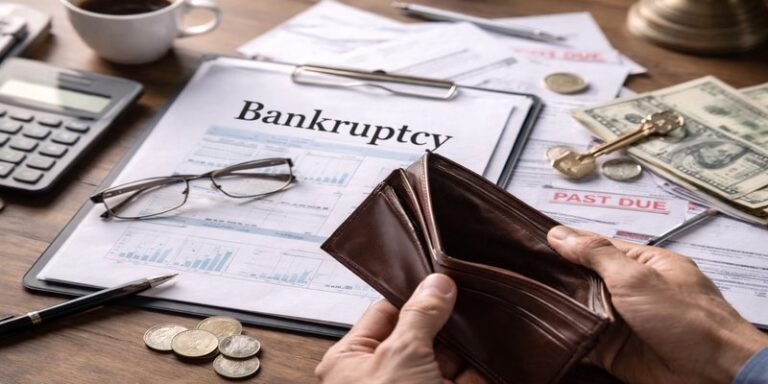
Few financial words carry as much emotional weight as bankruptcy. For many, it signals failure, loss and uncertainty. Yet in legal and economic terms, bankruptcy is not simply a collapse — it is a structured legal process designed to manage overwhelming debt and provide a pathway either to orderly liquidation or financial rehabilitation.
In modern economies, bankruptcy laws play a crucial role in balancing the interests of debtors and creditors, encouraging responsible lending while offering individuals and businesses a second chance. As Finch and Milman (2017) note, insolvency systems are not merely punitive mechanisms; they are instruments of economic policy that shape risk-taking and entrepreneurship. This article explores the causes of bankruptcy, its legal framework, its personal and corporate implications, and its broader economic significance.
1.0 Understanding Bankruptcy
1.1 What Is Bankruptcy?
Bankruptcy is a legal status declared when an individual or organisation is unable to repay outstanding debts. In the UK, personal bankruptcy is governed primarily by the Insolvency Act 1986, while corporate insolvency procedures include liquidation, administration and company voluntary arrangements.
Bankruptcy differs from simple debt in that it involves formal court proceedings or legal administration. Its purpose is to ensure that available assets are distributed fairly among creditors and, in some cases, to allow the debtor to make a fresh start (Goode, 2011).
1.2 Personal vs Corporate Bankruptcy
- Personal bankruptcy applies to individuals who cannot meet their financial obligations.
- Corporate insolvency concerns companies that are unable to pay their debts as they fall due.
While both involve financial distress, the processes and consequences differ significantly.
2.0 Causes of Bankruptcy
Bankruptcy rarely stems from a single cause. Instead, it often results from a combination of structural, economic and personal factors.
2.1 Economic Downturns
Periods of recession can lead to widespread insolvencies. During economic crises, rising unemployment, declining consumer demand and tightened credit conditions place pressure on households and businesses alike (Minsky, 2008). For example, the global financial crisis of 2008 led to a sharp increase in bankruptcy filings across many advanced economies.
2.2 Over-Indebtedness
Excessive borrowing is a major contributor to bankruptcy. Easy access to credit cards, personal loans and mortgages can encourage households to accumulate unsustainable levels of debt. When income falls or interest rates rise, repayment becomes unmanageable.
2.3 Business Failure
Entrepreneurship inherently involves risk. According to the OECD (2022), a significant proportion of new businesses fail within their first five years. Poor cash flow management, market misjudgement or unexpected competition can quickly push firms into insolvency.
2.4 Personal Circumstances
Illness, divorce or job loss can destabilise household finances. Research indicates that medical expenses and income shocks are common precursors to personal bankruptcy in some jurisdictions (White, 2007).
3.0 The Legal Process
3.1 Declaring Bankruptcy
In the UK, individuals can apply for bankruptcy online. Once approved, an Official Receiver or insolvency practitioner takes control of assets and assesses liabilities. Certain assets may be sold to repay creditors, though essential household items are typically protected.
Bankruptcy generally lasts for 12 months, after which most remaining debts are discharged, subject to conditions.
3.2 Corporate Insolvency Procedures
Companies may enter:
- Liquidation, where assets are sold and the company ceases trading.
- Administration, where an administrator attempts to rescue the business.
- Company Voluntary Arrangements (CVAs), allowing repayment plans to be negotiated with creditors.
These mechanisms aim to preserve economic value where possible while protecting creditor interests (Finch and Milman, 2017).
4.0 Consequences of Bankruptcy
4.1 Financial Impact
Bankruptcy severely affects credit ratings, limiting access to future borrowing. It may also involve the sale of property and restrictions on financial activities.
4.2 Social and Psychological Effects
Beyond finances, bankruptcy carries psychological consequences. Studies show links between financial distress and anxiety, depression and social stigma (Sweet et al., 2013). The perception of personal failure can intensify emotional strain.
4.3 Economic Implications
From a macroeconomic perspective, bankruptcy systems promote efficient allocation of resources. Inefficient firms exit the market, allowing capital to be reallocated to more productive uses (Armour et al., 2009). In this sense, bankruptcy contributes to economic dynamism.
5.0 Bankruptcy as a Second Chance
Despite its negative connotations, bankruptcy law often embodies the principle of economic rehabilitation. The concept of a “fresh start” is central to many insolvency regimes. By discharging unmanageable debt, individuals can re-enter economic life and rebuild financial stability.
In the United States, for example, Chapter 11 bankruptcy allows companies to reorganise rather than liquidate, preserving jobs and economic value. The underlying philosophy recognises that risk-taking is essential to innovation and growth.
6.0 Preventing Bankruptcy
While not all insolvency can be avoided, preventive measures include:
- Budgeting and financial planning
- Seeking early advice from debt charities
- Negotiating repayment plans
- Diversifying business revenue streams
Organisations such as Citizens Advice and the MoneyHelper Service provide guidance for individuals facing financial difficulties (NHS MoneyHelper, 2023).
Bankruptcy is a complex legal and economic institution that extends far beyond its common association with failure. It serves as both a mechanism for orderly debt resolution and a framework for economic renewal. While its personal and financial consequences can be severe, bankruptcy also reflects a societal recognition that risk and uncertainty are inherent in modern economic life.
Understanding bankruptcy requires moving beyond stigma to appreciate its structural role in balancing creditor rights, encouraging entrepreneurship and offering a pathway to recovery. In that sense, bankruptcy is not merely an end — it is often the beginning of financial rebuilding.
References
Armour, J., Deakin, S. and Konzelmann, S. (2009) ‘Shareholder primacy and the trajectory of UK corporate governance’, British Journal of Industrial Relations, 47(3), pp. 531–555.
Finch, V. and Milman, D. (2017) Corporate Insolvency Law: Perspectives and Principles. 3rd edn. Cambridge: Cambridge University Press.
Goode, R. (2011) Principles of Corporate Insolvency Law. 4th edn. London: Sweet & Maxwell.
Minsky, H.P. (2008) Stabilizing an Unstable Economy. New York: McGraw-Hill.
OECD (2022) Entrepreneurship at a Glance. Paris: OECD Publishing.
Sweet, E., Nandi, A., Adam, E.K. and McDade, T.W. (2013) ‘The high price of debt’, Social Science & Medicine, 91, pp. 94–100.
White, M.J. (2007) ‘Bankruptcy reform and credit cards’, Journal of Economic Perspectives, 21(4), pp. 175–199.
MoneyHelper (2023) Dealing with debt. Available at: https://www.moneyhelper.org.uk.