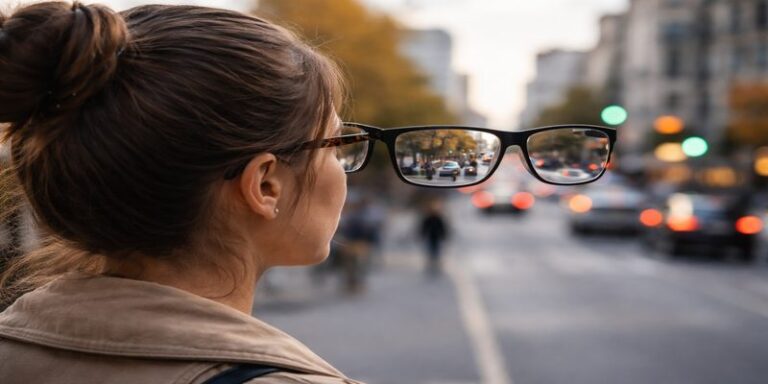
Myopia, commonly referred to as short-sightedness, is one of the most widespread visual disorders globally. Individuals with myopia can see near objects clearly, but distant objects appear blurred because light entering the eye focuses in front of the retina rather than directly on it (Baird et al., 2020). Over the past few decades, the prevalence of myopia has increased dramatically, particularly among children and adolescents. Some studies estimate that nearly half of the world’s population could be myopic by 2050 if current trends continue (Baird et al., 2020).
Myopia is influenced by a combination of genetic predisposition and environmental factors, such as prolonged near work and limited outdoor activity. Although it is often easily corrected with glasses or contact lenses, untreated or severe myopia can lead to complications such as retinal detachment, glaucoma, and myopic macular degeneration. For this reason, understanding the causes, symptoms, prevention strategies, and management options is essential for maintaining good eye health.
1.0 Understanding Myopia
1.1 What is Myopia?
Myopia occurs when the eyeball grows too long from front to back or when the cornea is excessively curved. As a result, light rays entering the eye focus in front of the retina instead of directly on it, producing blurred vision when looking at distant objects (Grzybowski et al., 2020).
For example, a student sitting in the back of a classroom with myopia may struggle to read the writing on the board, while the same student can comfortably read a book or use a smartphone at close range.
Myopia is generally classified into three categories:
- Low myopia: mild refractive error.
- Moderate myopia: moderate degree of visual distortion.
- High myopia: severe elongation of the eye, which increases the risk of ocular complications.
2.0 Causes of Myopia
Myopia develops due to a complex interaction between genetic factors and environmental influences.
2.1 Genetic Factors
One of the strongest predictors of myopia is family history. Children with one or both parents who are myopic are more likely to develop the condition (Ying et al., 2024). Genetic studies suggest that several genes influence the growth and structure of the eye, increasing susceptibility to myopia.
For instance, if both parents wear glasses for distance vision, their children may have a higher likelihood of developing myopia during school years.
2.2 Excessive Near Work
Near work activities, such as reading, writing, or prolonged use of digital devices, have been strongly associated with the development of myopia (Dutheil et al., 2023). When the eyes focus on close objects for extended periods, the eye muscles remain constantly engaged, potentially encouraging elongation of the eyeball.
Common examples include:
- Long hours studying or reading.
- Frequent use of smartphones, tablets, or computers.
- Continuous gaming without breaks.
Modern lifestyles have significantly increased the amount of near work performed daily, particularly among school children.
2.3 Limited Outdoor Activity
Research consistently shows that spending more time outdoors reduces the risk of developing myopia (Xiong et al., 2017; French et al., 2013). Exposure to natural daylight appears to stimulate dopamine release in the retina, which helps regulate eye growth.
Children who spend at least 90–120 minutes outdoors daily have a lower incidence of myopia compared with those who spend most of their time indoors (Baird et al., 2020).
2.4 Lifestyle and Environmental Factors
Other contributing factors may include:
- Poor lighting conditions
- Close reading distance
- Educational pressure and intensive schooling
- Increased screen time
These factors collectively contribute to the growing prevalence of myopia worldwide (Biswas et al., 2024).
5.0 Symptoms of Myopia
The symptoms of myopia often develop gradually and may become more noticeable during childhood or adolescence.
Common symptoms include:
5.1 Blurred Distance Vision
The most obvious symptom is difficulty seeing distant objects clearly. For example, road signs, classroom boards, or television screens may appear blurry.
5.2 Squinting
Individuals with myopia may squint frequently to improve focus. Squinting temporarily changes the shape of the eye and allows slightly clearer vision.
5.3 Eye Strain
Prolonged visual effort can lead to eye fatigue or discomfort, particularly after reading or screen use.
5.4 Headaches
Frequent headaches may occur due to the strain placed on the visual system when trying to focus on distant objects.
5.5 Difficulty Driving at Night
Myopia may cause poor night vision, making it harder to see distant lights and objects.
Early detection through regular eye examinations is important, especially for children who may not recognise that their vision is impaired.
6.0 Prevention of Myopia
Although myopia cannot always be prevented, several lifestyle modifications may help reduce the risk of developing or worsening the condition.
6.1 Increasing Outdoor Time
Spending more time outdoors is one of the most effective preventive strategies. Studies show that daily outdoor exposure reduces the onset of myopia in children (Dhakal et al., 2022).
For example, encouraging children to play sports, walk to school, or participate in outdoor recreational activities can significantly benefit eye health.
6.2 Managing Screen Time
Reducing prolonged exposure to digital screens can help minimise eye strain and prevent excessive near work. Experts recommend following the 20-20-20 rule:
- Every 20 minutes, look at something 20 feet away
- For at least 20 seconds
This practice relaxes the eye muscles and reduces visual fatigue.
6.3 Maintaining Proper Reading Habits
Good reading habits include:
- Keeping reading material 30–40 cm away from the eyes
- Ensuring adequate lighting
- Taking regular breaks during study sessions
These measures help maintain healthy visual function.
6.4 Regular Eye Examinations
Routine eye tests allow early detection of myopia and enable timely treatment. Early intervention is particularly important for children whose eyes are still developing.
7.0 Management and Treatment of Myopia
Once myopia develops, several treatment options are available to correct vision and slow progression.
7.1 Spectacles (Glasses)
Corrective lenses are the most common treatment for myopia. Concave lenses help redirect light so that it focuses properly on the retina, restoring clear vision.
For example, a student who cannot see the classroom board may experience immediate improvement after wearing prescription glasses.
7.2 Contact Lenses
Contact lenses offer an alternative to spectacles and may provide better peripheral vision and convenience during sports or physical activities.
7.3 Orthokeratology (Ortho-K)
Orthokeratology involves wearing specially designed rigid contact lenses overnight to reshape the cornea temporarily. This method allows clear vision during the day without glasses.
Research suggests that orthokeratology may also slow the progression of myopia in children (Vagge et al., 2018).
7.4 Pharmacological Treatment
Low-dose atropine eye drops have been shown to reduce the progression of myopia in children by slowing eye growth (Saw & Matsumura, 2019).
7.5 Refractive Surgery
For adults with stable prescriptions, procedures such as LASIK or PRK can permanently reshape the cornea to correct myopia. However, these procedures are generally recommended only after the eyes have fully developed.
Myopia is a rapidly increasing global vision problem, particularly among younger populations. It occurs when the eye’s structure causes light to focus incorrectly, resulting in blurred distance vision. The condition arises from a combination of genetic predisposition and environmental factors, including excessive near work, prolonged screen use, and insufficient outdoor activity.
Common symptoms include blurred distance vision, squinting, eye strain, and headaches, all of which can affect daily activities such as learning, driving, and sports. Although myopia cannot always be completely prevented, strategies such as spending more time outdoors, limiting screen exposure, and practising healthy visual habits can significantly reduce the risk.
Management options—including spectacles, contact lenses, orthokeratology, atropine therapy, and refractive surgery—can effectively correct vision and slow disease progression. Ultimately, regular eye examinations and early intervention remain essential for protecting long-term visual health and preventing complications associated with high myopia.
References
Baird, P.N., Saw, S.M., Lanca, C. and Guggenheim, J.A. (2020) Myopia. Nature Reviews Disease Primers, 6(1), pp.1–20. https://doi.org/10.1038/s41572-020-00231-4.
Biswas, S., El Kareh, A., Qureshi, M. and Lee, D.M.X. (2024) The influence of the environment and lifestyle on myopia. Journal of Physiological Anthropology. https://doi.org/10.1186/s40101-024-00354-7.
Dhakal, R., Shah, R., Huntjens, B. and Verkicharla, P.K. (2022) Time spent outdoors as an intervention for myopia prevention and control in children. Ophthalmic and Physiological Optics. https://doi.org/10.1111/opo.12945.
Dutheil, F., Oueslati, T., Delamarre, L. and Castanon, J. (2023) Myopia and near work: A systematic review and meta-analysis. International Journal of Environmental Research and Public Health, 20(1). https://www.mdpi.com/1660-4601/20/1/875.
French, A.N., Ashby, R.S., Morgan, I.G. and Rose, K.A. (2013) Time outdoors and the prevention of myopia. Experimental Eye Research, 114, pp.58–68. https://doi.org/10.1016/j.exer.2013.04.018.
Grzybowski, A., Kanclerz, P., Tsubota, K. and Lanca, C. (2020) A review on the epidemiology of myopia in school children worldwide. BMC Ophthalmology, 20(27). https://doi.org/10.1186/s12886-019-1220-0.
Saw, S.M. and Matsumura, S. (2019) Prevention and management of myopia and myopic pathology. Investigative Ophthalmology & Visual Science. https://iovs.arvojournals.org/article.aspx?articleid=2723705.
Vagge, A., Ferro Desideri, L., Nucci, P. and Serafino, M. (2018) Prevention of progression in myopia: A systematic review. Diseases, 6(4). https://doi.org/10.3390/diseases6040092.
Ying, Z.Q., Li, D.L., Zheng, X.Y. and Zhang, X.F. (2024) Risk factors for myopia among children and adolescents: An umbrella review. British Journal of Ophthalmology, 108(2), pp.167–174.