British Monarchy Religion is closely tied to the Protestant tradition and, more specifically, to the Church of England, the national church established during the English Reformation. This connection is not simply ceremonial. It is embedded in the constitutional framework of the United Kingdom and has been shaped by centuries of political conflict, religious division and legal change. Today, the reigning dynasty is the House of Windsor, and the monarch, King Charles III, is both head of state and Supreme Governor of the Church of England (The Royal Family, 2024; Church of England, 2024). Understanding why the monarch must be Protestant requires looking beyond modern royal pageantry to the upheavals of the sixteenth and seventeenth centuries. The monarchy’s religious identity emerged from struggles over papal authority, civil stability and parliamentary power. Although some rules have been modernised, the principle that the sovereign must be in communion with the Church of England remains in place.
1.0 The Present Royal Dynasty
1.1 The House of Windsor
The current ruling family is the House of Windsor, a dynasty that adopted its present name in 1917 during the First World War, replacing the more German-sounding Saxe-Coburg and Gotha (Cannadine, 2000). The change was symbolic, intended to reinforce a distinctly British identity at a time of intense nationalism. Despite this twentieth-century rebranding, the monarchy’s religious position remained rooted in much older constitutional principles.
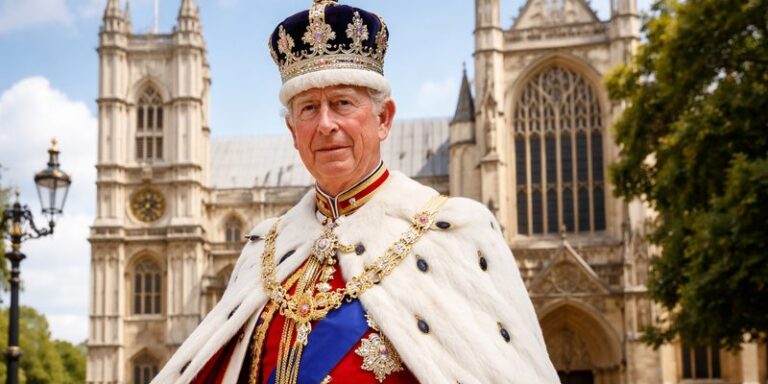
Today, King Charles III is the reigning monarch. As sovereign, he is not only the constitutional head of the United Kingdom but also the Supreme Governor of the Church of England. This does not mean that the monarch directs theology in the way a cleric might. Rather, it reflects the established relationship between Crown and Church, in which the monarch plays a formal constitutional and symbolic role (Bogdanor, 1995).
1.2 Why Anglican Identity Matters
The monarch’s Anglican identity is significant because the Church of England remains the established church in England. Bishops sit in the House of Lords, the coronation has a religious character, and the sovereign promises to uphold the Protestant religion. For example, at a coronation service, the liturgy, setting and vows all reflect the historic union of monarchy and Anglicanism (Church of England, 2023).
2.0 Historical Origins of the Protestant Monarchy
2.1 The English Reformation
The roots of the monarchy’s Protestant character lie in the English Reformation of the sixteenth century. Under Henry VIII, England broke with the authority of the Pope after disputes over annulment, succession and sovereignty. The Act of Supremacy 1534 declared the king to be the supreme head of the Church in England, marking a decisive shift from Roman Catholic authority to royal control (Elton, 1977; Britannica, 2024).
This break was initially political as much as doctrinal. Henry VIII did not immediately create a fully Protestant church in a modern sense. However, the separation from Rome opened the way for later reforms under Edward VI, partial Catholic restoration under Mary I, and a more lasting Protestant settlement under Elizabeth I. By the late sixteenth century, the Church of England had become a distinctive Protestant institution, though one retaining bishops, liturgy and some Catholic-influenced forms (Haigh, 1993).
2.2 The Seventeenth Century Crisis
The issue of monarchy and religion became even more explosive in the seventeenth century. Tensions over Catholicism, royal authority and parliamentary rights sharpened under the Stuarts. These anxieties reached a climax under James II, a Catholic monarch whose policies alarmed many political and religious elites. His overthrow in the Glorious Revolution of 1688 established a powerful constitutional principle: the English, later British, crown would not revert to Catholic rule (Schwoerer, 1981).
This was not simply prejudice in the abstract; contemporaries feared that a Catholic monarch might align the kingdom with foreign Catholic powers, undermine Parliament and weaken Protestant liberties. In that sense, religion and politics were deeply intertwined.
3.0 The Legal Requirement That the Monarch Must Be Protestant
3.1 The Act of Settlement 1701
The decisive legal measure was the Act of Settlement 1701, which specified that the crown should pass to Sophia, Electress of Hanover, and “the heirs of her body”, provided they were Protestant. It also made clear that a person who was Roman Catholic, or who married a Roman Catholic, could not inherit the throne (UK Parliament, 1701/2024).
This Act remains one of the most important constitutional statutes in British history. It aimed to secure a Protestant succession after a period of instability and dynastic uncertainty. The law helped produce the later Hanoverian succession and ultimately shaped the line that leads to the present House of Windsor.
3.2 The Monarch and the Church of England
The monarch must still be in communion with the Church of England, because the sovereign serves as its Supreme Governor. In practical terms, a Catholic could not fulfil this role without contradicting the constitutional structure of an established Protestant church (The Royal Family, 2024). This is why the monarch personally still cannot be Roman Catholic, even though wider rules have been relaxed.
An example of this continuing link is the coronation oath, in which the sovereign pledges to maintain the Protestant religion and preserve the settlement of the Church of England. This demonstrates that the monarchy’s religious identity is not merely historic ornament; it remains part of constitutional practice.
4.0 Modern Reform and Continuing Limits
4.1 The Succession to the Crown Act 2013
A major modern reform came with the Succession to the Crown Act 2013. This legislation removed the rule that disqualified a person from the line of succession for marrying a Roman Catholic. It also introduced absolute primogeniture for those born after 28 October 2011, meaning that elder daughters no longer lose precedence to younger brothers (UK Parliament, 2013/2024).
This was a significant step towards modernisation. For example, under the old rules, marriage to a Catholic could have serious constitutional consequences. After the 2013 reform, such marriages no longer create automatic exclusion.
4.2 What Did Not Change
However, the reform stopped short of allowing the monarch to become Catholic. The sovereign must still be able to serve as Supreme Governor of the Church of England, so the personal religious bar remains. In other words, the law became more tolerant in relation to marriage, but not in relation to the monarch’s own religious affiliation.
This balance reflects the British constitution’s characteristically gradual approach to reform: adapting rules that seem unnecessarily discriminatory while preserving the historic structure of the established church.
In conclusion, British Monarchy Religion reflects a long and often turbulent history in which questions of faith, law and political authority became deeply intertwined. From the English Reformation to the Glorious Revolution and the Act of Settlement 1701, the monarchy’s Protestant identity developed as part of Britain’s wider constitutional settlement. The present royal house, the House of Windsor, therefore, remains firmly within the Anglican tradition, and King Charles III continues to serve as Supreme Governor of the Church of England. Modern legislation, especially the Succession to the Crown Act 2013, has softened older restrictions by allowing heirs to marry Catholics without losing their place in succession. Yet the core rule remains unchanged: the monarch themselves must be Protestant. As a result, British Monarchy Religion remains a defining feature of the enduring relationship between the Crown, the Church of England and the British state.
References
Bogdanor, V. (1995) The Monarchy and the Constitution. Oxford: Clarendon Press.
Britannica (2024) Act of Supremacy. Available at: https://www.britannica.com/event/Act-of-Supremacy-England-1534 (Accessed: 13 March 2026).
Cannadine, D. (2000) The Decline and Fall of the British Aristocracy. New Haven: Yale University Press.
Church of England (2023) The Coronation Liturgy. Available at: https://www.churchofengland.org (Accessed: 13 March 2026).
Church of England (2024) The history of the Church of England. Available at: https://www.churchofengland.org/about/history-church-england (Accessed: 13 March 2026).
Elton, G.R. (1977) Reform and Reformation: England 1509–1558. London: Edward Arnold.
Haigh, C. (1993) English Reformations: Religion, Politics and Society under the Tudors. Oxford: Clarendon Press.
Schwoerer, L.G. (1981) The Declaration of Rights, 1689. Baltimore: Johns Hopkins University Press.
The Royal Family (2024) The King and the Church of England. Available at: https://www.royal.uk (Accessed: 13 March 2026).
UK Parliament (1701/2024) Act of Settlement 1701. Available at: https://www.legislation.gov.uk/aep/Will3/12-13/2 (Accessed: 13 March 2026).
UK Parliament (2013/2024) Succession to the Crown Act 2013. Available at: https://www.legislation.gov.uk/ukpga/2013/20/contents (Accessed: 13 March 2026).