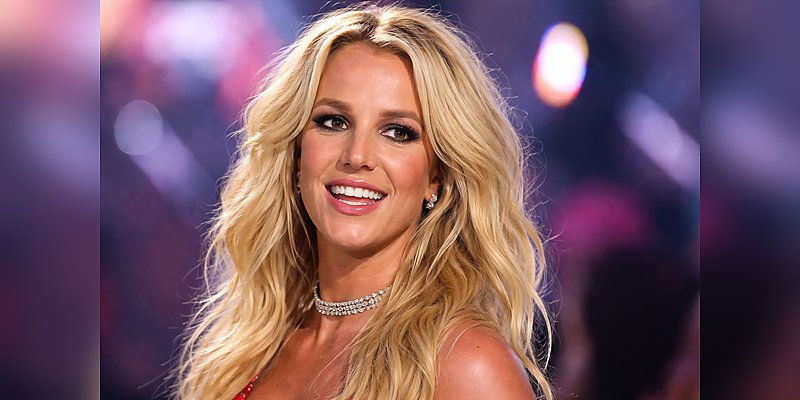
✧ At the turn of the millennium, Britney Spears was not simply a chart success. She became a cultural event. Her debut helped define late-1990s teen pop, her image shaped music television, and her career became inseparable from wider debates about celebrity, gender, media scrutiny and artistic reinvention. For that reason, Britney Spears remains one of the most significant figures in modern popular culture, not only because of commercial success, but because her public life has repeatedly reflected broader changes in how fame is produced and consumed (Encyclopaedia Britannica, 2026; Cashmore, 2023).
From her early breakthrough with …Baby One More Time to later work such as Blackout, Circus and Glory, her catalogue shows both mainstream appeal and a willingness to evolve (Encyclopaedia Britannica, 2026). At the same time, the story of Britney Spears has come to symbolise the pressures placed on women in the entertainment industry and the uneasy relationship between stardom and personal autonomy (Daros, 2021; Cheng, 2018). That combination of music, mythology and media history explains why her influence still feels Immediate.
1.0 Britney Spears and the Making of a Pop Phenomenon
The rise of Britney Spears was remarkably fast. After performing as a child and appearing on The All New Mickey Mouse Club, she signed with Jive Records and released …Baby One More Time in 1998. The single and album quickly became defining moments in commercial pop, helping to relaunch teen-oriented mainstream music on a global scale (Encyclopaedia Britannica, 2026; Biography.com, 2023).
What made the breakthrough so powerful was not only the music itself, but the combination of voice, choreography, image and timing. The songs were accessible, catchy and highly produced, while the videos and live performances gave them instant recognisability. Follow-up releases such as Oops!… I Did It Again and Britney demonstrated that the success was not accidental. Instead, a durable star persona was being constructed, one that balanced youthful innocence, calculated spectacle and pop professionalism (Patrick, 2022).
This early period also established Britney Spears as a global reference point. Her songs became part of everyday popular culture, while her performances influenced fashion, dance routines and the visual grammar of early-2000s pop music. In this sense, her fame was not merely musical; it was symbolic and generational (Marshall, 2014).
2.0 The Musical Legacy of Britney Spears
The career of Britney Spears is sometimes reduced to a handful of headline moments, but the music itself remains central to her lasting reputation. Her discography traces the movement of pop across several eras, from teen-pop and radio ballads to darker electronic production and dance-pop experimentation. In the Zone helped reposition her as a more mature artist, while “Toxic” became one of the most recognisable pop singles of the 2000s and won a Grammy Award for Best Dance Recording (Encyclopaedia Britannica, 2026; Biography.com, 2023).
Academic commentary has often highlighted Blackout as especially important because it anticipated later developments in mainstream pop production and performance aesthetics (Lasky, 2022). Rather than functioning as a simple comeback narrative, the album is often seen as evidence of artistic resilience and stylistic influence. Later projects, including Circus, Femme Fatale and the Las Vegas Piece of Me residency, reinforced her ability to adapt her catalogue for new audiences and formats (Encyclopaedia Britannica, 2026).
In broader cultural terms, Britney Spears helped demonstrate how popular music operates as both entertainment and social text. Songs, videos and performances became sites where identity, gender and celebrity were negotiated in public view (Kotarba, 2013).
3.0 Britney Spears as Celebrity, Brand and Cultural Symbol
A key reason for the durability of Britney Spears lies in the fact that she became more than a singer. She developed into a cultural brand, with her image circulating across magazines, advertising, television, merchandise and digital platforms. Research on celebrity culture suggests that stars such as Spears occupy an unusual position: they are both individuals and highly managed public symbols, shaped by commercial systems as much as by personal talent (Cashmore, 2023; Marshall, 2014).
That duality was especially visible in her case. On one hand, Britney Spears embodied mainstream pop accessibility. On the other, she became a site onto which audiences projected debates about femininity, control, desirability and respectability. Saray (2007) argues that such pop icons function as cultural brands, carrying meanings that extend far beyond music sales. Spears illustrates that argument clearly. Her significance has rested not only on chart performance, but on the way her image has been repeatedly reinterpreted over time.
4.0 Britney Spears, Media Scrutiny and Public Reappraisal
No discussion of Britney Spears is complete without acknowledging the extreme media attention that surrounded her private life. Scholars have argued that her treatment by tabloids, entertainment media and gossip culture revealed deep problems in the way female celebrity was framed in the early 2000s (Daros, 2021; Thelandersson, 2022). Public fascination often blurred into intrusion, and commercial entertainment journalism frequently treated vulnerability as spectacle.
The conservatorship imposed in 2008, and ended in 2021, added a further layer of legal and ethical debate to the public understanding of her career (Encyclopaedia Britannica, 2026). The later #FreeBritney movement played a major role in reshaping that conversation. Rather than accepting older celebrity narratives at face value, fans and observers increasingly questioned how power operated around famous women and how digital communities could challenge dominant media frames (Vaidya and Lingel, 2025).
This shift mattered because it altered the meaning of Britney Spears in public discourse. She was no longer viewed only as a pop star of the past, but also as a figure through whom questions of agency, exploitation, fandom and accountability could be discussed. Her 2023 memoir, The Woman in Me, further contributed to that reappraisal by allowing her story to be presented in her own voice (Spears, 2023).
5.0 Why Britney Spears Still Matters
The continuing relevance of Britney Spears comes from the unusual breadth of her impact. Musically, she helped define a period of global pop. Visually, she influenced performance style and celebrity branding. Culturally, she became central to debates about how fame is consumed, judged and resisted (Patrick, 2022; Daros, 2021).
Her legacy also remains visible in the work of later artists who combine precision pop, visual storytelling and confessional public identity. Yet the significance of Britney Spears cannot be measured only through influence on other performers. It also lies in the way her career has prompted audiences to reconsider the ethics of celebrity culture itself. In that respect, her story is not simply about stardom; it is about the changing terms on which stardom is understood.
∎ Britney Spears remains one of the defining figures of contemporary pop culture because her career sits at the intersection of music, image, commerce and public debate. Her early work helped shape the sound and style of turn-of-the-century pop, while her later career exposed uncomfortable truths about celebrity scrutiny and control. Over time, the public meaning of Britney Spears has shifted from teen-pop sensation to enduring cultural case study. That evolution helps explain why she continues to matter: not only as a successful performer, but as a symbol of how popular culture creates, celebrates and reconsiders its icons.
References
Biography.com (2023) Britney Spears. Available at: https://www.biography.com/musicians/britney-spears (Accessed: 15 April 2026).
Cashmore, E. (2023) Celebrity Culture. London: Routledge.
Cheng, W. (2018) ‘So you’ve been musically shamed’, Journal of Popular Music Studies, 30(3), pp. 63–74.
Daros, O. (2021) ‘Deconstructing Britney Spears: stardom, meltdown and conservatorship’, Journal for Cultural Research. Available at: https://www.tandfonline.com/doi/abs/10.1080/14797585.2021.2018663 (Accessed: 15 April 2026).
Encyclopaedia Britannica (2026) Britney Spears. Available at: https://www.britannica.com/biography/Britney-Spears (Accessed: 15 April 2026).
Kotarba, J.A. (2013) Understanding Society through Popular Music. New York: Routledge.
Lasky, N. (2022) Britney Spears’s Blackout. New York: Bloomsbury Academic.
Marshall, P.D. (2014) Celebrity and Power: Fame in Contemporary Culture. Minneapolis: University of Minnesota Press.
Patrick, S. (2022) Celebrity and New Media: Gatekeeping Success. London: Routledge.
Saray, M. (2007) Buying Britney: Pop Culture Icons to Cultural Brands. Brock University thesis.
Spears, B. (2023) The Woman in Me. New York: Gallery Books.
Thelandersson, F. (2022) ‘Celebrity mental health: intimacy, ordinariness, and repeated self-transformation’, in Celebrity Mental Health: Profitable Vulnerability and Sad Girl Culture. Cham: Springer.
Vaidya, A. and Lingel, J. (2025) ‘#FreeBritney: strategies of counternarratives and self-regulation in digital feminist counterpublics’, Feminist Media Studies. Available at: https://www.tandfonline.com/doi/abs/10.1080/14680777.2024.2394514 (Accessed: 15 April 2026).