✧ Few contemporary political figures have generated as much attention, controversy and scholarly analysis as Donald Trump. From Manhattan real estate to reality television, and from the White House to a return to office after a political comeback, his public life has been unusually visible and deeply polarising. In modern political history, Donald Trump stands out not simply because of electoral success, but because he has reshaped the language, style and tempo of political communication itself (Kellner, 2017; Lockhart, 2018).
Born in New York in 1946, Trump first became known as a businessman and brand-builder before emerging as a national television personality through The Apprentice. That celebrity profile later became a political asset, helping to translate name recognition into electoral momentum (Britannica, 2026). For supporters, he has represented disruption, nationalism and anti-establishment energy. For critics, he has embodied democratic strain, institutional conflict and intensified social division. An evidence-based discussion of Donald Trump therefore requires attention to business, media, politics and historical legacy together.
1.0 Who Is Donald Trump?
Donald Trump was born on 14 June 1946 in New York City and was educated at the New York Military Academy, Fordham University and the Wharton School of the University of Pennsylvania, where he completed a degree in economics (Britannica, 2026). He entered his father’s property business and later expanded its profile through high-visibility projects in Manhattan and Atlantic City. Properties such as Trump Tower helped establish a brand identity built on luxury, publicity and personal name recognition.
This early phase is important because it explains how Donald Trump developed a public persona long before formal political office. The business career was never only about property ownership; it also involved self-marketing, licensing, media appearances and the cultivation of a recognisable image. Scholarly work has argued that Trump’s later political success cannot be understood without this earlier fusion of business ambition and media performance (Kellner, 2017; Boczkowski and Papacharissi, 2018).
2.0 Donald Trump and the Rise of Celebrity Politics
The rise of Donald Trump in popular culture accelerated during the 2000s with The Apprentice. The programme presented him as a decisive and wealthy executive, reinforcing an image of commercial competence and direct authority. That image became politically valuable because it offered a ready-made narrative of leadership at a time of distrust in traditional political elites (Britannica, 2026; Pluta, 2023).
Scholars have frequently described Trump as a figure of media spectacle, meaning that his influence has depended not only on policy positions but also on visibility, conflict and emotional impact (Kellner, 2017). In this sense, his public career illustrates a broader transformation in democratic politics, where media presence can become as important as institutional experience. The case of Donald Trump therefore sits at the intersection of celebrity culture and political power.
3.0 Donald Trump in Electoral Politics
The political ascent of Donald Trump reached a decisive stage in 2016, when he won the US presidency in a result widely regarded as a major upset. He was inaugurated as the 45th president in January 2017. After losing the 2020 election, he returned to office following victory in the 2024 election, becoming only the second US president to serve non-consecutive terms and taking office again in January 2025 as the 47th president (Miller Center, 2025; Britannica, 2026).
This return to office is historically significant. It demonstrates both the resilience of Trump’s political coalition and the continuing strength of his MAGA movement within Republican politics. It also underlines how Donald Trump has remained central to American political debate even outside formal office. Unlike many former presidents, he retained direct influence over party direction, candidate selection and political messaging between terms (Britannica, 2026).
4.0 Donald Trump and Presidential Style
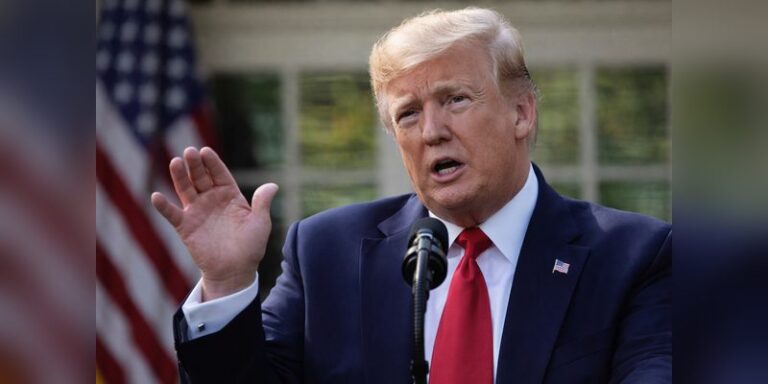
The presidency of Donald Trump has often been analysed less through conventional ideology than through style, tone and method. His approach has been characterised by confrontation, personalisation and a preference for direct public messaging. Research on political communication has shown that Trump frequently bypassed traditional media filters through rallies, interviews and social media, allowing him to speak in a highly personalised and emotionally charged manner (Kreis, 2017; Perloff, 2021).
In policy terms, Trump became associated with immigration restriction, tariff-based trade policy, deregulation, conservative judicial appointments and an “America First” approach to foreign affairs (Britannica, 2026; Lacatus, 2021). His supporters have often praised this as decisive nationalism and institutional disruption. Critics have viewed it as a challenge to democratic norms and long-standing international commitments. What is clear is that Donald Trump transformed expectations of presidential communication by making conflict itself a central instrument of leadership.
5.0 Donald Trump, Populism and the Media
A large academic literature describes Donald Trump as a major case study in populist communication. Populism, in this context, refers to a style that frames politics as a struggle between “the people” and corrupt elites, often using plain, combative and emotionally resonant language (Block and Negrine, 2017; Sengul, 2019). Trump’s speeches, slogans and online presence have repeatedly drawn on this logic.
Studies of Trump’s rhetoric and digital communication suggest that his messages often simplify complex issues into dramatic moral contrasts, heighten crisis narratives and personalise political conflict (Homolar and Scholz, 2019; Kreis, 2017). This style has helped explain why Donald Trump has been both highly effective as a mobiliser and highly divisive as a public figure. It has also made him an important subject for scholars studying the changing relationship between democracy, media and political identity.
6.0 Donald Trump, Controversy and Institutional Conflict
No serious account of Donald Trump can avoid controversy. His career has involved repeated legal, ethical and political disputes in both business and public office. Britannica notes that he became the only former US president convicted in a criminal case and that his wider public record includes two impeachments and sustained institutional conflict (Britannica, 2026). These developments have made his career historically distinctive even by the often turbulent standards of American politics.
At the same time, scholarly work suggests that controversy has not always weakened Trump politically. In some cases, it has reinforced his anti-establishment appeal by allowing supporters to interpret criticism as proof that entrenched institutions are hostile to outsider leadership (Lockhart, 2018; Gutsche, 2018). This helps explain the paradox of Donald Trump: events that might have ended other political careers have often been absorbed into his broader narrative of conflict, grievance and resilience.
7.0 Donald Trump and Historical Significance
The long-term significance of Donald Trump lies in more than election results. His influence has altered debates about truth, political civility, executive power, party identity and the role of media in democratic life. Scholars have linked Trump’s rise to broader developments such as polarisation, distrust of institutions and the changing economics of attention in digital communication (Boczkowski and Papacharissi, 2018; Perloff, 2021).
Historically, Donald Trump may be remembered as a figure who merged celebrity branding, populist rhetoric and presidential power in an especially visible form. Whether assessed positively or negatively, his impact on American and global politics is unlikely to be seen as ordinary. He has altered both the content of political debate and the style through which that debate is conducted.
∎ Donald Trump remains one of the defining political figures of the early twenty-first century. His journey from property developer and television personality to the 45th and 47th president of the United States illustrates the growing power of celebrity, branding and direct communication in modern politics. It also shows how political influence now depends as much on media performance and narrative control as on conventional party structures.
An objective assessment suggests that Donald Trump has had a lasting effect on presidential communication, Republican politics and the wider democratic culture of the United States. His legacy will continue to be debated, but its scale is already clear: few modern leaders have so thoroughly reshaped how politics is spoken, staged and understood.
References
Block, E. and Negrine, R. (2017) ‘The populist communication style: Toward a critical framework’, International Journal of Communication, 11, pp. 178–197. Available at: https://ijoc.org/index.php/ijoc/article/view/5820.
Boczkowski, P.J. and Papacharissi, Z. (2018) Trump and the Media. Cambridge, MA: MIT Press.
Britannica (2026) Donald Trump. Available at: https://www.britannica.com/biography/Donald-Trump (Accessed: 13 April 2026).
Gutsche, R.E. (2018) The Trump Presidency, Journalism, and Democracy. New York: Routledge.
Homolar, A. and Scholz, R. (2019) ‘The power of Trump-speak: Populist crisis narratives and ontological security’, Cambridge Review of International Affairs, 32(3), pp. 344–364. Available at: https://www.tandfonline.com/doi/abs/10.1080/09557571.2019.1575796.
Kellner, D. (2017) ‘Donald Trump, media spectacle, and authoritarian populism’, Fast Capitalism, 14(1). Available at: https://fastcapitalism.journal.library.uta.edu/index.php/fastcapitalism/article/view/355/407.
Kreis, R. (2017) ‘The “tweet politics” of President Trump’, Journal of Language and Politics, 16(4), pp. 607–618.
Lacatus, C. (2021) ‘Populism and President Trump’s approach to foreign policy: An analysis of tweets and rally speeches’, Politics, 41(1), pp. 31–47. Available at: https://journals.sagepub.com/doi/abs/10.1177/0263395720935380.
Lockhart, M. (2018) President Donald Trump and His Political Discourse. New York: Routledge.
Miller Center (2025) Donald Trump: Life in Brief. Available at: https://millercenter.org/president/trump (Accessed: 13 April 2026).
Perloff, R.M. (2021) The Dynamics of Political Communication: Media and Politics in a Digital Age. 3rd edn. New York: Routledge.
Pluta, A.C. (2023) Persuading the Public: The Evolution of Popular Presidential Communication from Washington to Trump. New York: Routledge.