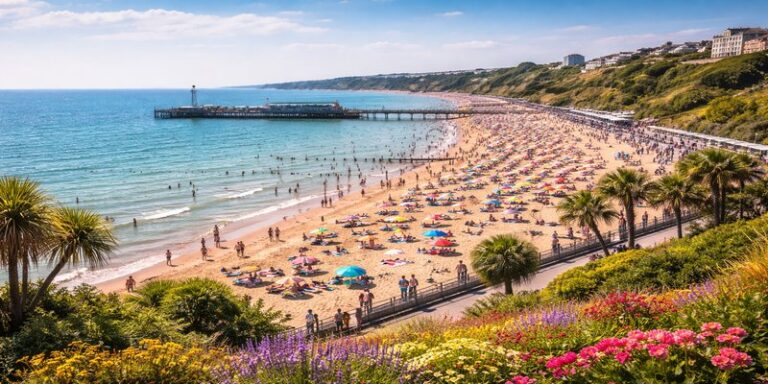
There is something undeniably uplifting about stepping onto warm sand, hearing the rhythmic hush of waves and breathing in the crisp sea air. On England’s south coast, Bournemouth captures this timeless seaside magic while offering the comfort and vibrancy of a modern resort. With its seven miles of golden sandy beaches, elegant Victorian gardens and iconic pier, Bournemouth blends nostalgia with innovation. It is a destination where families build sandcastles beside surfers riding Atlantic swells, where retirees stroll palm-lined promenades, and where international students gather for summer sunsets.
In an era when domestic travel has regained popularity, Bournemouth stands as one of Britain’s most accessible and appealing coastal escapes (VisitBritain, 2023). Its continued success illustrates how traditional seaside resorts can evolve to meet changing visitor expectations while retaining their essential charm.
1.0 Brief Background and History
Unlike older fishing villages that gradually transformed into resorts, Bournemouth was purposefully developed as a leisure destination in the early nineteenth century. Originally heathland, the area was promoted for its health-giving sea air and mild climate, attracting Victorian visitors seeking convalescence and relaxation. The arrival of the railway in 1870 accelerated its growth, enabling middle-class travellers from London and the Midlands to reach the coast with ease (Walton, 2000).
Throughout the twentieth century, Bournemouth cultivated a reputation for refinement, distinguishing itself from more boisterous resorts such as Blackpool. Grand hotels, landscaped gardens and cultural events reinforced its identity as a genteel yet lively seaside town. Today, while it embraces contemporary entertainment and water sports, it continues to reflect this heritage of thoughtful design and hospitality.
2.0 Accommodation: Comfort for Every Traveller
Bournemouth offers a diverse range of accommodation, catering to families, couples, students and conference visitors. Along the West Cliff and East Cliff, elegant hotels overlook the bay, many with spa facilities and sea-view terraces. Boutique guesthouses and family-run bed-and-breakfasts provide personalised charm within walking distance of the promenade.
Self-catering apartments and holiday parks remain popular among families seeking flexibility. According to Cooper et al. (2018), accommodation diversity strengthens destination resilience by attracting varied market segments. Bournemouth exemplifies this principle, offering options from luxury suites to budget-friendly hostels.
Sustainability is also gaining prominence. Several hotels have adopted energy-efficient practices and local sourcing policies, reflecting growing consumer awareness of environmental responsibility (Hall and Page, 2014).
3.0 Food and Drink: Seaside Classics and Culinary Creativity
No British seaside experience feels complete without fish and chips enjoyed by the shore. In Bournemouth, traditional seafood kiosks sit comfortably alongside contemporary bistros and international cuisine. Restaurants around Bournemouth Pier and the town centre serve fresh Dorset crab, locally caught mackerel and artisan pizzas.
The rise of gastronomic tourism has influenced even classic resorts. Ellis et al. (2018) observe that visitors increasingly seek authentic local flavours as part of their travel experience. Bournemouth responds with farmers’ markets, beachfront cafés and independent coffee shops that celebrate regional produce.
Evenings bring a lively atmosphere, with waterfront bars and theatres offering entertainment for all ages. Whether it is a relaxed family dinner or a sunset cocktail overlooking the sea, Bournemouth’s culinary scene enhances its appeal.
4.0 Things to Do: From Sandcastles to Surfboards
At the heart of Bournemouth lies its greatest asset: the beach. The soft sand and gently shelving shoreline create safe conditions for swimming and paddling. Seasonal lifeguards reinforce the resort’s reputation for safety, a key factor in family travel decisions (Morgan and Pritchard, 1999).
The iconic Bournemouth Pier offers amusements, zip-lining adventures and panoramic coastal views. Nearby, the Oceanarium provides educational entertainment, particularly popular with children.
For active visitors, water sports abound. Paddleboarding, kayaking and surfing reflect a broader growth in adventure and experiential tourism (Jennings, 2004). Inland, the Victorian Lower Gardens host seasonal festivals and open-air concerts, blending nature with culture.
Cycling routes, coastal walks and boat excursions to nearby Poole Harbour expand recreational possibilities. This diversity ensures that Bournemouth appeals not only to traditional sun-seekers but also to those seeking activity and exploration.
5.0 When to Visit: Seasons by the Sea
Bournemouth thrives during the summer months of June to August, when warm temperatures and long daylight hours fill the beaches with vibrant energy. The annual Bournemouth Air Festival, typically held in late summer, attracts thousands with spectacular aerial displays.
However, spring and early autumn offer quieter charm. The milder climate allows for scenic walks and relaxed dining without peak-season crowds. Butler’s (1980) Tourism Area Life Cycle model suggests that destinations sustaining year-round appeal enhance long-term viability. Bournemouth achieves this through festivals, conferences and cultural programming beyond summer.
Even winter has its appeal, as bracing sea breezes and peaceful promenades provide restorative escapes from urban bustle.
6.0 Sample Three-Day Itinerary
Day One – Classic Seaside Experience
Morning: Relax on Bournemouth Beach and explore the pier.
Afternoon: Visit the Oceanarium and enjoy fish and chips by the sea.
Evening: Stroll through the Lower Gardens before dining at a waterfront restaurant.
Day Two – Active Adventure
Morning: Take a surfing or paddleboarding lesson.
Afternoon: Cycle along the promenade towards Boscombe.
Evening: Attend a show at the Pavilion Theatre.
Day Three – Coastal Exploration
Morning: Boat trip to Poole Harbour or Sandbanks.
Afternoon: Coffee and shopping in the town centre.
Evening: Sunset walk along the cliffs.
This itinerary balances relaxation, culture and activity — a hallmark of Bournemouth’s enduring versatility.
7.0 Travel Tips
- Getting There: Direct trains from London Waterloo take under two hours.
- Parking: Consider park-and-ride options during peak season.
- Weather: Even in summer, pack a light jacket for cooler evenings.
- Sustainability: Respect dune systems and follow local recycling guidance.
Planning ahead ensures a smoother and more enjoyable stay, particularly during school holidays.
8.0 Why Bournemouth Is Worth Visiting
Bournemouth endures because it understands the evolving needs of seaside travellers. Its wide sandy beaches, environmental standards and landscaped gardens provide the foundation for memorable family holidays. Yet it also embraces innovation, from water sports to cultural festivals, ensuring relevance in a competitive tourism market.
As Walton (2000) observes, the British seaside carries powerful cultural resonance. Bournemouth captures this sentiment while adapting to contemporary expectations of sustainability, diversity and experience-led travel. Whether building sandcastles, sampling local seafood or watching aircraft sweep across a summer sky, visitors discover that Bournemouth offers more than a beach — it offers a welcoming coastal community shaped by history and hospitality.
For those seeking a quintessential British seaside escape with modern comforts and enduring appeal, Bournemouth remains a destination well worth visiting.
References
Butler, R.W. (1980) ‘The concept of a tourist area cycle of evolution’, Canadian Geographer, 24(1), pp. 5–12.
Cooper, C., Fletcher, J., Fyall, A., Gilbert, D. and Wanhill, S. (2018) Tourism: Principles and Practice. 6th edn. Harlow: Pearson.
Ellis, A., Park, E., Kim, S. and Yeoman, I. (2018) ‘What is food tourism?’, Tourism Management, 68, pp. 250–263.
Hall, C.M. and Page, S.J. (2014) The Geography of Tourism and Recreation. 4th edn. London: Routledge.
Jennings, G. (2004) Adventure Tourism. Oxford: Elsevier Butterworth-Heinemann.
Morgan, N. and Pritchard, A. (1999) Tourism Promotion and Power. Chichester: Wiley.
VisitBritain (2023) Domestic Tourism Trends Report. Available at: https://www.visitbritain.org.
Walton, J.K. (2000) The British Seaside: Holidays and Resorts in the Twentieth Century. Manchester: Manchester University Press.