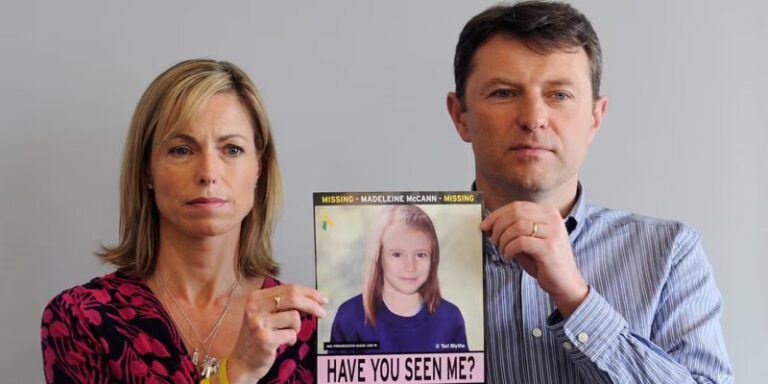
The disappearance of Madeline McCann in May 2007 remains one of the most widely discussed missing-child cases in recent history. The case shocked families across Britain and beyond because it happened during what should have been a normal family holiday. A young child vanished from holiday accommodation in Praia da Luz, Portugal, and the story quickly became a global news event. Since then, the Madeline McCann case has shaped public debate about child safety, parental supervision, holiday security and the risks that can arise in unfamiliar settings.
Although stranger child abduction is statistically uncommon, cases involving very young children create intense public concern because of their seriousness and emotional impact (O’Brien, 2008). For parents, the real lesson is not to live in fear, but to understand risk in a balanced and practical way. Holidays often encourage relaxation, yet unfamiliar surroundings, shared accommodation, open-access resorts and disrupted routines can increase vulnerability.
This article explores what parents can learn from Madeline McCann, with a focus on supervision, accommodation safety, communication, child awareness and the sensible use of technology. Rather than revisiting speculation, it uses the case as a wider reminder that child protection requires planning, vigilance and clear responsibility.
1.0 The Madeline McCann Case and Why It Still Matters
1.1 What Happened?
Madeline McCann disappeared on 3 May 2007 from her family’s holiday apartment while her parents were dining nearby with friends and checking on the children periodically (McCann, 2011). The case rapidly became one of Europe’s largest missing-child investigations and generated sustained international media attention.
What made the case especially significant was the setting. It did not happen in an obviously high-risk environment, but in a holiday resort many families might have considered safe enough for a short evening meal nearby. That perceived normality is one reason the case still resonates. It forced parents to think more seriously about how quickly danger, confusion or opportunity can emerge in a temporary holiday environment.
1.2 Why Did the Case Have Such a Global Impact?
The Madeline McCann case influenced public attitudes because it combined several powerful themes: a very young child, an overseas holiday, intense media coverage and the uncertainty of an unresolved disappearance. Research suggests that highly publicised child cases often shape public perceptions of risk far more strongly than statistics alone (Cotterill, 2011; O’Malley, 2015). In other words, people do not only respond to data; they respond to stories.
For parents, the lasting impact of Madeline McCann has been a sharper awareness that child safety abroad cannot be left to assumption. A family resort, apartment block or hotel complex may feel secure, but parents still need to assess the environment carefully.
2.0 Understanding Child Abduction Risk
2.1 Types of Child Abduction
Child abduction is not a single phenomenon. Researchers generally distinguish between family abduction, acquaintance abduction and stranger abduction (Feigh, 2021). Stranger abductions are the rarest, but they attract the greatest attention because they are frightening, unpredictable and often harder to resolve.
This distinction matters because parents may focus on rare scenarios while overlooking more common risks such as children wandering off, becoming separated in crowds or being approached by known individuals. The lesson from Madeline McCann is broader than abduction alone: it is about reducing opportunities for harm.
2.2 Why Holidays Can Increase Vulnerability
Family holidays can create conditions that weaken everyday safety habits. Parents are often tired, distracted or more relaxed than usual. Accommodation may be unfamiliar. Doors and windows may not be as secure as they appear. Public areas such as pools, restaurants and play zones increase movement and visibility.
Tourism research also suggests that unfamiliar environments change behaviour and judgement (Niininen, 2021). Families may assume that a resort structure, reception desk or gated area automatically guarantees safety. In reality, temporary accommodation often involves shared access, multiple entry points and reduced control over who is nearby.
For example, a ground-floor holiday apartment with an unlocked patio door may be convenient for parents moving in and out, but it also creates easy access. Likewise, a routine evening meal at the same time each night may allow others to observe patterns.
3.0 Lessons Parents Can Learn from Madeline McCann
3.1 Continuous Supervision Matters
The clearest lesson from Madeline McCann is the importance of constant supervision of young children, especially in unfamiliar environments. Young children cannot judge danger, recognise suspicious behaviour consistently or respond effectively in emergencies.
Even short gaps in supervision can matter. A parent may believe they are only a minute away, but that minute may be enough for a child to wake, leave a room, become distressed or go missing. Child protection literature consistently emphasises that leaving young children unattended increases exposure to both accidental and intentional harm (O’Brien, 2008).
A practical example is dining arrangements on holiday. Rather than leaving children sleeping in a room or apartment while adults eat nearby, safer alternatives include room service, takeaway meals, babysitting services vetted by the accommodation provider, or adults taking turns to stay with the children.
3.2 Check Accommodation Security Carefully
Another key lesson from Madeline McCann is that parents should assess accommodation in the same way they might assess home safety. Important points include door locks, window access, balconies, shared corridors, lighting, CCTV, and how easily a stranger could approach the room or flat.
Criminological research often highlights the role of opportunity in offending behaviour (Mohamed, 2011). That means simple precautions can reduce risk significantly. Parents should lock doors and windows, avoid leaving access points open for convenience and request a room change if the layout feels exposed.
For instance, a family with toddlers may prefer a room closer to reception or on an upper floor with secure internal access rather than a secluded ground-floor apartment opening onto a public walkway.
3.3 Avoid Highly Predictable Routines
Routine provides comfort, but predictable patterns can also make families easier to observe. Going to the same restaurant at the same hour every evening, taking the same path through a resort, or allowing children to play in the same place without close oversight can create unnecessary visibility.
The lesson here is not paranoia, but awareness. Parents can vary timing, change routes and avoid making family routines too easy to anticipate. In shared holiday spaces, that small adjustment may reduce exposure.
3.4 Teach Children Simple Safety Habits
The Madeline McCann case also highlights the need for age-appropriate safety education. Even very young children can learn basic rules such as staying close, not wandering away, and seeking help from trusted adults like uniformed staff or police officers. Safety education literature shows that children benefit from repeated, simple messages delivered calmly and consistently (Legare, 2016).
Examples include teaching children:
- to know their full name where possible;
- to identify a safe adult;
- to stay in one place if separated in a public area;
- not to go anywhere with someone they do not know.
These lessons should be taught without frightening children. The aim is confidence and clarity, not anxiety.
3.5 Use Technology as Support, Not a Substitute
Modern families have more tools available than in 2007. GPS-enabled watches, identification bands, phone tracking and shared family location apps can all support safety planning. In crowded places such as airports, beaches or theme parks, these tools can be helpful.
However, technology should never replace active supervision. A tracker is useful only after a problem has occurred. The stronger approach is to combine technology with attentive parenting, good planning and clear communication.
3.6 Make Adult Responsibility Explicit
When families travel in groups, one common weakness is assumed supervision. Everyone believes someone else is watching the children. Research on child safety incidents shows that confusion over responsibility can create dangerous gaps (Feigh, 2021).
A better approach is to make supervision explicit. One adult should be clearly responsible at any given moment. This is especially important near pools, beaches, hotel entertainment areas and apartments where children may be asleep.
4.0 Wider Lessons Beyond the Family
4.1 Better International Cooperation
The legacy of Madeline McCann also extends beyond parenting. The case contributed to debate about international policing, missing-child alerts and cooperation across borders (Thomas, 2013). Missing-child cases involving travel or overseas locations require rapid information sharing between local police, border agencies and child protection organisations.
4.2 Media, Awareness and Public Understanding
Media coverage can be both helpful and harmful. It can raise awareness of missing children and encourage vigilance, but it can also intensify speculation and public judgement (Cotterill, 2011). For parents, the most useful response is to focus on evidence-based safety habits rather than sensational fear.
The disappearance of Madeline McCann remains one of the most painful and widely recognised missing-child cases of the modern era. Its lasting importance lies not only in the unresolved mystery, but in the practical lessons it offers parents. The case shows that young children need continuous supervision, especially on holiday, where unfamiliar surroundings can create hidden risks. It also underlines the importance of secure accommodation, clear adult communication, basic child safety education, less predictable routines and the careful use of technology.
The central lesson from Madeline McCann is simple but powerful: safety should never be assumed just because a place feels comfortable or family-friendly. Holidays are meant to be enjoyable, yet enjoyment should be supported by planning and vigilance. By applying these lessons thoughtfully, parents can reduce risk and create safer travel experiences for children.
References
Cotterill, J. (2011) ‘Mugshots and motherhood: The media semiotics of vilification in child abduction cases’, International Journal for the Semiotics of Law, 24(3), pp. 303–325. Available at: https://link.springer.com/article/10.1007/s11196-010-9199-0.
Feigh, A. (2021) ‘Missing and exploited youth’, in Geffner, R., White, J.W., Hamberger, L.K., Rosenbaum, A., Vaughan-Eden, V. and Vieth, V.I. (eds.) Handbook of Interpersonal Violence and Abuse Across the Lifespan. Cham: Springer. Available at: https://link.springer.com/content/pdf/10.1007/978-3-319-89999-2_24.pdf.
Goode, S. (2011) Paedophiles in Society: Reflecting on Sexuality, Abuse and Hope. London: Routledge.
Legare, M.J. (2016) When Things Seem Odd: Polly and the Internal Guardian. New York: Palgrave Macmillan.
McCann, K. (2011) Madeleine: Our Daughter’s Disappearance and the Continuing Search for Her. London: Transworld Publishers.
Mohamed, M.K.N. (2011) Understanding Career Criminal Kidnapping: A Study of Offending Dynamics. Nottingham: Nottingham Trent University. Available at: https://irep.ntu.ac.uk/id/eprint/250/.
Niininen, M. (2021) The Effect of Serious Criminal Offences on International Tourism. Theseus. Available at: https://www.theseus.fi/handle/10024/509938.
O’Brien, S. (2008) Child Abduction and Kidnapping. New York: Chelsea House.
O’Malley, S. (2015) Cotton Wool Kids: What’s Making Irish Parents Paranoid? Dublin: Gill Books.
Thomas, T. (2013) ‘Monitoring movements across international borders’, in Harrison, K. and Rainey, B. (eds.) The Wiley-Blackwell Handbook of Legal and Ethical Aspects of Sex Offender Treatment and Management. Chichester: Wiley-Blackwell.
NSPCC (no date) Keeping children safe on holiday. Available at: https://www.nspcc.org.uk/keeping-children-safe/ (Accessed: 24 March 2026).
Missing People (no date) Children reported missing. Available at: https://www.missingpeople.org.uk/ (Accessed: 24 March 2026).