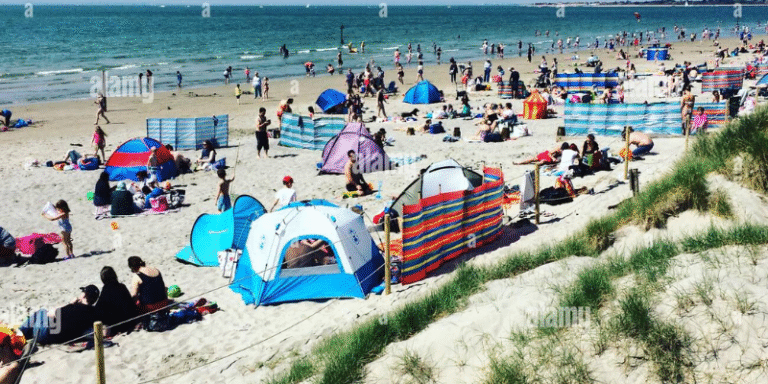
There is something quietly restorative about West Wittering Beach. As you crest the final dune and the horizon opens into an expanse of shimmering sea and golden sand, the everyday noise of life seems to dissolve. Gulls wheel overhead, windsurfers skim across the water, and families settle into the soft dunes with picnic blankets and sun hats. Tucked along the southern coast of England in West Sussex, West Wittering Beach is more than a picturesque stretch of shoreline — it is a destination where natural beauty, outdoor adventure and eco-conscious tourism meet in perfect balance.
Unlike many crowded coastal resorts, West Wittering feels open, unspoilt and refreshingly managed. It offers both the tranquillity sought by nature lovers and the excitement desired by watersports enthusiasts, making it one of Britain’s most rewarding seaside escapes.
1.0 Brief Background and History
West Wittering’s story stretches back thousands of years. Archaeological evidence indicates human activity from the Palaeolithic era through Roman Britain and the Anglo-Saxon period, reflecting the long-standing appeal of this coastal landscape (West Wittering Parish Council, n.d.). The village name, derived from “Wihttringes”, hints at early Saxon settlement.
Modern tourism, however, has been shaped by a remarkable legacy of community-led conservation. In 1952, concerned residents formed the West Wittering Preservation Trust to prevent overdevelopment and protect the natural coastline. This initiative evolved into West Wittering Estate Ltd., which continues to manage the beach responsibly (West Wittering Estate, n.d.-a).
Such stewardship aligns with principles of sustainable destination management highlighted by Hall and Page (2014), demonstrating how community engagement can safeguard environmental assets while supporting tourism.
2.0 Accommodation: Relaxed Coastal Living
Although West Wittering itself retains a quiet, residential character, nearby accommodation options cater to a range of preferences. Visitors can choose from charming bed-and-breakfasts, boutique guesthouses and self-catering cottages in the village or neighbouring East Wittering. Many properties embrace coastal aesthetics, featuring airy interiors and sea-inspired décor.
For families and longer stays, holiday cottages and caravan parks provide practical comfort. Chichester and surrounding rural villages also offer country inns and hotels, combining seaside access with countryside charm.
According to Cooper et al. (2018), accommodation diversity enhances a destination’s appeal to varied market segments. West Wittering’s understated yet comfortable options reflect its ethos of low-impact, quality-focused tourism rather than mass resort development.
3.0 Food and Drink: Fresh, Local and Relaxed
West Wittering’s food scene mirrors its coastal simplicity. The Beach Café, located near the car park, offers light meals, hot drinks and classic seaside refreshments. Visitors can enjoy fish and chips or ice cream while overlooking the dunes.
For a broader culinary experience, nearby East Wittering village boasts independent cafés, traditional pubs and seafood restaurants. Many establishments prioritise locally sourced produce, reflecting the growing significance of regional food identity in tourism experiences (Ellis et al., 2018).
Farm shops and delis in West Sussex supply fresh ingredients for self-catering guests, encouraging sustainable consumption and support for the local economy.
4.0 Things to Do: Nature, Water and Open Space
Golden Sands and Blue Flag Quality
West Wittering Beach is celebrated for its expansive sandy shoreline — a rarity along parts of England’s south coast. The beach has consistently earned Blue Flag status, recognising its cleanliness, safety and environmental management (West Wittering Estate, 2024). Shallow waters and wide tidal flats create safe conditions for paddling and family play.
Watersports Wonderland
Thanks to favourable winds and tidal conditions, West Wittering is a haven for windsurfing, kite surfing and paddleboarding. The nearby 2XS Watersports Centre provides equipment hire and lessons for beginners and experienced enthusiasts alike (Experience Sussex, n.d.). Jennings (2004) notes that adventure tourism continues to grow as travellers seek active, participatory experiences — a trend clearly reflected here.
East Head and Coastal Walking
One of the area’s most striking features is East Head, a sand and shingle spit within the Chichester Harbour Area of Outstanding Natural Beauty (AONB). Managed carefully to protect fragile habitats, East Head offers panoramic views and peaceful walking trails (West Wittering Estate, n.d.-b).
Beyond the dunes, visitors can explore the New Lipchis Way, a scenic walking and cycling route linking the coast to the South Downs (Wikipedia, n.d.). Wildlife-rich marshes and open skies create an immersive experience in coastal ecology.
5.0 When to Visit
Summer (June to August) is peak season, when sunshine transforms the dunes into golden waves of grass and families gather for day trips. However, spring and early autumn offer milder weather and quieter shores, ideal for walking and birdwatching.
Winter reveals a more dramatic character, with bracing winds and expansive skies providing a sense of solitude. Butler’s (1980) Tourism Area Life Cycle suggests destinations that diversify seasonal appeal are more resilient. West Wittering’s natural beauty ensures year-round attraction.
6.0 Sample Two-Day Itinerary
Day One – Beach and Watersports
Morning: Arrive early and settle on the sands.
Afternoon: Windsurfing or paddleboarding session.
Evening: Sunset walk along East Head followed by dinner in East Wittering.
Day Two – Nature and Exploration
Morning: Explore Chichester Harbour and observe birdlife.
Afternoon: Cycle part of the New Lipchis Way.
Evening: Picnic on the dunes and stargazing if skies are clear.
This itinerary blends relaxation, adventure and environmental appreciation, capturing the essence of West Wittering.
7.0 Travel Tips
- Arrive Early: Car park spaces are regulated and fill quickly in summer.
- Check Tide Times: Essential for exploring East Head safely.
- Dress for the Breeze: Even warm days can feel windy.
- Respect Wildlife: Follow signage to protect nesting birds and dune habitats.
- Public Transport: Trains to Chichester followed by bus connections reduce environmental impact.
8.0 Why West Wittering Is Worth Visiting
West Wittering Beach stands apart because it harmonises leisure with environmental responsibility. Its golden sands and sparkling waters invite relaxation, while its dunes and marshlands remind visitors of nature’s delicate balance.
Supported by community stewardship and sustainable management, West Wittering exemplifies the principles of responsible tourism described by Hall and Page (2014). It proves that seaside holidays need not compromise ecological integrity.
Whether you seek sunlit sands, exhilarating watersports or contemplative coastal walks, West Wittering offers an experience that feels both invigorating and restorative. It is, quite simply, one of England’s finest coastal escapes — a place where sky, sea and sustainability meet.
References
Butler, R.W. (1980) ‘The concept of a tourist area cycle of evolution’, Canadian Geographer, 24(1), pp. 5–12.
Chichester Harbour Conservancy (n.d.) Coastal Management – East Head. Available at: https://www.conservancy.co.uk.
Cooper, C., Fletcher, J., Fyall, A., Gilbert, D. and Wanhill, S. (2018) Tourism: Principles and Practice. 6th edn. Harlow: Pearson.
Ellis, A., Park, E., Kim, S. and Yeoman, I. (2018) ‘What is food tourism?’, Tourism Management, 68, pp. 250–263.
Experience Sussex (n.d.) West Wittering Beach. Available at: https://www.experiencesussex.com.
Hall, C.M. and Page, S.J. (2014) The Geography of Tourism and Recreation. 4th edn. London: Routledge.
Jennings, G. (2004) Adventure Tourism. Oxford: Elsevier Butterworth-Heinemann.
West Wittering Estate (n.d.-a) History of West Wittering Estate. Available at: https://www.westwitteringestate.co.uk.
West Wittering Estate (n.d.-b) East Head and Conservation at West Wittering. Available at: https://www.westwitteringestate.co.uk.
West Wittering Estate (2024) The Blue Flag & Seaside Awards 2024. Available at: https://www.westwitteringestate.co.uk.
West Wittering Parish Council (n.d.) Archaeology and History. Available at: https://www.westwitteringparishcouncil.gov.uk.
Wikipedia (n.d.) New Lipchis Way. Available at: https://en.wikipedia.org/wiki/New_Lipchis_Way.