The moment you step off the ferry and breathe in the salt-tinged air, the Isle of Wight feels different. There is a softness to the light, a slower rhythm to the days, and a sense that the mainland has drifted reassuringly far away. Just a short crossing from England’s south coast, this island blends golden beaches, dramatic chalk cliffs, nostalgic seaside towns, and rolling countryside into one compact yet richly varied destination.
In 2025, it was named the UK’s most budget-friendly family holiday destination, offering excellent value alongside classic coastal charm (Hoseasons via The Scottish Sun, 2025). Yet affordability is only part of its appeal. The Isle of Wight offers something increasingly rare in modern travel: a place where you can roam freely between beach, woodland and heritage site in a single afternoon — and still have time for fish and chips at sunset.
1.0 Brief Background and History
The Isle of Wight’s story stretches back thousands of years. Fossilised dinosaur footprints at Compton Bay reveal a prehistoric past (Rough Guides, n.d.; Condé Nast Traveller, 2020). Later, the Romans settled here, followed by Saxon and Norman influences that shaped its villages and religious sites.
The island rose to prominence during the Victorian era, when Queen Victoria built Osborne House as her seaside retreat. Its Italianate terraces and sweeping views cemented the Isle of Wight’s reputation as a fashionable escape (Visit Isle of Wight, n.d.). The 19th century also saw the expansion of railways and piers, establishing traditions of seaside holidays that continue today.
In tourism studies, destinations that combine heritage, landscape and accessibility tend to show long-term resilience (Cooper et al., 2018; Holloway and Humphreys, 2019). The Isle of Wight exemplifies this blend, balancing nostalgia with modern visitor expectations.
2.0 Accommodation: From Seafront Hotels to Cosy Retreats
Accommodation on the Isle of Wight reflects its broad appeal. Families often opt for holiday parks and self-catering lodges, with average stays around £646 — competitive compared with other southern coastal regions (Hoseasons via The Scottish Sun, 2025).
Seaside towns such as Shanklin, Sandown and Ryde offer traditional guesthouses and boutique hotels along promenades. For a more tranquil stay, converted barns and countryside cottages provide peaceful rural escapes. In Cowes and Yarmouth, chic inns and marina-side apartments attract sailing enthusiasts and couples seeking refinement.
Spring and autumn stays often offer particularly strong value (Isle of Wight Guru, n.d.), reinforcing the island’s reputation as an accessible destination across income groups — a key feature of sustainable domestic tourism (Holloway and Humphreys, 2019).
3.0 Food and Drink: A Rising Culinary Star
Once modest in culinary reputation, the island has quietly evolved into a serious food destination. According to the Financial Times (2025), restaurants such as The Terrace in Yarmouth and Smoking Lobster in Ventnor showcase elevated seafood dishes with global influences.
Seafront pubs serve traditional favourites — crab sandwiches, battered cod and local ales — while farm shops and markets celebrate island produce. Artisanal gin distilleries and microbreweries reflect the broader UK trend towards craft beverages and experiential dining (Financial Times, 2025).
The average family meal costs around £42 (Hoseasons via The Scottish Sun, 2025), keeping dining experiences accessible. Culinary tourism research highlights how regional food enhances destination identity and visitor satisfaction (Cooper et al., 2018). On the Isle of Wight, that identity is increasingly delicious.
4.0 Things to Do: Beaches, Nature and Heritage
The Isle of Wight boasts around 25 distinct beaches, each with its own personality (Go Outdoors via The Sun, 2024).
- Seaview Beach and Seagrove Bay: Peaceful and nostalgic, recently trending among travellers (Tripadvisor via The Sun, 2025).
- Shanklin Beach: Wide sands and classic promenade charm, located in one of the UK’s sunniest areas (Independent via The Sun, 2024).
- Yaverland Beach: Ideal for fossil enthusiasts and close to Dinosaur Isle museum (Condé Nast Traveller, 2020).
- Colwell Bay and Steephill Cove: Dramatic cliffs and hidden coves offering postcard views.
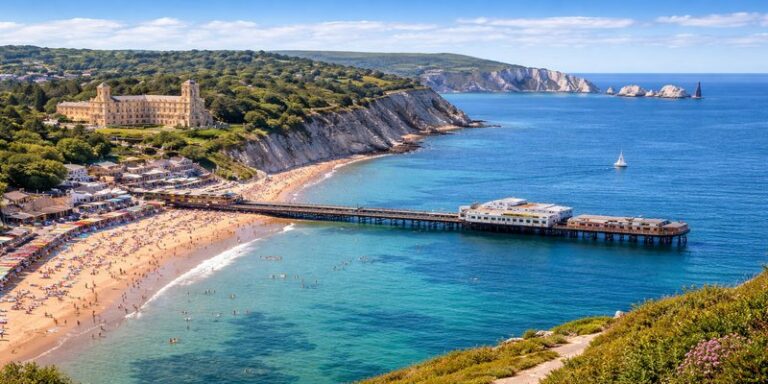
No visit is complete without seeing The Needles, the island’s most iconic natural landmark — towering white chalk stacks rising from the sea at the island’s western tip. Equally evocative is Sandown Pier, a classic Victorian-style promenade offering amusements, sea views and traditional seaside nostalgia.
Beyond the shoreline, the island features over 500 miles of walking paths and bridleways (Visit Isle of Wight, n.d.). The Tennyson Trail delivers sweeping coastal panoramas, while Newtown Nature Reserve protects medieval field patterns and habitats for red squirrels and migratory birds (Rough Guides, n.d.).
Families can enjoy Blackgang Chine, the UK’s oldest theme park (The Sun, 2024), or visit the Isle of Wight Donkey Sanctuary, home to over 100 rescued animals. Meanwhile, the Island Line Railway, reopened in 2025, offers a charming coastal journey from Ryde to Shanklin (The Sun, 2025).
5.0 Sample Itinerary: A Week of Coastal Discovery
Day 1 – Seaside Welcome
Relax at Seaview Beach. Explore Shanklin’s promenade and enjoy dinner overlooking the sea.
Day 2 – Fossils and History
Take a guided fossil walk at Compton Bay. Visit Dinosaur Isle and explore Bembridge.
Day 3 – Classic Seaside Fun
Spend the morning at Sandown Pier, enjoying traditional amusements and panoramic sea views. In the afternoon, relax along Shanklin Beach before a sunset stroll along the esplanade.
Day 4 – Natural Wonders
Head west to visit The Needles. Walk along the clifftops, admire the chalk stacks, and take in sweeping views across the Solent. Continue with part of the Tennyson Trail for dramatic coastal scenery.
Day 5 – Nature and Wildlife
Picnic at Newtown Nature Reserve and watch for red squirrels and coastal birds. Later, visit the Isle of Wight Donkey Sanctuary.
Day 6 – Heritage and Gardens
Tour Osborne House. Visit Ventnor Botanic Gardens and dine in Ventnor. Stop at Quarr Abbey for peaceful reflection.
Day 7 – Coastal Towns and Farewell
Stroll along Ryde Pier and ride the Island Line. Explore Cowes or Gurnard before a final swim at Colwell Bay or Steephill Cove.
6.0 When to Visit
The Isle of Wight is frequently cited as one of the sunniest locations in the UK (Independent via The Sun, 2024).
- Summer (July–August): Warmest weather, festivals such as the Isle of Wight Festival, livelier atmosphere — but higher prices.
- Spring and Autumn: Mild conditions, fewer crowds, better accommodation rates (Isle of Wight Guru, n.d.).
- Winter: Ideal for walkers seeking dramatic coastal scenery and peaceful retreats.
Visitor statistics show resilience despite national tourism fluctuations, with short-stay numbers rising by 1.4% in early 2025 (OnTheWight, 2025).
7.0 Travel Tips
- Book ferry crossings early during peak summer.
- Consider visiting in shoulder seasons for better value.
- Bring sturdy footwear for cliff and countryside walks.
- Check tide times if planning fossil hunts.
- Use public transport, cycling routes or walking trails to reduce environmental impact — supporting sustainable tourism principles (Cooper et al., 2018).
8.0 Why the Isle of Wight Is Worth Visiting
The Isle of Wight offers a rare balance of affordability, accessibility and authenticity. It combines the nostalgic pleasures of bucket-and-spade holidays — epitomised by Sandown Pier — with extraordinary natural drama at The Needles, alongside emerging gastronomy and rich heritage.
From dinosaur footprints pressed into ancient rock to sunset views over chalk cliffs, the island tells stories at every turn. In tourism theory, successful destinations integrate natural assets, cultural heritage and visitor infrastructure (Holloway and Humphreys, 2019). The Isle of Wight does exactly that — making it not only a practical holiday choice, but a genuinely memorable one.
References
Condé Nast Traveller (2020) ‘The best beaches on the Isle of Wight’. Available at: https://www.cntraveller.com/gallery/beaches-isle-of-wight (Accessed: 1 August 2025).
Cooper, C., Fletcher, J., Fyall, A., Gilbert, D. and Wanhill, S. (2018) Tourism: Principles and Practice. 6th edn. Harlow: Pearson.
Financial Times (2025) ‘A gourmet’s guide to the Isle of Wight: rising food destination’. Available at: https://www.ft.com (Accessed: 1 August 2025).
Go Outdoors via The Sun (2024) ‘Best caravanning spot in UK: Isle of Wight crowned’. Available at: https://www.thesun.co.uk (Accessed: 1 August 2025).
Holloway, J.C. and Humphreys, C. (2019) The Business of Tourism. 10th edn. Harlow: Pearson.
Hoseasons via The Scottish Sun (2025) ‘Isle of Wight ranked most budget-friendly family holiday destination’. Available at: https://www.thescottishsun.co.uk (Accessed: 1 August 2025).
Independent via The Sun (2024) ‘UK’s sunniest holiday spots revealed’. Available at: https://www.thesun.co.uk (Accessed: 1 August 2025).
Isle of Wight Guru (n.d.) ‘What time of year should I visit the Isle of Wight?’ Available at: https://www.isleofwightguru.co.uk (Accessed: 1 August 2025).
OnTheWight (2025) ‘Visitor figures reflect resilience despite national tourism downturn’. Available at: https://onthewight.com (Accessed: 1 August 2025).
Rough Guides (n.d.) ‘Isle of Wight: things to do & places to stay’. Available at: https://www.roughguides.com (Accessed: 1 August 2025).
The Sun (2025) ‘Seaview named top trending coastal destination for 2025’. Available at: https://www.thesun.co.uk (Accessed: 1 August 2025).
Visit Isle of Wight (n.d.) ‘Things to do on the Isle of Wight’. Available at: https://www.visitisleofwight.co.uk (Accessed: 1 August 2025).
Visit Wight Pro (n.d.) ‘Visitor statistics Quarter 2 2024’. Available at: https://visitwightpro.com (Accessed: 1 August 2025).