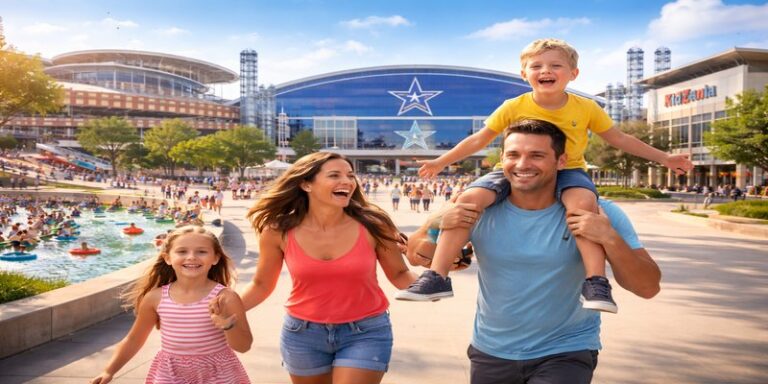
Nestled just north of Dallas in the heart of North Texas, Frisco, Texas has rapidly emerged as one of America’s most dynamic family-friendly destinations. Once a small railroad town, Frisco has transformed into a thriving city celebrated for its sports tourism, interactive attractions, outdoor recreation, and community-centred experiences. As global tourism trends increasingly highlight the demand for experiential travel, particularly among families seeking meaningful shared activities, Frisco represents a compelling case study in modern destination development (Page, 2019; UNWTO, 2023).
1.0 A Modern Family Destination in a Growing City
Frisco’s appeal lies in its strategic combination of urban sophistication and suburban accessibility. According to the City of Frisco (2024), the city has experienced substantial population growth over the past two decades, accompanied by significant investment in infrastructure, leisure facilities and hospitality services. This aligns with broader tourism development principles suggesting that successful destinations integrate quality amenities, accessibility and diversified attractions (Cooper et al., 2018).
Families today seek destinations that provide multi-generational appeal, safety and convenience. Research in family tourism emphasises that parents prioritise environments offering educational enrichment, entertainment value and secure public spaces (Schänzel & Yeoman, 2015). Frisco delivers on these expectations through its carefully curated mix of sports complexes, museums, parks and entertainment venues.
2.0 The Power of Sports Tourism
One of Frisco’s defining features is its reputation as a sports tourism hub. The city is home to The Star, the world headquarters of the Dallas Cowboys, which offers guided tours of training facilities and the impressive Ford Centre indoor stadium. Sports tourism is recognised as one of the fastest-growing sectors within the tourism industry, generating substantial economic and social benefits for host destinations (Gibson, 1998; Higham & Hinch, 2018). Families visiting The Star gain behind-the-scenes insights into professional sport, blending recreation with inspiration.
Similarly, Riders Field, home of the Frisco RoughRiders minor league baseball team, offers a uniquely family-friendly stadium experience. Features such as a lazy river seating area and post-game fireworks enhance the experiential dimension of a traditional sporting event. According to Getz and Page (2016), successful event-based attractions often incorporate entertainment elements beyond the core event itself, thereby extending visitor engagement and satisfaction.
3.0 Edutainment and Interactive Learning
Frisco also excels in educational entertainment, often referred to as “edutainment”. The National Videogame Museum provides interactive exhibits tracing the history of digital gaming. Visitors can explore vintage arcade machines and learn about technological innovation, making the attraction both nostalgic for adults and fascinating for children. Pine and Gilmore’s (2011) theory of the Experience Economy suggests that immersive, participatory attractions create lasting memories, a crucial factor in family holiday decision-making.
Another standout example is KidZania USA, an interactive miniature city designed for children to role-play real-world professions. Children can act as firefighters, doctors or pilots, learning teamwork and responsibility in a safe environment. Such attractions reflect contemporary educational theories advocating experiential and role-based learning, where knowledge is acquired through active participation (Kolb, 1984). For parents, this dual benefit of entertainment and developmental value enhances Frisco’s appeal.
4.0 Outdoor Recreation and Green Spaces
Beyond structured attractions, Frisco offers abundant opportunities for outdoor leisure and relaxation. Frisco Commons Park features expansive playgrounds, walking trails and seasonal splash pads. Outdoor recreational spaces are increasingly valued in tourism planning due to their contribution to physical wellbeing and social interaction (Hall & Page, 2014). For families travelling with young children, accessible parks provide balance to more intense entertainment activities.
Texas’s warm climate further supports year-round outdoor enjoyment. Studies in leisure behaviour note that destinations offering varied climatic advantages often enjoy extended tourist seasons (Cooper et al., 2018). Families can enjoy picnics, cycling and casual play while experiencing the welcoming Texan atmosphere.
5.0 Indoor Adventure and All-Weather Options
Recognising that family holidays must accommodate unpredictable weather and diverse age groups, Frisco has invested in indoor adventure facilities. Venues such as Urban Air Adventure Park and Andretti Indoor Karting & Games provide trampolines, obstacle courses, go-kart racing and arcade entertainment. These attractions cater particularly well to teenagers, ensuring that older children remain engaged during family trips.
According to Swarbrooke and Horner (2020), destinations that diversify attractions across age segments increase their competitiveness in the family travel market. Frisco’s blend of high-energy adventure and relaxed recreational spaces reflects this strategic diversification.
6.0 Retail, Dining and Community Atmosphere
Holiday experiences extend beyond attractions to include shopping and gastronomy. Stonebriar Centre, Frisco’s major retail complex, integrates shopping with cinemas and child-friendly dining options. Food tourism scholars argue that local cuisine forms a vital part of destination identity and visitor satisfaction (Ellis et al., 2018). In Frisco, families can enjoy classic Texan barbecue at Hutchins BBQ or Southern comfort dishes at Babe’s Chicken Dinner House, enhancing cultural immersion.
Moreover, Frisco’s carefully maintained public areas and emphasis on safety reinforce its suitability for families. Destination image theory suggests that perceptions of safety and cleanliness significantly influence travel decisions, particularly for households with children (Tasci & Gartner, 2007).
7.0 Accessibility and Connectivity
Frisco benefits from its proximity to Dallas/Fort Worth International Airport, one of the busiest airports globally. Accessibility is a fundamental determinant of tourism success (Page, 2019). Families travelling domestically or internationally can reach Frisco with relative ease, while still enjoying a less congested, suburban environment compared with central Dallas.
The city’s infrastructure — including ample parking, well-designed roads and modern accommodation options — further enhances visitor convenience. According to the World Travel & Tourism Council (WTTC, 2023), seamless infrastructure contributes significantly to positive visitor experiences and repeat visitation.
8.0 Sustainability and Future Prospects
Modern tourism increasingly emphasises sustainability and community engagement. Frisco’s urban planning incorporates green spaces and mixed-use developments that encourage walkability and environmental responsibility. While not traditionally marketed as an eco-tourism destination, its commitment to managed growth aligns with sustainable tourism principles outlined by the United Nations World Tourism Organization (UNWTO, 2023).
Looking ahead, continued investment in sports facilities, cultural attractions and hospitality infrastructure positions Frisco as a long-term contender in the family tourism market. As family travel remains a dominant segment globally, destinations that combine innovation, safety, accessibility and diverse attractions are likely to thrive.
In summary, Family Fun in Frisco, Texas exemplifies how a modern American city can successfully position itself as a premier family destination. Through a strategic blend of sports tourism, edutainment, outdoor recreation, indoor adventure, retail experiences and accessible infrastructure, Frisco caters effectively to multi-generational travellers. Supported by sound tourism development principles and aligned with contemporary experiential travel trends, the city offers far more than a simple weekend getaway — it provides families with opportunities to create meaningful, shared memories in a vibrant and welcoming environment.
References
City of Frisco (2024) About Frisco. Available at: https://www.friscotexas.gov.
Cooper, C., Fletcher, J., Fyall, A., Gilbert, D. and Wanhill, S. (2018) Tourism: Principles and Practice. 6th edn. Harlow: Pearson.
Ellis, A., Park, E., Kim, S. and Yeoman, I. (2018) ‘What is food tourism?’, Tourism Management, 68, pp. 250–263.
Getz, D. and Page, S.J. (2016) Event Studies: Theory, Research and Policy for Planned Events. 3rd edn. London: Routledge.
Gibson, H.J. (1998) ‘Sport tourism: A critical analysis of research’, Sport Management Review, 1(1), pp. 45–76.
Hall, C.M. and Page, S.J. (2014) The Geography of Tourism and Recreation. 4th edn. London: Routledge.
Higham, J. and Hinch, T. (2018) Sport Tourism Development. 3rd edn. Bristol: Channel View Publications.
Kolb, D.A. (1984) Experiential Learning. Englewood Cliffs: Prentice Hall.
Page, S.J. (2019) Tourism Management. 6th edn. London: Routledge.
Pine, B.J. and Gilmore, J.H. (2011) The Experience Economy. Boston: Harvard Business Review Press.
Schänzel, H. and Yeoman, I. (2015) ‘Trends in family tourism’, Journal of Tourism Futures, 1(2), pp. 141–147.
Swarbrooke, J. and Horner, S. (2020) Consumer Behaviour in Tourism. 3rd edn. London: Routledge.
Tasci, A.D.A. and Gartner, W.C. (2007) ‘Destination image and its functional relationships’, Journal of Travel Research, 45(4), pp. 413–425.
UNWTO (2023) Tourism and Sustainable Development Goals Report. Madrid: United Nations World Tourism Organization.
WTTC (2023) Economic Impact Report. London: World Travel & Tourism Council.