There are places in Britain where the coastline feels almost cinematic — where rugged cliffs tumble into turquoise coves, Atlantic waves roll in with rhythmic power and fishing villages cling to hillsides as they have for centuries. Cornwall, perched at the south-western tip of England, is one such place. It is a land of dramatic scenery, surf culture and coastal serenity, where visitors come not merely to relax but to reconnect — with nature, with community and often with themselves.
For many travellers, Cornwall represents the essence of the British seaside reimagined. Beyond deckchairs and promenades, it offers wild landscapes, artisan food and immersive outdoor experiences. Its enduring popularity reflects a wider shift towards experiential and nature-based tourism, where visitors value authenticity, sustainability and participation over passive observation (Jennings, 2004; VisitBritain, 2023).
1.0 A Brief Background: From Tin Mines to Tourism
Cornwall’s identity has been shaped by both industry and isolation. Historically reliant on tin mining and fishing, the region developed a strong cultural heritage distinct from the rest of England. Its Celtic roots, Cornish language revival and maritime traditions contribute to a powerful sense of place.
As traditional industries declined in the nineteenth and twentieth centuries, tourism emerged as a vital economic driver. Walton (2000) notes that coastal regions across Britain transitioned from industrial or fishing economies to leisure-oriented destinations. Cornwall, however, differentiated itself through its natural beauty and artistic communities, particularly in St Ives, which attracted painters inspired by the region’s unique light.
Today, tourism forms a cornerstone of Cornwall’s economy, yet it is increasingly shaped by sustainability principles and community engagement (Cornwall Council, 2023).
2.0 Accommodation: From Boutique Retreats to Beachside Campsites
Cornwall’s accommodation options mirror its diverse landscapes. In St Ives, boutique hotels overlook sweeping bays, offering refined comfort with sea-view balconies. Fistral Beach in Newquay, known for its surf culture, features modern lodges and eco-conscious hostels catering to younger travellers.
For those seeking rustic immersion, cliff-top campsites along the South West Coast Path provide unforgettable sunrise views. Meanwhile, converted fishermen’s cottages in villages such as Mousehole and Port Isaac offer charm and intimacy.
Sustainable accommodation has grown significantly in recent years. Eco-lodges powered by renewable energy and farm stays supporting local agriculture reflect the region’s commitment to environmental responsibility. According to Hall and Page (2014), environmentally sensitive lodging enhances destination appeal among conscious travellers.
3.0 Food and Drink: A Celebration of Local Flavours
Cornwall’s culinary scene has evolved beyond its iconic Cornish pasty. While this traditional hand-held pastry remains a symbol of regional identity, contemporary Cornwall celebrates locally sourced seafood, artisan bakeries and vineyard produce.
In Padstow, restaurants showcase freshly caught lobster and mackerel, while coastal cafés serve crab sandwiches overlooking working harbours. The region has also embraced farm-to-table dining, reflecting global trends in gastronomic tourism (Ellis et al., 2018).
Cornwall’s burgeoning wine industry, aided by a milder maritime climate, adds a further dimension. Vineyards such as Camel Valley produce award-winning sparkling wines, illustrating how coastal regions can diversify their tourism economy.
4.0 Things to Do: Surf, Walk and Wander
Cornwall’s beaches are as varied as its visitors. Fistral Beach in Newquay is internationally recognised for surfing, attracting enthusiasts drawn by Atlantic swells. Surf schools cater to beginners, reflecting the growth of adventure tourism in coastal destinations (Jennings, 2004).
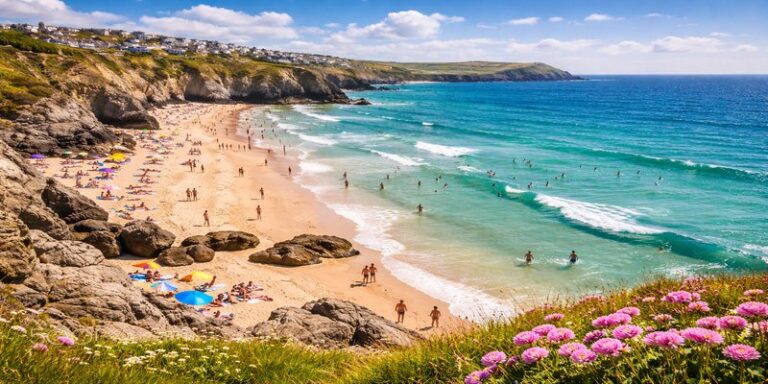
For those seeking quieter beauty, Porthcurno enchants with white sand and turquoise waters framed by granite cliffs. Nearby, the open-air Minack Theatre offers performances against a dramatic ocean backdrop, blending culture and landscape.
St Ives, meanwhile, balances art and seaside leisure. The Tate St Ives celebrates modern British art, linking Cornwall’s natural environment with creative expression.
Walking remains one of Cornwall’s most cherished activities. The South West Coast Path, stretching over 600 miles, provides panoramic views and access to hidden coves. Coastal walking reflects the broader appeal of slow, immersive travel experiences (Page, 2019).
5.0 When to Visit: Seasons of Contrast
Cornwall’s peak season falls between June and August, when beaches bustle and festivals animate seaside towns. However, spring and early autumn offer milder temperatures and fewer crowds, ideal for walking and photography.
Winter reveals another side of Cornwall. Storm-watching along rugged headlands provides dramatic spectacle, appealing to travellers drawn to nature’s raw power. According to Butler’s (1980) Tourism Area Life Cycle model, destinations that diversify seasonal offerings sustain long-term resilience.
6.0 Sample Three-Day Itinerary
Day One – Newquay and Fistral Beach
Begin with a morning surf lesson at Fistral Beach. Enjoy lunch overlooking the Atlantic before exploring Newquay’s coastal paths.
Day Two – St Ives and Coastal Culture
Travel to St Ives for a gallery visit at Tate St Ives, followed by a harbour-side seafood dinner. Sunset on Porthminster Beach offers unforgettable views.
Day Three – Porthcurno and the Minack Theatre
Visit Porthcurno’s pristine sands, then explore the Minack Theatre. Conclude with a coastal walk along cliff-top trails.
This itinerary blends adventure, culture and relaxation, illustrating Cornwall’s multifaceted appeal.
7.0 Travel Tips
- Transport: While trains connect Cornwall to London and other major cities, a car allows greater exploration of remote coves.
- Book Early: Summer accommodation fills quickly due to domestic tourism demand (VisitBritain, 2023).
- Respect the Environment: Follow coastal safety guidance and adhere to Leave No Trace principles.
- Support Local Businesses: Choose independent cafés and artisan markets to sustain community economies.
8.0 Sustainability and Coastal Stewardship
Cornwall has emerged as a leader in sustainable coastal tourism, balancing visitor demand with environmental preservation. Initiatives focus on marine conservation, renewable energy and waste reduction. Such practices align with broader sustainability frameworks emphasised in tourism scholarship (Hall and Page, 2014).
Research suggests that modern travellers increasingly prioritise destinations demonstrating environmental responsibility (Jennings, 2004). Cornwall’s commitment to conservation strengthens its competitive advantage.
9.0 Why Cornwall is Worth Visiting
Cornwall is more than a beach holiday; it is a coastal escape defined by authenticity, adventure and natural beauty. Its celebrated beaches — from the surf-friendly waves of Fistral to the serene sands of Porthcurno — each offer a distinctive sense of place. Combined with artisan cuisine, artistic heritage and sustainable values, Cornwall exemplifies the evolution of Britain’s seaside tourism.
For travellers seeking connection — with landscape, culture and community — Cornwall stands apart. In its windswept cliffs and welcoming harbours, one finds not only scenic splendour but a reminder of the enduring allure of the sea.
References
Butler, R.W. (1980) ‘The concept of a tourist area cycle of evolution’, Canadian Geographer, 24(1), pp. 5–12.
Cornwall Council (2023) Cornwall Tourism Strategy Report. Available at: https://www.cornwall.gov.uk.
Ellis, A., Park, E., Kim, S. and Yeoman, I. (2018) ‘What is food tourism?’, Tourism Management, 68, pp. 250–263.
Hall, C.M. and Page, S.J. (2014) The Geography of Tourism and Recreation. 4th edn. London: Routledge.
Jennings, G. (2004) Adventure Tourism. Oxford: Elsevier Butterworth-Heinemann.
Page, S.J. (2019) Tourism Management. 6th edn. London: Routledge.
VisitBritain (2023) Domestic Tourism Trends Report. Available at: https://www.visitbritain.org.
Walton, J.K. (2000) The British Seaside: Holidays and Resorts in the Twentieth Century. Manchester: Manchester University Press.