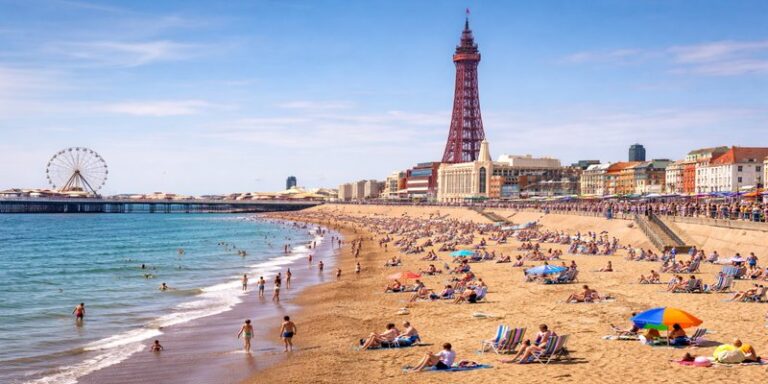
There are few places in Britain where nostalgia shines as brightly as it does in Blackpool. Standing on the promenade as the wind rolls in from the Irish Sea, with the iconic Blackpool Tower rising above the skyline and the distant hum of amusement rides filling the air, you feel immersed in a living postcard of traditional seaside fun. The scent of candyfloss mingles with salty air, trams glide along the seafront, and families laugh beneath neon lights. Blackpool is bold, energetic and unapologetically entertaining — a place where classic British holiday traditions endure.
For generations, Blackpool has represented the quintessential seaside break. It remains one of the UK’s most recognisable coastal resorts, celebrated for its illuminations, pleasure beach and enduring working-class charm (Walton, 2000). In a tourism landscape increasingly shaped by international travel and boutique escapes, Blackpool continues to prove that there is powerful appeal in heritage, spectacle and shared memory.
1.0 Brief Background and History
Blackpool’s transformation began in the nineteenth century, when railway expansion made coastal travel accessible to industrial communities across northern England. Textile workers from Lancashire and Yorkshire flocked to the seaside for brief but eagerly anticipated holidays. As Walton (2000) explains, Blackpool emerged as a pioneer of mass tourism, offering affordable accommodation, entertainment and accessible leisure.
The construction of Blackpool Tower in 1894, inspired by the Eiffel Tower, symbolised ambition and civic pride. The resort’s pleasure piers, ballroom culture and later the famous Blackpool Illuminations reinforced its reputation as the “Las Vegas of the North”.
While some British resorts struggled with decline during the late twentieth century, Blackpool invested in regeneration projects and diversified attractions. Its story reflects Butler’s (1980) Tourism Area Life Cycle, illustrating how adaptation and reinvention are crucial for long-term viability.
2.0 Accommodation: From Guesthouses to Grand Hotels
Accommodation in Blackpool is varied and accessible. Traditional family-run guesthouses line the promenade, offering warm hospitality and sea views at affordable rates. These establishments form part of Blackpool’s social fabric, reflecting its roots in mass domestic tourism.
Larger hotels near North Pier and Central Pier cater to families and coach tours, while modern developments such as the refurbished seafront hotels provide upgraded facilities. Self-catering apartments have also grown in popularity among visitors seeking flexibility.
According to Cooper et al. (2018), destinations that maintain diverse accommodation stock enhance inclusivity and market resilience. Blackpool’s ability to serve budget-conscious families alongside conference delegates and weekend revellers underscores this adaptability.
3.0 Food and Drink: Seaside Indulgence
Blackpool’s culinary landscape celebrates traditional seaside fare. Fish and chips remain the undisputed favourite, often enjoyed straight from the paper on the promenade. Donuts, ice cream and sticks of rock are as much a part of the experience as the beach itself.
Yet beyond nostalgia, Blackpool has diversified its dining scene. Independent cafés, global restaurants and contemporary bars have emerged, particularly around the town centre. Food tourism research suggests that even traditional destinations benefit from expanding gastronomic offerings to meet evolving tastes (Ellis et al., 2018).
The resort’s nightlife also contributes to its appeal. From lively pubs to cabaret venues and theatre dining experiences, Blackpool continues to entertain after sunset.
4.0 Things to Do: Entertainment at Every Turn
Blackpool thrives on activity. The legendary Blackpool Pleasure Beach remains one of Europe’s most famous amusement parks, featuring rollercoasters such as The Big One. The park embodies the rise of leisure consumption in industrial Britain (Walton, 2000).
The Blackpool Tower complex houses attractions including the Tower Ballroom, immortalised by decades of dance competitions, and the Tower Circus. Meanwhile, Madame Tussauds and SEA LIFE Blackpool add contemporary family appeal.
Each autumn, the Blackpool Illuminations transform six miles of seafront into a dazzling spectacle of light. This seasonal event exemplifies destination innovation, extending the tourist season and reinforcing identity (Butler, 1980).
The beach itself, though tidal and often breezy, provides space for relaxation, kite flying and traditional donkey rides — simple pleasures that sustain the resort’s nostalgic charm.
5.0 When to Visit: Seasons of Spectacle
Summer is peak season, with school holidays drawing families in large numbers. The warmest months offer the fullest programme of outdoor entertainment and beach activity.
However, autumn presents a unique attraction in the form of the Illuminations, typically running from late August to early November. Visiting during this period combines cooler weather with vibrant evening displays.
Winter and spring are quieter, offering budget-friendly stays and fewer crowds. As Butler (1980) suggests, seasonal diversification enhances resilience, and Blackpool’s year-round events calendar supports sustained visitation.
6.0 Sample Three-Day Itinerary
Day One – Iconic Blackpool
Morning: Explore Blackpool Tower and enjoy panoramic views.
Afternoon: Ride rollercoasters at Pleasure Beach.
Evening: Dinner at a seafront restaurant followed by Illuminations.
Day Two – Culture and Nostalgia
Morning: Visit the Tower Ballroom or Winter Gardens.
Afternoon: Stroll along the piers and beach.
Evening: Attend a live show or comedy performance.
Day Three – Family Fun
Morning: SEA LIFE Blackpool or Madame Tussauds.
Afternoon: Donkey rides and arcade games.
Evening: Fish and chips by the promenade at sunset.
This itinerary captures the essence of entertainment, heritage and shared enjoyment that defines Blackpool.
7.0 Travel Tips
- Getting There: Blackpool North station connects directly to major northern cities.
- Weather Preparedness: Coastal winds can be brisk; bring layers even in summer.
- Illuminations Traffic: Consider trams or walking to avoid congestion.
- Budget Planning: Pre-book attraction tickets for discounts during peak periods.
Responsible travel practices, including waste reduction and respect for local businesses, contribute to sustainable tourism (Hall and Page, 2014).
8.0 Why Blackpool Is Worth Visiting
Blackpool’s enduring appeal lies in its authenticity. It does not attempt to imitate Mediterranean glamour or boutique minimalism. Instead, it celebrates joyful spectacle, affordability and shared tradition. As Walton (2000) observes, the British seaside has long functioned as a democratic space of leisure, and Blackpool remains one of its strongest expressions.
Through regeneration, event programming and diversification, the resort continues to adapt without abandoning its identity. Whether illuminated by autumn lights or bustling with summer laughter, Blackpool offers an experience rooted in collective memory and exuberant entertainment.
For travellers seeking the true spirit of Britain’s seaside heritage — bright, bustling and brimming with character — Blackpool remains the classic coastal escape.
References
Butler, R.W. (1980) ‘The concept of a tourist area cycle of evolution’, Canadian Geographer, 24(1), pp. 5–12.
Cooper, C., Fletcher, J., Fyall, A., Gilbert, D. and Wanhill, S. (2018) Tourism: Principles and Practice. 6th edn. Harlow: Pearson.
Ellis, A., Park, E., Kim, S. and Yeoman, I. (2018) ‘What is food tourism?’, Tourism Management, 68, pp. 250–263.
Hall, C.M. and Page, S.J. (2014) The Geography of Tourism and Recreation. 4th edn. London: Routledge.
VisitBritain (2023) Domestic Tourism Trends Report. Available at: https://www.visitbritain.org.
Walton, J.K. (2000) The British Seaside: Holidays and Resorts in the Twentieth Century. Manchester: Manchester University Press.