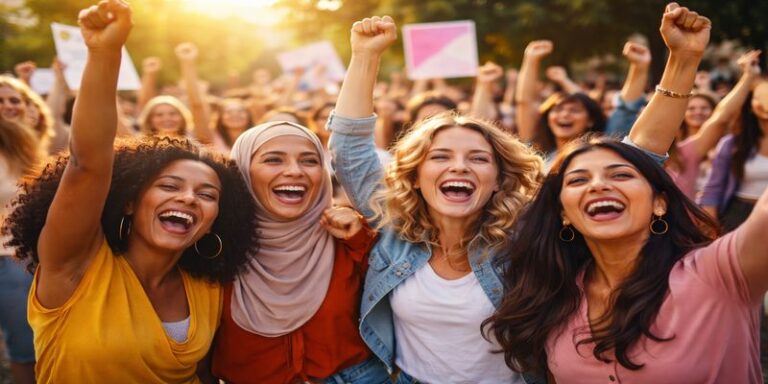
International Women’s Day (IWD), celebrated annually on 8 March, is a global event that recognises the social, economic, cultural, and political achievements of women while also highlighting the ongoing struggle for gender equality and women’s rights. The day serves both as a celebration of progress and as a reminder of the challenges that women continue to face in many parts of the world. Today, governments, international organisations, educational institutions, and community groups commemorate the occasion through conferences, campaigns, and public events aimed at promoting women’s empowerment (Em, 2023).
The origins of International Women’s Day lie in the early twentieth-century labour and feminist movements, particularly among women who advocated for better working conditions, voting rights, and social justice. Over time, the day evolved into a worldwide platform for raising awareness about issues such as gender discrimination, equal pay, education, and political participation. In 1975, the United Nations officially recognised International Women’s Day, further strengthening its global significance (Annan, 2012).
This article explores the history, significance, themes, and contemporary relevance of International Women’s Day, illustrating how the celebration continues to inspire movements for equality and social change around the world.
1.0 The Historical Origins of International Women’s Day
1.1 Early Labour Movements and Women’s Activism
The roots of International Women’s Day can be traced to the early 1900s, when women in Europe and North America began organising protests to demand better working conditions, voting rights, and fair wages. At the time, many women worked long hours in factories under unsafe conditions while receiving significantly lower wages than men (Diaz, Schmitt & Henninger, 2026).
One of the earliest inspirations for the movement came from women workers’ strikes in the United States, where female labourers protested against poor labour conditions and discrimination. These demonstrations helped to highlight the broader issue of women’s rights and the need for social reforms.
In 1910, the German socialist activist Clara Zetkin proposed the idea of an international day dedicated to women’s rights at the International Socialist Women’s Conference in Copenhagen. The proposal was widely supported, and the first International Women’s Day was celebrated in several European countries in 1911, with rallies advocating for women’s suffrage and labour rights (Krutílková, 2021).
1.2 Adoption by the United Nations
Although International Women’s Day gained popularity in many countries during the twentieth century, it became truly global when the United Nations officially recognised the day in 1975, which was also declared International Women’s Year (Olcott, 2017).
The United Nations began organising annual themes and campaigns for International Women’s Day to highlight issues such as education, health, gender equality, and women’s leadership. This recognition helped transform the day into a major global event that encourages governments and institutions to address gender inequality.
2.0 The Significance of International Women’s Day
2.1 Promoting Gender Equality
One of the primary goals of International Women’s Day is to promote gender equality, which refers to the principle that women and men should have equal rights, opportunities, and responsibilities in society.
Despite significant progress in many countries, women continue to face barriers in areas such as employment, education, and political participation. For example, studies show that women globally still earn less on average than men for similar work, a phenomenon commonly referred to as the gender pay gap (Poff, 2023).
International Women’s Day provides an opportunity to raise awareness about such issues and encourage policies that promote fairness and equality.
2.2 Celebrating Women’s Achievements
In addition to addressing challenges, the day also celebrates the achievements and contributions of women throughout history. Women have played vital roles in fields such as science, politics, education, healthcare, and social activism.
For example, influential figures such as Marie Curie, who made groundbreaking discoveries in physics and chemistry, and Malala Yousafzai, an advocate for girls’ education, demonstrate the impact women can have on society when given opportunities to succeed.
Recognising these accomplishments helps inspire younger generations and highlights the importance of women’s participation in all aspects of life.
3.0 Themes and Global Campaigns
3.1 Annual Themes
Each year, International Women’s Day focuses on a specific theme that addresses contemporary gender issues. These themes encourage discussion and action on topics such as women’s leadership, digital inclusion, education, and economic empowerment.
For instance, recent themes have emphasised ideas such as “Break the Bias,” “DigitALL: Innovation and Technology for Gender Equality,” and “Invest in Women: Accelerate Progress.” These themes encourage organisations and individuals to reflect on the progress made and the work that still needs to be done.
3.2 Global Participation
International Women’s Day is celebrated in over 100 countries, making it one of the most widely recognised global observances. Activities often include:
- Educational workshops and conferences
- Public marches and awareness campaigns
- Community events celebrating women’s achievements
- Social media initiatives promoting gender equality
For example, universities may host seminars discussing women’s leadership, while organisations might highlight successful female professionals in their industries.
These activities help build global solidarity and encourage individuals to participate in the movement for gender equality.
4.0 Challenges Facing Women Today
Despite decades of progress, many women around the world still experience social and economic inequalities. Key challenges include:
4.1 Gender Pay Gap
Women in many countries earn significantly less than men for comparable work. This inequality affects financial independence and long-term economic security.
4.2 Limited Access to Education
In some regions, girls still face barriers to education due to cultural norms, poverty, or conflict. Education is essential for empowering women and improving opportunities for future generations.
4.3 Underrepresentation in Leadership
Women remain underrepresented in political and corporate leadership roles, limiting their influence in decision-making processes.
International Women’s Day plays an important role in highlighting these challenges and encouraging policy changes to address them.
5.0 The Role of International Women’s Day in Modern Society
Today, International Women’s Day has become both a symbolic celebration and a call to action. Governments, non-governmental organisations, and activists use the occasion to advocate for policies that support women’s rights and empowerment.
Social media campaigns, for example, allow individuals across the world to share stories, celebrate achievements, and raise awareness about gender issues. Scholars note that digital platforms have helped transform International Women’s Day into a global movement for social change, connecting activists from different cultures and communities (Thelwall, 2021).
Moreover, businesses and educational institutions increasingly recognise the importance of promoting diversity, inclusion, and equal opportunities, aligning their policies with the values celebrated on International Women’s Day.
International Women’s Day is a powerful global celebration of women’s achievements and a reminder of the ongoing struggle for gender equality. Originating from early twentieth-century labour and feminist movements, the day has evolved into a worldwide platform for promoting women’s rights, recognising accomplishments, and addressing persistent inequalities.
By highlighting issues such as equal pay, education, leadership, and social justice, International Women’s Day encourages individuals and institutions to work together towards a more inclusive and equitable society. As the celebration continues to grow in importance, it remains a vital opportunity to reflect on the progress made while renewing commitments to ensuring that women everywhere can achieve their full potential.
References
Annan, R. (2012) ‘International Women’s Day’, World Nutrition, 3(3), pp. 141–145. https://wphna.org/worldnutritionjournal/index.php/wn/article/view/433.
Diaz, V.R., Schmitt, A. and Henninger, M. (2026) ‘International Women’s Day’, in Historical-Critical Dictionary of Marxism. Leiden: Brill. https://brill.com/edcollchap-oa/book/9789004754966/BP000025.xml.
Em, S. (2023) International Women’s Day 2023: Its History, Celebrations and Global Observance. Available at: https://www.researchgate.net/publication/369037782.
Krutílková, H. (2021) ‘International Women’s Day and its role in the consolidation of the female socialist worker’s movement’, Journal of Humanities and Social Sciences, pp. 45–60. https://journals.ur.edu.pl/jhss/article/view/7713.
Olcott, J. (2017) International Women’s Year: The Greatest Consciousness-Raising Event in History. Oxford: Oxford University Press.
Poff, D.C. (2023) ‘International Women’s Day and Its Role in Women’s Rights’, in Encyclopedia of Business and Professional Ethics. Springer. https://link.springer.com.
Thelwall, M. (2021) ‘International Women’s Day 2009–2020 on Twitter: Postfeminist or Fourth-Wave Feminism?’, SSRN Electronic Journal. https://papers.ssrn.com/sol3/papers.cfm?abstract_id=3846542.
Chaudhuri, M. (2020) ‘International Women’s Day: New avatars and forgotten beginnings’, Women & Society Review. Available at: https://www.researchgate.net/publication/361543672.
Spedding, L.S. (2012) ‘International Women’s Day and global advocacy for women’s rights’, Women’s Law Journal, pp. 15–28.