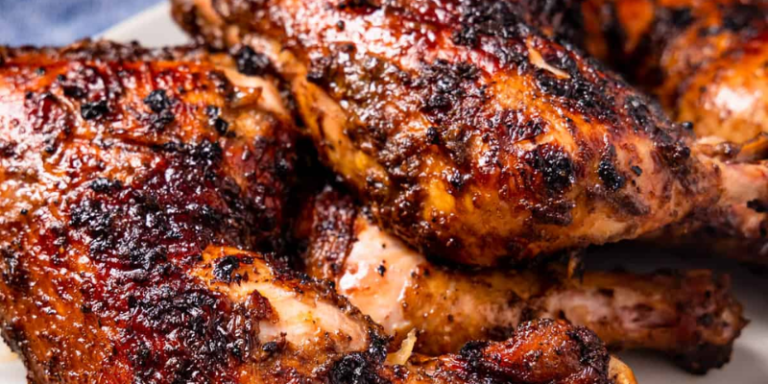
Few dishes carry the same combination of history, flavour and cultural meaning as jerk chicken. Deeply associated with Jamaica and the wider Caribbean, jerk is far more than a spicy way of cooking meat. It is a culinary tradition shaped by indigenous knowledge, African diasporic resilience and centuries of cultural exchange. Today, jerk chicken has become one of the most recognisable foods of the Caribbean world, enjoyed far beyond Jamaica itself. In London, where Caribbean communities have played a major role in shaping urban culture since the mid-twentieth century, jerk chicken is both an everyday comfort food and a powerful symbol of identity, memory and belonging.
This article explores what makes jerk chicken special, why it matters culturally, and where people can look for memorable examples of the dish in London. It argues that jerk chicken is not simply popular because it tastes good, although its smoky heat and aromatic seasoning certainly help. Its enduring appeal lies in the way it brings together heritage, migration and the evolving story of British multicultural food culture.
1.0 What Makes Jerk Chicken Special?
1.1 A Distinctive Seasoning Tradition
At the heart of jerk chicken is jerk seasoning, a blend known for its intense and layered flavour. Traditional recipes commonly include allspice, Scotch bonnet peppers, thyme, garlic, spring onions, ginger and other spices or herbs depending on household or regional preference. What makes the seasoning stand out is its balance of heat, sweetness, earthiness and fragrance. As Willinsky (2007) explains in his study of Jamaican barbecue traditions, jerk is not just about chilli; it is about the interplay between pimento, smoke and spice.
The Scotch bonnet pepper is especially important because it contributes both fierce heat and a slightly fruity character. Allspice, meanwhile, gives jerk much of its warm and recognisable aroma, often described as resembling cloves, cinnamon and nutmeg. Together, these ingredients create a flavour that is bold without being one-dimensional. A well-made jerk chicken should taste smoky, peppery, herbal and deeply savoury at the same time.
1.2 The Importance of Cooking Method
Traditional jerk cooking is associated with slow grilling over pimento wood, which gives the meat a distinctive smoky quality. In Jamaica, the technique has long been linked with outdoor cooking and communal eating. Outside the Caribbean, including in London, chefs often adapt the process by using charcoal grills, smokers or ovens, while trying to preserve the character of the original method.
What makes the cooking technique so effective is the contrast it creates. The outside develops a charred crust, while the inside remains juicy and tender. That contrast is one reason jerk chicken feels so satisfying to eat. It is also why jerk works well in different formats, from a traditional plate with rice and peas to a wrap, box meal or street-food portion served with slaw and plantain.
2.0 Jerk Chicken and Caribbean Cultural Identity
2.1 Origins in Survival and Adaptation
The history of jerk is often connected to the Taíno, the indigenous people of the Caribbean, whose methods of seasoning and slow-smoking meat influenced later practices. Scholars and food writers also connect jerk to the Jamaican Maroons, communities formed by formerly enslaved Africans who resisted colonial rule in Jamaica. These groups adapted available ingredients and preservation methods to suit difficult conditions in the island’s interior (Houston, 2005; Goucher, 2014). In this sense, jerk emerged not merely as a recipe, but as a technique shaped by survival, mobility and resistance.
That history matters because it helps explain why jerk chicken carries such symbolic weight. As Sperry (2021) argues in work on Jamaican food and identity, dishes such as jerk become cultural markers through which communities tell stories about themselves. Jerk chicken therefore represents more than national cuisine. It expresses a history of creativity under pressure and the transformation of hardship into cultural pride.
2.2 Diaspora, Memory and Belonging in London
In Britain, Caribbean food has long been part of the social world created by post-war migration, especially after the arrival of the Windrush generation and those who followed. Food became a way of preserving memory, building community and introducing wider Britain to Caribbean tastes. Research on diasporic food cultures suggests that meals can act as a bridge between homeland and host society, carrying emotional meaning as well as flavour (Welsh, 2019; Cook and Harrison, 2003).
In London, jerk chicken often performs exactly this role. For some people, it is a taste of home; for others, it is a beloved city food connected to markets, music, festivals and neighbourhood life. The sight of jerk drums at community events or the smell of smoke drifting through a market has become part of the sensory landscape of multicultural London. Rhys-Taylor (2016) shows how food in urban markets can express the lived reality of diversity, and jerk chicken is a strong example of that.
3.0 Where to Eat Jerk Chicken in London
London has no shortage of places serving jerk chicken, but the experience varies depending on whether you want a casual takeaway, a market stall, or a more polished restaurant meal. Among the most frequently mentioned names are Rudies Jerk Shack, Fish, Wings & Tings in Brixton Village, Cottons, The Rum Kitchen and Mama’s Jerk. Each represents a different side of the city’s Caribbean food scene.
3.1 Rudies Jerk Shack
Rudies Jerk Shack is known for serving Jamaican-inspired grilled meats in a lively, modern setting. Its jerk chicken is popular for its smoky flavour, deep marinade and tender texture, making it a strong choice for diners who want a more contemporary take on classic Caribbean food.
3.2 Fish, Wings & Tings in Brixton Village
Located in the heart of Brixton Village, Fish, Wings & Tings is celebrated for its relaxed atmosphere and bold Caribbean flavours. The restaurant is especially appreciated for combining authentic seasoning, generous portions and the vibrant energy of one of London’s best-known food markets.
3.3 Cottons
Cottons is one of London’s longest-established Caribbean restaurant names and is known for its welcoming atmosphere and broad menu of island favourites. Its jerk chicken is often praised for being richly spiced, well-cooked and faithful to the comforting flavours associated with traditional Jamaican cuisine.
3.4 The Rum Kitchen
The Rum Kitchen offers a stylish and modern Caribbean dining experience, pairing jerk chicken with a more polished restaurant presentation. It is a good option for people who want the smoky heat of jerk alongside a lively social setting and a menu that blends Caribbean tradition with contemporary London dining.
3.5 Mama’s Jerk
Mama’s Jerk is widely associated with street-food style Caribbean cooking, offering jerk chicken that feels casual, flavour-packed and satisfying. Popular for its easy-going approach, it appeals to diners looking for a quick meal that still delivers the spice, char and comfort expected from good jerk chicken.
4.0 What to Look for in a Good Jerk Chicken Meal
The best jerk chicken is not defined only by reputation or décor. It should have a well-seasoned marinade, clear smokiness, a degree of char, and meat that remains moist. A strong side dish also matters. Rice and peas, plantain, festival, slaw and gravy often complete the meal. In practice, the “best” place depends on what the diner values most. Someone seeking the feel of a market or roadside grill may prefer Brixton or Hackney, while someone wanting a sit-down meal with cocktails and a broader menu may favour a restaurant setting.
A useful example is the difference between jerk eaten at a lively outdoor event such as Notting Hill Carnival and jerk served in a restaurant dining room. The first may feel more immediate, smoky and communal; the second may be more refined and consistent. Both can be enjoyable, but they offer different expressions of the same tradition.
5.0 Jerk Chicken in Contemporary British Food Culture
Jerk chicken’s visibility in London says something important about Britain itself. Caribbean food has moved from the margins to the mainstream, yet it still carries questions about authenticity, commercialisation and cultural ownership. Cook and Harrison (2003) note that foods such as jerk can “cross over” into broader markets while still retaining strong links to the communities from which they emerge. That is one reason jerk chicken can be found both in neighbourhood takeaways and in fashionable central London venues.
Its popularity also reflects a broader public appreciation for foods with strong stories behind them. Diners increasingly value dishes that represent not only taste but also history, migration and cultural exchange. Jerk chicken answers that demand powerfully because its flavour is inseparable from its past.
In conclusion, jerk chicken is one of the most compelling dishes in Caribbean cuisine because it combines remarkable flavour with deep historical significance. Its roots in indigenous practice, Maroon innovation and Jamaican culinary tradition give it a meaning that goes far beyond the plate. In London, jerk chicken has become a vivid part of the city’s food identity, reflecting the creativity and influence of the Caribbean diaspora. Whether eaten from a market stall in Brixton, a takeaway box in Hackney, or a restaurant table in central London, it offers more than a meal. It offers a connection to heritage, community and the continuing evolution of British food culture.
References
Cook, I. and Harrison, M. (2003) ‘Cross over food: Re-materializing postcolonial geographies’, Transactions of the Institute of British Geographers, 28(3), pp. 296–317. Available at: https://rgs-ibg.onlinelibrary.wiley.com/doi/abs/10.1111/1475-5661.00094.
Goucher, C. (2014) Congotay! Congotay! A global history of Caribbean food. London: Routledge. Available at: https://api.taylorfrancis.com/content/books/mono/download?identifierName=doi&identifierValue=10.4324/9781315719887&type=googlepdf.
Houston, L.M. (2005) Food culture in the Caribbean. Westport, CT: Greenwood Press. Available at: https://www.torrossa.com/gs/resourceProxy?an=5547618&publisher=FZ0661.
Plummer, N., Wilson, M., Yaneva-Toraman, I. and McKenzie, C. (2022) ‘Recipes for resilience: engaging Caribbean youth in climate action and food heritage through stories and song’, Sustainability, 14(14), 8717. Available at: https://www.mdpi.com/2071-1050/14/14/8717.
Rhys-Taylor, A. (2016) ‘The essences of multiculture: A sensory exploration of an inner-city street market’, in Ethnography, Diversity and Urban Space. Available at: https://research.gold.ac.uk/id/eprint/8359/1/essences%20pre-proof.pdf.
Rose, C.S. (2024) How does the Caribbean Creole Cuisine advertise to the Ladywood constituency’s superdiversity scene? PhD thesis. University of Birmingham. Available at: https://etheses.bham.ac.uk/id/eprint/15591/.
Sperry, A.J. (2021) ‘Eating Jamaica: How food is used as a tool to create and reinforce cultural identity’, World History Connected. Available at: https://journal.gmu.edu/index.php/whc/article/download/3629/2038.
Welsh, S.L. (2019) Food, text and culture in the Anglophone Caribbean. Lanham, MD: Lexington Books. Available at: https://books.google.com/books?hl=en&lr=&id=Z-LaDwAAQBAJ&oi=fnd&pg=PR5.
Willinsky, H. (2007) Jerk from Jamaica: Barbecue Caribbean style. Berkeley, CA: Ten Speed Press. Available at: https://books.google.com/books?hl=en&lr=&id=BhgNrIgNuggC&oi=fnd&pg=PR8.
Thompson, M. (2022) Motherland: A Jamaican cookbook. London: Bluebird. Available at: https://books.google.com/books?hl=en&lr=&id=CXyCEAAAQBAJ&oi=fnd&pg=PP1.