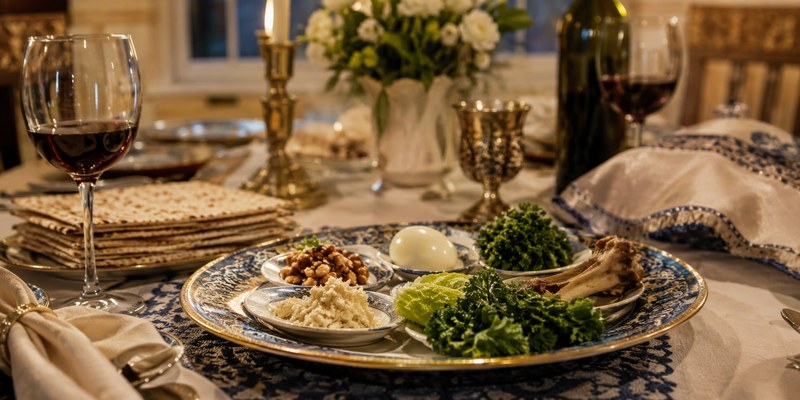
✧ The sound of families gathering around a table, the aroma of traditional foods, and the retelling of an ancient escape from oppression together create the distinctive atmosphere of The Passover story (Pesach). Celebrated by Jewish communities across the world, Passover is far more than a religious festival. It is a powerful remembrance of liberation, resilience, identity, and hope.
Observed over eight days in many Jewish traditions, Passover commemorates the Israelites’ escape from slavery in ancient Egypt under the leadership of Moses. The story, recorded in the biblical Book of Exodus, remains one of the most influential narratives in religious and cultural history (The Jewish Study Bible, 2014). Beyond its historical and theological importance, The Passover story (Pesach) continues to resonate in modern discussions about freedom, justice, and human dignity.
This article explores the origins, symbolism, customs, and continuing significance of Passover, while examining why this ancient celebration still captures global attention today.
1.0 The Origins of The Passover Story (Pesach)
1.1 Slavery in Ancient Egypt
According to the Hebrew Bible, the Israelites settled in Egypt during a time of famine after Joseph, son of Jacob, rose to prominence in Pharaoh’s court. Over generations, however, a new Pharaoh perceived the Israelites as a threat and enslaved them (Exodus 1:8–14).
The biblical narrative describes harsh labour, suffering, and oppression. The Israelites were reportedly forced to build storage cities and work under brutal conditions. This period of enslavement forms the foundation of The Passover story (Pesach), emphasising themes of endurance and divine deliverance.
1.2 Moses and the Call for Freedom
The central figure in The Passover story (Pesach) is Moses. Raised within Pharaoh’s household yet born Hebrew, Moses later encountered God through the burning bush, where he was commanded to lead the Israelites out of Egypt (Levenson, 2006).
Moses repeatedly demanded that Pharaoh “let my people go”, yet Pharaoh refused. According to the biblical account, God responded by sending ten plagues upon Egypt, including darkness, locusts, disease, and the turning of the Nile River into blood.
The final plague, the death of the firstborn, became the defining moment of Passover.
2.0 Why It Is Called Passover
2.1 The Meaning Behind the Name
The term “Passover” originates from the Hebrew word Pesach, meaning “to pass over”. According to Exodus 12, the Israelites were instructed to mark their doorposts with lamb’s blood so that the destructive force associated with the final plague would “pass over” their homes.
This event became central to Jewish identity and religious memory. The annual observance of The Passover story (Pesach) serves as a reminder of divine protection and liberation from oppression.
2.2 The Flight from Egypt
Following the final plague, Pharaoh finally allowed the Israelites to leave Egypt. The biblical account explains that the departure happened so quickly that there was no time for bread dough to rise. As a result, unleavened bread, known as matzah, became a symbolic food of Passover (Neusner, 1995).
The escape culminated in the crossing of the Red Sea, where the Israelites are said to have passed safely while Pharaoh’s pursuing army was overwhelmed by the waters. This dramatic event represents triumph over tyranny and remains one of the most memorable scenes in The Passover story (Pesach).
3.0 Traditions and Customs in The Passover Story (Pesach)
3.1 The Seder Meal
One of the most important Passover observances is the Seder, a ceremonial meal held on the first nights of the festival. During the Seder, families retell The Passover story (Pesach) using a text known as the Haggadah.
The meal includes symbolic foods placed on a Seder plate, each representing an aspect of the Exodus story:
- Matzah – symbolises haste and humility.
- Maror (bitter herbs) – represents the bitterness of slavery.
- Charoset – a sweet mixture symbolising mortar used by enslaved Israelites.
- Parsley dipped in salt water – reflects tears and suffering.
- Roasted bone – recalls the sacrificial lamb.
Questions and storytelling play a major role during the Seder, particularly the traditional “Four Questions” asked by the youngest participant.
3.2 Removing Leavened Food
Another important custom connected to The Passover story (Pesach) involves removing leavened products, known as chametz, from Jewish homes. This practice symbolises purification, discipline, and remembrance of the hurried departure from Egypt.
Many families conduct extensive cleaning before Passover begins. In contemporary practice, supermarkets and restaurants in Israel often adjust their products and menus during the festival period.
4.0 Religious and Cultural Significance
4.1 A Celebration of Freedom
At its core, The Passover story (Pesach) is about liberation. The narrative has influenced religious teachings, civil rights movements, and discussions surrounding social justice worldwide.
Scholars frequently note the universal appeal of the Exodus story because it speaks to the human desire for freedom and dignity (Sarna, 1996). Leaders such as Martin Luther King Jr. drew inspiration from the Exodus narrative during the American Civil Rights Movement.
4.2 Strengthening Jewish Identity
Passover also reinforces Jewish continuity and identity. Through storytelling, ritual foods, songs, and prayers, each generation is encouraged to view itself as personally connected to the Exodus experience.
The command to “remember” appears repeatedly throughout Jewish scripture and tradition. This emphasis on memory explains why The Passover story (Pesach) remains deeply significant even among secular Jewish communities.
5.0 Modern Relevance of The Passover Story (Pesach)
5.1 Passover in Contemporary Society
In modern times, The Passover story (Pesach) extends beyond strictly religious observance. Many families use the festival as an opportunity to discuss modern forms of oppression, migration, inequality, and human rights.
For example, some contemporary Seders include readings connected to refugees, racial injustice, or humanitarian crises. This adaptation demonstrates the enduring flexibility and relevance of the Passover narrative.
5.2 Global Celebrations
Passover is celebrated internationally, from Israel and the United Kingdom to the United States and South Africa. Despite cultural differences, the central themes remain consistent: remembrance, gratitude, and freedom.
In Britain, Jewish communities often host communal Seders and educational events designed to explain The Passover story (Pesach) to wider audiences. Such activities promote interfaith understanding and cultural awareness.
∎ The Passover story (Pesach) remains one of the most enduring and influential narratives in world history. Through its vivid account of suffering, courage, faith, and liberation, Passover continues to inspire millions of people across generations and cultures.
The festival’s customs — from eating matzah to retelling the Exodus during the Seder meal — preserve a deep connection between past and present. More importantly, Passover’s emphasis on freedom and human dignity ensures its continuing relevance in the modern world.
As societies continue to confront injustice and inequality, the message at the heart of The Passover story (Pesach) remains profoundly meaningful: liberation is possible, memory matters, and hope can endure even in the darkest circumstances.
References
Levenson, J.D. (2006) Inheriting Abraham: The Legacy of the Patriarch in Judaism, Christianity, and Islam. Princeton: Princeton University Press.
Neusner, J. (1995) Judaism in the Beginning of Christianity. Philadelphia: Fortress Press.
Sarna, N.M. (1996) Exploring Exodus: The Heritage of Biblical Israel. New York: Schocken Books.
The Jewish Study Bible (2014) The Jewish Study Bible. 2nd edn. Oxford: Oxford University Press.
The Torah, Exodus 1–14.
BBC Religion (2024) ‘Passover’. Available at: https://www.bbc.co.uk/religion/religions/judaism/holydays/passover.shtml (Accessed: 15 May 2026).
Encyclopaedia Britannica (2025) ‘Passover’. Available at: https://www.britannica.com/topic/Passover (Accessed: 15 May 2026).