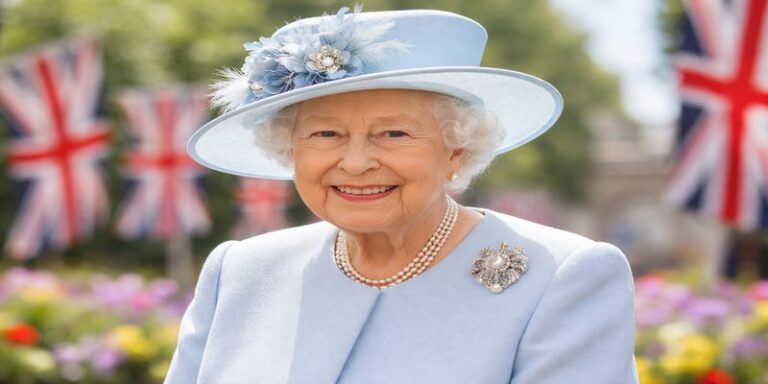
Few individuals have shaped modern British history as profoundly as Queen Elizabeth II (1926–2022). Reigning for more than seventy years, she became the longest-serving monarch in British history and one of the most recognised figures in the world. Her reign witnessed enormous political, social, and technological changes—from the aftermath of the Second World War to the digital age.
As a constitutional monarch, Queen Elizabeth II rarely exercised political power directly. Instead, her influence lay in symbolism, continuity, diplomacy, and national identity. She served not only as the head of state of the United Kingdom, but also as the Head of the Commonwealth, representing a voluntary association of nations with historical ties to Britain.
This article explores the life, role, and legacy of Queen Elizabeth II, examining her early life, constitutional duties, global influence, and the enduring significance of her reign.
1.0 Early Life and Family Background
Elizabeth Alexandra Mary Windsor was born on 21 April 1926 in London. At the time of her birth, she was not expected to become queen. Her grandfather, King George V, was the reigning monarch, and her father was the Duke of York (later King George VI) (Hardman, 2022).
Elizabeth grew up in a royal household but had a relatively private childhood compared with many public figures. She was educated at home and studied subjects such as history, constitutional law, literature, and languages—knowledge that later proved important for her role as monarch (Cannadine, 2025).
A dramatic turning point occurred in 1936, when King George V died and his eldest son Edward VIII abdicated the throne in order to marry Wallis Simpson. Elizabeth’s father became King George VI, and at the age of ten Elizabeth became heir presumptive to the throne (Lacey, 2008).
2.0 Experiences During the Second World War
The Second World War had a lasting impact on Elizabeth’s sense of duty and national service. During the war, she joined the Auxiliary Territorial Service, where she trained as a driver and mechanic. This experience symbolised her willingness to share the hardships faced by ordinary citizens during wartime Britain.
Her wartime broadcasts also demonstrated her early role in national morale. In 1940, she delivered a radio message to children evacuated during the war, emphasising courage and unity. This early public engagement foreshadowed her lifelong commitment to public service (Pimlott, 2002).
3.0 Becoming Queen – Accession and Coronation
Elizabeth became queen unexpectedly on 6 February 1952, following the death of her father, King George VI. At the time, she was only 25 years old and was travelling in Kenya during a Commonwealth tour.
Her coronation in 1953 was a landmark event. It was one of the first major international ceremonies to be broadcast on television, allowing millions of people across the world to witness the event. The broadcast symbolised the monarchy’s adaptation to a new era of mass media and global communication.
The young queen quickly became a symbol of stability and continuity during a period when Britain was undergoing profound political and social transformation.
4.0 The Constitutional Role of the Monarch
The United Kingdom operates under a constitutional monarchy, meaning that political authority rests with elected governments while the monarch performs largely ceremonial and constitutional functions (Bogdanor, 1995).
According to political theorist Walter Bagehot, the monarch possesses three essential rights: the right to be consulted, the right to encourage, and the right to warn. Queen Elizabeth II exercised these rights during her regular weekly meetings with the Prime Minister.
Although these meetings remained confidential, they allowed the monarch to offer advice and historical perspective to elected leaders. Over the course of her reign, Elizabeth worked with 15 British Prime Ministers, from Winston Churchill to Liz Truss.
5.0 Symbolic Leadership
While her political powers were limited, Queen Elizabeth II played a crucial role as a symbol of national unity. She performed duties such as:
- Opening sessions of Parliament
- Receiving foreign ambassadors
- Hosting state visits
- Representing the United Kingdom at national ceremonies
These activities reinforced the monarchy’s role as a non-partisan institution above political divisions (Markovich, 2022).
6.0 Queen Elizabeth II and the Commonwealth – Head of the Commonwealth
One of Queen Elizabeth II’s most significant roles was serving as Head of the Commonwealth, a voluntary association of independent countries that evolved from the former British Empire.
When Elizabeth became queen in 1952, the Commonwealth was undergoing rapid change as many colonies gained independence. Over the following decades, newly independent countries across Africa, Asia, and the Caribbean joined the organisation.
Scholars note that Elizabeth II played an important diplomatic role in maintaining relationships between these nations during the process of decolonisation (Murphy, 2013).
7.0 Promoting Global Cooperation
The Queen travelled extensively throughout the Commonwealth, becoming the most widely travelled monarch in history. Her visits often had strong symbolic significance.
For example:
- In South Africa (1995), her visit celebrated the country’s return to the Commonwealth after the end of apartheid.
- In Ireland (2011), her historic state visit helped strengthen relations between the United Kingdom and Ireland after decades of political tension.
Such diplomatic engagements demonstrated how the monarchy could function as a soft power instrument in international relations (Rotaru, 2023).
8.0 Adapting the Monarchy to Modern Society – Responding to Social Change
During Elizabeth’s reign, British society experienced major changes in culture, politics, and media. The monarchy faced increasing scrutiny, particularly during moments of crisis such as:
- The death of Princess Diana in 1997
- Debates about the cost and relevance of the monarchy
- Growing public interest in the private lives of royal family members
In response, the monarchy gradually adopted a more open and modern image. For example, royal ceremonies became more accessible through television broadcasts and digital media.
Historians argue that Elizabeth II’s ability to adapt while preserving tradition helped ensure the monarchy’s survival in the modern era (Clar Baena, 2022).
9.0 Legacy and Historical Significance – A Reign of Continuity
Queen Elizabeth II’s reign lasted 70 years, a period often referred to as the Second Elizabethan Age. Few leaders have served across such a long period of history.
During her lifetime she witnessed:
- The decline of the British Empire
- The expansion of the Commonwealth
- The Cold War and its aftermath
- The rise of globalisation and digital technology
Despite these transformations, she remained a constant figure in public life, representing stability and continuity.
10.0 Public Service and Dedication
Elizabeth famously declared during a speech on her 21st birthday in 1947 that her life would be devoted to public service, whether it was long or short. She fulfilled that promise over seven decades of royal duty.
By the time of her death on 8 September 2022, she had become one of the most respected public figures in the world. Many commentators described her reign as an example of duty, resilience, and dedication to service.
Queen Elizabeth II was far more than a ceremonial figurehead. Through her long reign, she became a symbol of stability, continuity, and national identity in a rapidly changing world. As a constitutional monarch, she exercised limited political power, yet her influence was felt through diplomacy, tradition, and public service.
Her role in supporting the Commonwealth, representing Britain internationally, and adapting the monarchy to modern society helped ensure that the institution remained relevant in the twenty-first century.
Ultimately, the legacy of Queen Elizabeth II lies not only in the length of her reign but also in the example of dedication and service she provided for generations. Her life illustrates how constitutional monarchy can combine tradition with adaptability, linking the past with the present in a changing world.
References
Balmer, J. (2011) ‘Corporate heritage brand management: Insights from the British monarchy’, Journal of Brand Management, 18(8), pp. 517–544.
Bogdanor, V. (1995) The Monarchy and the Constitution. Oxford: Oxford University Press.
Cannadine, D. (2025) Queen Elizabeth II: A Concise Biography of an Exceptional Sovereign. London: Penguin.
Clar Baena, M. (2022) The Perception of the New British Monarchy: Looking Back on Elizabeth II’s Reign. Palma: University of the Balearic Islands.
Hardman, R. (2022) Queen of Our Times: The Life of Queen Elizabeth II. London: Macmillan.
Lacey, R. (2008) Monarch: The Life and Reign of Elizabeth II. London: Little, Brown.
Markovich, S. (2022) ‘Legacy of Queen Elizabeth II: The symbolism of the British monarchy’, Politički život, pp. 25–36.
Murphy, P. (2013) Monarchy and the End of Empire: The House of Windsor, the British Government, and the Postwar Commonwealth. Oxford: Oxford University Press.
Pimlott, B. (2002) The Queen: Elizabeth II and the Monarchy. London: HarperCollins.
Rotaru, M. C. (2023) ‘Queen Elizabeth II and the Commonwealth: Her role and legacy’, Polis: Journal of Political Science.