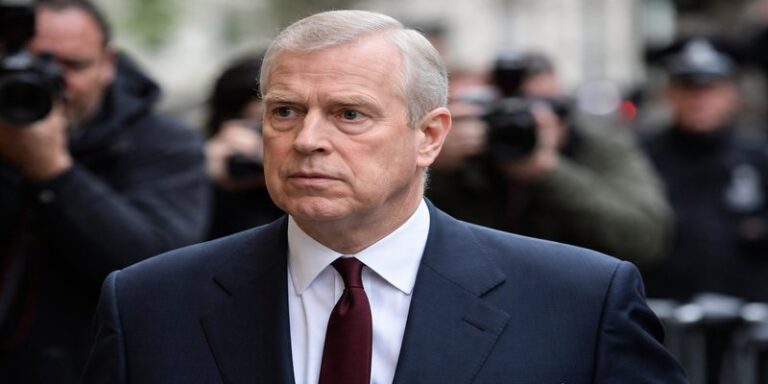
Members of the British Royal Family often live under intense public scrutiny. Their actions and personal relationships can influence not only their own reputation but also the public image of the monarchy as an institution. One of the most controversial figures in recent royal history is Prince Andrew, Duke of York, the third child of Queen Elizabeth II and Prince Philip. Once known as a decorated naval officer and a prominent royal representative, Prince Andrew’s public image has changed dramatically over the past two decades.
A series of controversies and allegations, particularly relating to his association with the convicted sex offender Jeffrey Epstein, have generated widespread media attention and public debate. These events have raised important questions about accountability, reputation management, and the modern role of the monarchy (Clancy, 2021; Lee, 2024). This article explores Prince Andrew’s background, the controversies surrounding him, and the broader implications for the British royal family.
1.0 Prince Andrew: Early Life and Royal Role
4.1 A Royal Upbringing
Prince Andrew was born in 1960 at Buckingham Palace. As the second son of Queen Elizabeth II, he was not expected to inherit the throne but still played a visible role within the royal family. During his youth he gained popularity in the media and was often portrayed as one of the Queen’s favourite children (Cawthorne, 2021).
4.2 Naval Career and Royal Duties
Andrew served as an officer in the Royal Navy, including active duty during the Falklands War in 1982. His service earned him respect and contributed to a reputation as a dedicated royal figure (Cawthorne, 2021).
After leaving the navy, he took on a range of official royal duties, representing the United Kingdom at international events and supporting charitable organisations. From 2001 to 2011, he served as the UK’s Special Representative for International Trade and Investment, promoting British business interests overseas.
However, it was during this period that several controversies began to emerge.
2.0 Early Controversies and Criticism
2.1 Business Links and Diplomatic Concerns
While acting as a trade ambassador, Prince Andrew faced criticism regarding his connections with wealthy businessmen and foreign political figures. Some observers questioned whether these relationships created conflicts of interest or damaged the reputation of the royal family (Vashchenko, 2017).
For example, reports in British media highlighted his meetings with individuals who had controversial political backgrounds. Critics argued that such associations were inappropriate for a royal figure representing the United Kingdom internationally.
Although no wrongdoing was proven, these concerns contributed to growing scrutiny of the Duke of York’s activities.
3.0 The Epstein Connection
3.1 Friendship with Jeffrey Epstein
The most serious controversy surrounding Prince Andrew involves his association with Jeffrey Epstein, a financier who was convicted in 2008 of offences related to the sexual exploitation of minors.
Prince Andrew acknowledged that he had known Epstein and had stayed at some of his residences. However, he maintained that the friendship had been a mistake and that he had ended contact after Epstein’s conviction (Romberg, 2021).
Despite this explanation, photographs and reports suggested that the relationship continued for some time after Epstein’s legal troubles, intensifying public criticism.
3.2 Allegations Involving Virginia Giuffre
In 2015, Virginia Giuffre accused Prince Andrew of sexual misconduct, claiming she had been trafficked by Epstein and forced to have sexual relations with him when she was underage. Prince Andrew strongly denied these allegations.
The case gained significant media attention and became a major issue for the royal family. Scholars have noted that such allegations placed the monarchy in an unprecedented reputational crisis, especially in the context of the #MeToo movement, which has encouraged public scrutiny of powerful individuals accused of sexual misconduct (Clancy and Yelin, 2021).
4.0 The BBC Interview and Public Reaction
4.1 The 2019 Newsnight Interview
In November 2019, Prince Andrew gave a widely publicised interview on the BBC programme Newsnight. During the interview, he attempted to address the allegations and his relationship with Epstein.
However, the interview was widely criticised. Commentators argued that his responses lacked empathy and failed to address key concerns. Media analysts have described the interview as a significant public relations failure that intensified the controversy rather than resolving it (Chichon, 2021).
4.2 Stepping Back from Royal Duties
Shortly after the interview, Prince Andrew announced that he would step back from public royal duties. Several organisations and charities also distanced themselves from him, reflecting the reputational impact of the controversy.
In 2022, it was reported that Prince Andrew had reached a financial settlement with Virginia Giuffre in a civil lawsuit in the United States. The settlement did not involve an admission of liability but effectively ended the legal case.
5.0 Impact on the Monarchy
5.1 Reputation and Public Trust
The controversy surrounding Prince Andrew has had broader implications for the public perception of the British monarchy. Researchers have noted that scandals involving members of the royal family can influence how the institution is viewed by the public and the media (Clancy, 2021).
Because the monarchy relies heavily on public legitimacy and symbolic authority, reputational damage can create significant challenges. Studies examining media coverage suggest that Prince Andrew’s case has been widely discussed as an example of how modern royal families must manage crises in an era of constant global media attention (Vašková, 2025).
5.2 The Concept of The “Family Firm”
Historians often describe the British monarchy as “the family firm”, emphasising how it functions as both a family and a public institution (Owens, 2019). When one member becomes involved in controversy, it can affect the entire organisation.
As a result, the royal household has increasingly focused on a smaller group of “working royals”, with Prince Andrew largely excluded from official duties.
6.0 Media, Power and Public Accountability
6.1 Media Scrutiny in the Digital Age
The Prince Andrew controversy also illustrates the powerful role of modern media and public discourse. In the digital age, allegations and scandals spread rapidly through social media, news websites and documentaries.
Academic research highlights how these discussions shape narratives about the monarchy and influence public expectations of accountability and transparency (Lee, 2024).
6.2 Changing Expectations of Public Figures
The case has also been interpreted through the lens of wider social change. Scholars argue that movements advocating gender equality and justice for victims have increased pressure on powerful individuals to respond to allegations responsibly (Clancy and Yelin, 2021).
This changing social environment means that public institutions—including the monarchy—must adapt to new standards of accountability.
Prince Andrew’s story demonstrates how personal relationships and public controversies can significantly affect both individual reputations and institutional credibility. Once seen as a prominent royal ambassador and military veteran, the Duke of York has become one of the most controversial figures in modern royal history.
The allegations connected to Jeffrey Epstein, the widely criticised BBC interview, and the subsequent withdrawal from royal duties illustrate how quickly public trust can be damaged. More broadly, the episode highlights the challenges faced by the British monarchy in the modern media landscape, where transparency, accountability and public perception are more important than ever.
Whether the long-term impact on the monarchy will be lasting remains debated. What is clear, however, is that the controversy surrounding Prince Andrew has become a defining example of how reputation, power and public scrutiny intersect in contemporary royal life.
References
Cawthorne, N. (2021) Prince Andrew: Epstein, Maxwell and the Palace. London: Gibson Square.
Chichon, J.P. (2021) ‘Working Royals, Megxit and Prince Andrew’s disastrous BBC interview: The online media’s representation of the British monarchy between 2010 and 2020’. Journal of Language and Politics. Available at: https://www.jbe-platform.com/content/journals/10.1075/jlp.20020.chi.
Clancy, L. (2021) ‘The corporate power of the British monarchy: Capital, wealth and power in contemporary Britain’. The Sociological Review. Available at: https://journals.sagepub.com/doi/10.1177/0038026120916105.
Clancy, L. and Yelin, H. (2021) ‘Monarchy is a feminist issue: Andrew, Meghan and the #MeToo era monarchy’. Women’s Studies International Forum. Available at: https://www.sciencedirect.com/science/article/pii/S0277539520308141.
Lee, L. (2024) Monarch or President of the United Kingdom? Available at: https://papers.ssrn.com/sol3/papers.cfm?abstract_id=4880082.
Owens, E. (2019) The Family Firm: Monarchy, Mass Media and the British Public. London: University of London Press. Available at: https://sas-space.sas.ac.uk/9305/.
Romberg, M. (2021) ‘Royal scandals and public perception’. In: Empresses and Queens in the Courtly Public Sphere. Leiden: Brill.
Vašková, P. (2025) Depiction of the British Monarchy in Significant Online Media 2021–2023. Available at: https://dspace.cuni.cz/handle/20.500.11956/197083.