Modern scholarship presents British history as a dynamic field shaped by debates over power, identity, empire, industrialisation, democracy, and decolonisation. Historians increasingly examine not only political milestones but also social, cultural, economic, and imperial dimensions. Influential works such as The Oxford History of the British Empire (Louis, 1999; Brown, 1999), Darwin’s Britain and Decolonisation (1988), and Black’s The British Empire: A History and a Debate (2016) reveal how interpretations have shifted from celebratory imperial narratives to more critical, postcolonial analyses. Studies of textbooks and historical memory (Foster, 2005; MacKenzie, 2017; Nagre, 2025) further demonstrate how public history and education shape national identity.
Across the field, several key topics dominate: the formation of the British state, the Glorious Revolution, the Industrial Revolution, the British Empire, the World Wars, and the processes of decolonisation. Together, these themes form the backbone of British historical scholarship.
1.0 The Formation of the British State
One foundational topic is the creation of Britain as a political entity. The Acts of Union (1707, 1801) united England, Scotland, and later Ireland under a single parliament, reshaping governance and identity. Historians emphasise that Britain was not an inevitable nation-state but a product of negotiation, conflict, and compromise.
The Glorious Revolution of 1688–89 is often considered a turning point in constitutional history. It established parliamentary sovereignty, limited monarchical power, and laid groundwork for constitutional monarchy. Though earlier historians portrayed it as a bloodless triumph of liberty, recent scholarship questions its simplicity, highlighting religious tensions and political instability (Black, 2016).
For example, the Bill of Rights (1689) curtailed royal authority and strengthened parliamentary control over taxation and law-making. This settlement shaped Britain’s political culture and influenced later democratic developments, including reforms in the nineteenth century.
2.0 The Industrial Revolution
The Industrial Revolution remains central to British historiography. Beginning in the late eighteenth century, it transformed Britain from an agrarian society into the world’s first industrial economy. Scholars highlight innovations such as steam power, textile mechanisation, and coal mining expansion.
The consequences were profound: rapid urbanisation, new class structures, and global economic dominance. As Parsons (2019) notes, industrialisation enabled Britain’s nineteenth-century imperial expansion. However, historians increasingly stress its social costs, including child labour, poor housing, and environmental degradation.
For example, cities such as Manchester and Birmingham grew rapidly, becoming symbols of industrial progress and social inequality. The work of social historians has drawn attention to working-class experiences, challenging earlier narratives that focused primarily on inventors and entrepreneurs.
3.0 The British Empire
Few topics generate as much debate as the British Empire. At its height in the early twentieth century, it covered roughly a quarter of the world’s land surface. Earlier historiography often celebrated imperial achievement, but modern scholars offer more critical perspectives.
The Oxford History of the British Empire (Louis, 1999; Brown, 1999) provides a comprehensive overview of imperial governance, economics, and ideology. Black (2016) frames empire as both a historical reality and an ongoing debate about morality and legacy. Potter (2017) examines how imperial history itself has evolved as a discipline.
Educational studies (Abadia and Collins, 2018; Foster, 2005; MacKenzie, 2017) reveal how representations of empire in textbooks have shifted over time—from heroic conquest narratives to discussions of exploitation and resistance. Nagre (2025) highlights the persistence of Eurocentric narratives, showing that imperial perspectives still shape classroom history.
For instance, the Indian Rebellion of 1857 was once labelled a “mutiny,” implying illegitimacy. Contemporary historians often describe it as a broader anti-colonial uprising, reflecting changing interpretative frameworks.
4.0 Britain and the World Wars
The First and Second World Wars represent defining moments in twentieth-century British history. They reshaped the economy, society, and global position of Britain.
The First World War strained imperial resources but also strengthened calls for self-determination within colonies (Brown, 1999). The Second World War further accelerated imperial decline. While Britain emerged victorious in 1945, it faced economic exhaustion and growing anti-colonial movements.
Textbook research (Foster, 2005) demonstrates how narratives of wartime unity often marginalised colonial contributions. Millions of soldiers from India, Africa, and the Caribbean served in both wars, yet their roles were historically underrepresented.
An example is the Battle of Britain (1940), often portrayed as a purely national triumph. However, pilots from across the empire and occupied Europe contributed significantly, complicating narrow national narratives.
5.0 Decolonisation and the End of Empire
The process of decolonisation after 1945 is a major focus of contemporary scholarship. Darwin (1988) describes Britain’s retreat from empire as complex and uneven rather than sudden. White (2014) emphasises that decolonisation involved negotiation, conflict, and political calculation.
Boyce (1999) traces imperial contraction from the American Revolution to the late twentieth century, showing that decolonisation was part of a longer trajectory. Thomas, Moore and Butler (2015) situate British decolonisation within a broader European crisis of empire.
For example, Indian independence in 1947 marked a watershed moment. While often portrayed as an orderly transfer of power, it was accompanied by partition violence and mass displacement. Similarly, conflicts in Kenya (the Mau Mau uprising) and Malaya illustrate that decolonisation could be violent and contested.
6.0 Historiography and Historical Memory
A distinctive feature of British history as a field is its strong engagement with historiography—the study of how history is written. Louis (1999) and Potter (2017) show how imperial history has shifted from imperial celebration to critical re-evaluation influenced by postcolonial theory.
Studies of textbooks and historical culture (MacKenzie, 2017; Grindel, 2017; Nieuwenhuyse, 2018) reveal that public understanding of Britain’s past often lags behind academic debate. The way empire, slavery, and decolonisation are taught remains politically sensitive.
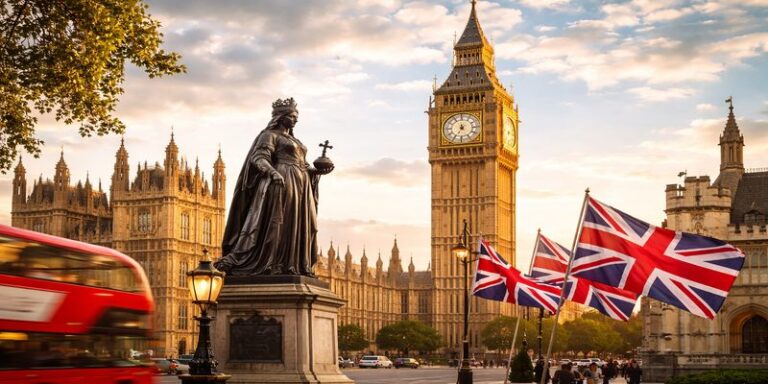
For instance, current debates about statues of imperial figures demonstrate how historical memory influences contemporary politics. Historians play a crucial role in contextualising such controversies within broader scholarly understanding.
British history encompasses far more than monarchs and battles. It is a field shaped by constitutional change, industrial transformation, imperial expansion, global warfare, and postcolonial reassessment. Modern scholarship highlights complexity, diversity, and contested interpretations rather than simple national triumph narratives.
From the Glorious Revolution’s constitutional legacy to the Industrial Revolution’s global impact, from the rise of the British Empire to the challenges of decolonisation, key themes interconnect across centuries. Increasingly, historians integrate perspectives from former colonies, working-class communities, and marginalised groups, ensuring that British history is understood not as an isolated national story but as part of a broader global narrative.
References
Abadia, L. and Collins, J.M. (2018) Imperial ideas and ideologies of empire: British imperial history in educational books for KS3 history. Emerald Publishing.
Black, J. (2016) The British Empire: A History and a Debate. London: Routledge.
Boyce, G. (1999) Decolonisation and the British Empire, 1775–1997. Basingstoke: Macmillan.
Brown, J. (1999) The Oxford History of the British Empire: Volume IV: The Twentieth Century. Oxford: Oxford University Press.
Darwin, J. (1988) Britain and Decolonisation: The Retreat from Empire in the Post-war World. London: Macmillan.
Foster, S. (2005) ‘The British Empire and Commonwealth in World War II: selection and omission in English history textbooks’, History Education Research Journal, 5(2), pp. 72–89.
Louis, W.R. (1999) The Oxford History of the British Empire: Volume V: Historiography. Oxford: Oxford University Press.
MacKenzie, J.M. (2017) ‘Imperialism and the school textbook’, in Propaganda and Empire. Manchester: Manchester University Press.
Nagre, K. (2025) ‘(Mis) educating England: Eurocentric narratives in secondary school history textbooks’, Race Ethnicity and Education.
Parsons, T.H. (2019) The British Imperial Century, 1815–1914: A World History Perspective. Lanham: Rowman & Littlefield.
Potter, S. (2017) British Imperial History. Basingstoke: Palgrave Macmillan.
Thomas, M., Moore, B. and Butler, L. (2015) Crises of Empire: Decolonization and Europe’s Imperial States. London: Bloomsbury.
White, N. (2014) Decolonisation: The British Experience since 1945. London: Routledge.