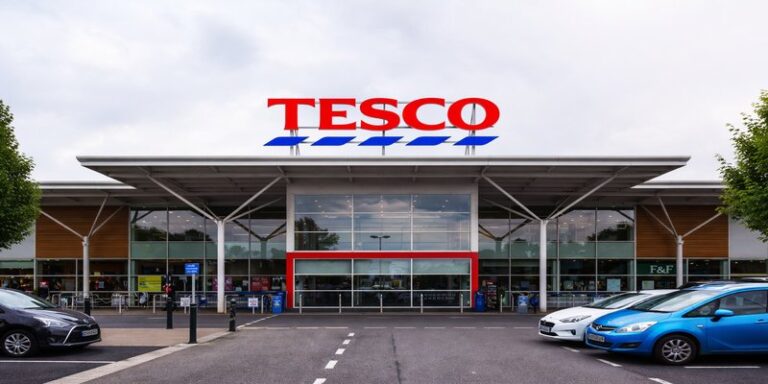
Tesco PLC is one of the United Kingdom’s largest retailers and a prominent example of a public limited company (PLC) listed on the London Stock Exchange (LSE). As a PLC, Tesco is a separate legal entity distinct from its shareholders, meaning it can own property, enter contracts and sue or be sued in its own name (Hudson, 2017). Shareholders benefit from limited liability, restricting their financial risk to the amount invested.
According to Kershaw (2012), incorporation allows large enterprises to raise substantial capital, a necessity for multinational expansion. Tesco has utilised this structure to expand beyond the UK into Europe and Asia, demonstrating how PLC status facilitates access to public capital markets and large-scale growth.
1.0 Legal Framework: The Companies Act 2006
All UK PLCs operate under the Companies Act 2006, the principal source of company law in the UK. A central feature is section 172, which requires directors to promote the success of the company for the benefit of its members (shareholders), while having regard to factors such as employees, suppliers, community impact and the environment (Iqbal and Keay, 2019).
This approach is known as “enlightened shareholder value” (ESV). Rather than pursuing short-term profit alone, directors must consider long-term sustainability (Nanavati, 2023). For Tesco, this means balancing competitive pricing and profitability with supply chain ethics, employee welfare and environmental performance.
For example, Tesco’s annual reports include disclosures on environmental targets, workforce engagement and supplier relationships, reflecting compliance with both legal and governance expectations.
2.0 Primary Objective: Maximising Shareholder Value
The traditional view of PLCs emphasises maximising shareholder wealth (Arnold and Lewis, 2019). Financial management theory suggests that companies should make investment and financing decisions that increase the market value of shares (Atrill, 2006).
Tesco demonstrates this objective through:
- Dividend payments to shareholders
- Share buy-back programmes (where applicable)
- Strategic cost control and efficiency initiatives
- Investment in digital transformation and online retail
However, the 2014 Tesco accounting scandal—where profits were overstated—illustrates the risks of prioritising financial performance without sufficient governance controls (Chen, 2022). The case reinforced the importance of transparent financial reporting and strong board oversight.
3.0 Corporate Governance and Accountability
As a listed PLC, Tesco is subject to the UK Corporate Governance Code and oversight from the Financial Reporting Council (FRC). Good governance ensures accountability, fairness and transparency (Turner, 2009).
Corporate governance mechanisms at Tesco include:
- A Board of Directors with executive and non-executive members
- Audit, remuneration and nomination committees
- Independent external auditors
- Shareholder voting rights at annual general meetings
The governance reforms following the accounting scandal demonstrate how PLCs are held accountable not only legally but also reputationally. Woods (2022) notes that risk management in retail corporations like Tesco is central to protecting long-term shareholder value.
4.0 Economic Contribution and Scale
Large PLCs significantly contribute to national economies. Tesco employs hundreds of thousands of staff globally and supports extensive supply chains. Such companies contribute to UK GDP, employment and tax revenue.
According to financial management literature, the scale achieved by PLCs allows economies of scale, reducing average costs and increasing competitiveness (Arnold and Lewis, 2019). Tesco’s purchasing power enables competitive pricing strategies, strengthening its market position against rivals such as Sainsbury’s and Asda.
However, scale also increases complexity, requiring strong governance and regulatory compliance.
5.0 Financial Reporting and Transparency
PLCs must prepare financial statements in accordance with International Financial Reporting Standards (IFRS) and the Companies Act 2006. Transparency ensures investor confidence and efficient capital markets (Hudson, 2017).
Tesco publishes:
- Annual financial statements
- Strategic reports
- Sustainability disclosures
- Section 172 statements
The separation of CSR reports from financial reports, discussed by Idowu and Towler (2004), demonstrates how major UK companies communicate non-financial performance alongside profitability.
6.0 Corporate Social Responsibility (CSR)
Although PLCs are profit-oriented, large corporations increasingly integrate CSR into business strategy. Rühmkorf (2015) argues that CSR has become embedded within corporate governance debates, particularly in relation to global supply chains.
Tesco engages in CSR initiatives such as:
- Reducing food waste
- Supporting food banks
- Providing community spaces
- Setting carbon reduction targets
Pulker et al. (2018) highlight how supermarkets incorporate public health and sustainability commitments into corporate strategies. Tesco’s efforts to reformulate products and promote healthier options illustrate how CSR aligns with long-term brand value.
The Companies Act 2006 indirectly encourages such practices through its requirement to consider environmental and community impacts (Iqbal and Keay, 2019).
7.0 Stakeholder versus Shareholder Debate
The Tesco case also reflects the broader academic debate between shareholder primacy and stakeholder theory (Vasudev, 2012). While UK law prioritises shareholders, it acknowledges wider stakeholder interests.
For example:
- Tesco’s employee engagement policies support workforce stability.
- Ethical sourcing programmes address supplier relationships.
- Environmental commitments reflect societal expectations.
Nanavati (2023) suggests that modern governance is shifting gradually towards stakeholder capitalism, though shareholder value remains central.
8.0 Strengths and Limitations of the PLC Structure
Strengths
- Access to substantial capital
- Limited liability protection
- Enhanced credibility
- Transferable shares
- Potential for large-scale growth
Limitations
- Regulatory complexity
- Public scrutiny
- Agency problems between directors and shareholders
- Pressure for short-term financial results
The Tesco accounting scandal exemplifies the agency problem, where management actions conflicted with shareholder interests (Chen, 2022). Effective governance mechanisms are therefore essential.
Tesco PLC exemplifies the characteristics of a UK public limited company operating within a complex legal, financial and ethical framework. As a separate legal entity, Tesco benefits from access to capital markets and limited liability, enabling multinational expansion and large-scale operations.
However, with these advantages come responsibilities: compliance with the Companies Act 2006, adherence to corporate governance standards, transparent financial reporting and engagement in corporate social responsibility.
The case illustrates that while the primary objective of PLCs remains maximising shareholder value, contemporary governance increasingly integrates stakeholder considerations through the principle of enlightened shareholder value. Tesco’s evolution—particularly following governance challenges—demonstrates how large PLCs must balance profitability, accountability and sustainability to achieve long-term success.
References
Arnold, G. and Lewis, D.S. (2019) Corporate Financial Management. Harlow: Pearson.
Atrill, P. (2006) Financial Management for Decision Makers. Harlow: Pearson Education.
Chen, J.J. (2022) International Cases of Corporate Governance. Singapore: Springer.
Hudson, A. (2017) Understanding Company Law. London: Routledge. Available at: http://www.alastairhudson.com/companylaw/.
Idowu, S.O. and Towler, B.A. (2004) ‘A comparative study of the contents of corporate social responsibility reports of UK companies’, Management of Environmental Quality, 15(4), pp. 420–437. Available at: https://www.emerald.com/meq/article/15/4/420/457720.
Iqbal, T. and Keay, A. (2019) ‘An evaluation of sustainability in large British companies’, Common Law World Review, 48(2), pp. 88–110. Available at: https://journals.sagepub.com/doi/10.1177/1473779519839611.
Kershaw, D. (2012) Company Law in Context: Text and Materials. Oxford: Oxford University Press.
Nanavati, H. (2023) ‘A Study of Section 172(1) of the Companies Act 2006’, SSRN. Available at: https://papers.ssrn.com/sol3/papers.cfm?abstract_id=4520212.
Pulker, C.E. et al. (2018) ‘Global supermarkets’ corporate social responsibility commitments to public health’, Globalization and Health, 14(121). Available at: https://link.springer.com/article/10.1186/s12992-018-0440-z.
Rühmkorf, A. (2015) Corporate Social Responsibility, Private Law and Global Supply Chains. Cheltenham: Edward Elgar.
Turner, C. (2009) Corporate Governance: A Practical Guide for Accountants. Oxford: Elsevier.
Vasudev, P.M. (2012) ‘The stakeholder principle, corporate governance, and theory’, Hofstra Law Review, 41(2), pp. 399–454. Available at: https://scholarlycommons.law.hofstra.edu/hlr/vol41/iss2/.