In today’s fast-paced society, many individuals experience persistent stress, anxiety and nervousness, often linked to work pressures, academic demands, social expectations and digital overload. Chronic stress not only affects psychological wellbeing but also contributes to physical health problems such as hypertension, sleep disturbance and weakened immunity (McEwen, 2007; Guyton and Hall, 2021). Consequently, relaxation techniques have become essential tools for promoting mental resilience and restoring physiological balance.
Relaxation techniques are structured practices designed to activate the body’s relaxation response, a physiological state characterised by reduced heart rate, lower blood pressure and decreased muscle tension (Benson, 2000). When practised consistently, these methods can significantly improve emotional regulation and overall wellbeing. This article explores evidence-based relaxation techniques and their effectiveness in managing stress and anxiety.
1.0 Understanding the Stress Response
Stress activates the sympathetic nervous system, triggering the “fight or flight” response. This leads to the release of cortisol and adrenaline, increased heart rate and heightened alertness (Guyton and Hall, 2021). While adaptive in emergencies, prolonged activation contributes to anxiety disorders and cardiovascular strain (McEwen, 2007).
Relaxation techniques counteract this response by stimulating the parasympathetic nervous system, sometimes referred to as the “rest and digest” system. This shift restores physiological equilibrium and promotes calmness.
2.0 Relaxation Techniques
2.1 Deep Breathing
Deep breathing, also known as diaphragmatic breathing, is one of the simplest and most accessible relaxation techniques. It involves slow inhalation through the nose, brief breath retention and controlled exhalation through the mouth.
Benson (2000) describes how deep breathing triggers the relaxation response, reducing heart rate and muscle tension. Research suggests that paced breathing can lower anxiety levels by regulating autonomic nervous system activity (Jerath et al., 2015).
Example: A student experiencing nervousness before an examination may practise slow breathing for five minutes, reducing physical symptoms such as trembling and rapid heartbeat.
2.2 Progressive Muscle Relaxation (PMR)
Developed by Jacobson (1938), Progressive Muscle Relaxation (PMR) involves systematically tensing and then relaxing muscle groups from the toes to the head. This enhances body awareness and helps individuals recognise and release physical tension.
PMR has demonstrated effectiveness in reducing symptoms of generalised anxiety and insomnia (Davis, Eshelman and McKay, 2008). By consciously releasing muscular tension, individuals experience reduced somatic manifestations of stress.
2.3 Visualisation
Visualisation involves imagining oneself in a peaceful environment or successfully navigating a stressful situation. This cognitive rehearsal technique can enhance confidence and emotional control.
Globokar (2020) notes that visualisation is widely used in performance psychology to improve outcomes in public speaking and sports. By mentally practising calm behaviour, individuals prime neural pathways associated with positive coping.
Example: An employee preparing for a presentation may visualise delivering it confidently, reducing anticipatory anxiety.
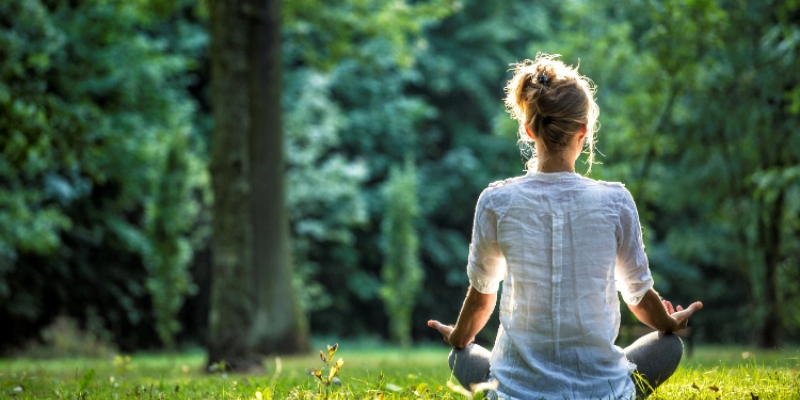
2.4 Mindfulness Meditation
Mindfulness meditation encourages non-judgemental awareness of present-moment experiences, including thoughts, sensations and emotions. Kabat-Zinn (1994) defines mindfulness as purposeful, present-moment awareness without judgement.
Research indicates that mindfulness-based interventions significantly reduce stress, anxiety and depressive symptoms (Khoury et al., 2013). By fostering acceptance rather than avoidance of uncomfortable emotions, mindfulness enhances emotional resilience.
Neurobiological studies demonstrate reduced amygdala reactivity following mindfulness practice, suggesting improved emotional regulation (Hölzel et al., 2011).
2.5 Guided Imagery
Guided imagery combines elements of visualisation and meditation. Individuals listen to structured audio recordings that guide them through calming scenarios, such as walking along a beach or resting in a forest.
Klein (2020) explains that guided imagery helps redirect attention away from intrusive thoughts, promoting relaxation. Clinical studies show that guided imagery can reduce stress and improve coping in medical settings.
2.6 Yoga and Tai Chi
Yoga and tai chi integrate gentle movement, controlled breathing and focused attention. These practices enhance flexibility while simultaneously calming the mind.
Evidence suggests that yoga reduces cortisol levels and improves mood in individuals experiencing chronic stress (Streeter et al., 2012). Tai chi has similarly been associated with reduced anxiety and improved balance in older adults.
Trachman (2024) highlights the therapeutic potential of yoga-based interventions in reducing psychological distress.
2.7 Progressive Relaxation Throughout the Day
A flexible version of PMR involves noticing tension in specific muscle groups during daily activities and consciously releasing it. Davis et al. (2008) recommend brief relaxation “check-ins” during work hours to prevent stress accumulation.
For example, office workers may pause to relax shoulder and neck muscles after prolonged computer use.
2.8 Aromatherapy
Aromatherapy utilises essential oils such as lavender, chamomile and bergamot to promote relaxation. Olfactory stimulation influences the limbic system, which governs emotional responses.
The National Association for Holistic Aromatherapy (2024) reports that certain essential oils are associated with reduced anxiety and improved sleep. Lavender oil, in particular, has demonstrated calming effects in clinical studies.
2.9 Listening to Music
Music has profound effects on mood regulation. Listening to soothing music or nature sounds can reduce physiological arousal and promote emotional calmness (MacDonald, Kreutz and Mitchell, 2012).
Music therapy is increasingly incorporated into healthcare settings to support stress management and recovery.
2.10 Journaling
Journaling provides a structured outlet for processing thoughts and emotions. Expressive writing has been associated with improved emotional clarity and reduced psychological distress (Pennebaker and Chung, 2011).
Adams (1990) emphasises journaling as a method for self-reflection and problem-solving. Writing before stressful events can help clarify concerns and reduce anticipatory anxiety.
3.0 Integrating Relaxation Techniques into Daily Life
Effective stress management often requires combining multiple techniques. For instance:
- Deep breathing during acute stress
- Yoga sessions for weekly physical and mental balance
- Journaling for emotional processing
- Guided imagery before sleep
Consistency enhances benefits. Even short daily practices—10 to 15 minutes—can significantly reduce stress over time.
4.0 Limitations and Considerations
While relaxation techniques are highly beneficial, they are not substitutes for professional treatment in severe anxiety disorders. Individuals experiencing persistent or debilitating symptoms should seek medical advice.
Moreover, responses vary; some individuals may prefer physical approaches such as yoga, while others benefit more from cognitive methods like journaling or mindfulness.
Relaxation techniques provide practical, accessible and evidence-based strategies for managing stress, anxiety and nervousness. By activating the body’s relaxation response and promoting emotional awareness, these methods improve both psychological and physiological wellbeing.
From deep breathing and progressive muscle relaxation to mindfulness meditation, yoga and journaling, individuals can experiment with different approaches to determine what works best. Regular practice fosters resilience, enhances mental clarity and supports long-term health.
In an increasingly demanding world, cultivating relaxation skills is not merely a luxury—it is a vital component of sustainable wellbeing.
References
Adams, K. (1990) Journal to the Self. New York: Warner Books.
Benson, H. (2000) The Relaxation Response. New York: HarperTorch.
Davis, M., Eshelman, E.R. and McKay, M. (2008) The Relaxation and Stress Reduction Workbook. Oakland: New Harbinger.
Globokar, L. (2020) ‘The power of visualization and how to use it’, Forbes. Available at: https://www.forbes.com.
Guyton, A.C. and Hall, J.E. (2021) Guyton and Hall Textbook of Medical Physiology. 14th edn. Philadelphia: Elsevier.
Hölzel, B.K. et al. (2011) ‘How does mindfulness meditation work?’, Perspectives on Psychological Science, 6(6), pp. 537–559.
Jacobson, E. (1938) Progressive Relaxation. Chicago: University of Chicago Press.
Jerath, R. et al. (2015) ‘Physiology of long pranayamic breathing’, Medical Hypotheses, 85(5), pp. 486–496.
Khoury, B. et al. (2013) ‘Mindfulness-based therapy: a comprehensive meta-analysis’, Clinical Psychology Review, 33(6), pp. 763–771.
MacDonald, R., Kreutz, G. and Mitchell, L. (2012) Music, Health, and Wellbeing. Oxford: Oxford University Press.
McEwen, B.S. (2007) ‘Physiology and neurobiology of stress’, Physiological Reviews, 87(3), pp. 873–904.
National Association for Holistic Aromatherapy (2024) What is aromatherapy? Available at: https://naha.org.
Pennebaker, J.W. and Chung, C.K. (2011) ‘Expressive writing’, Oxford Handbook of Health Psychology, pp. 417–437.
Streeter, C.C. et al. (2012) ‘Effects of yoga on the autonomic nervous system’, Medical Hypotheses, 78(5), pp. 571–579.
Trachman, S.B. (2024) ‘The benefits of yoga and tai chi for stress relief’, Psychology Today. Available at: https://www.psychologytoday.com.