✧ Following the joy and celebration of Easter Sunday comes Easter Monday, a day that continues the reflection and festivities associated with the resurrection of Jesus Christ. While Easter Sunday marks the central Christian celebration of the resurrection, Easter Monday extends the meaning of the event into everyday life, allowing communities to continue observing the significance of Easter through worship, tradition and shared cultural practices.
In many countries, Easter Monday is recognised as a public holiday, offering a moment of rest, reflection and communal celebration after the solemnity of Holy Week. Although it may appear less religiously prominent than Easter Sunday, Easter Monday still carries historical and cultural importance within Christian tradition. Churches, families and communities often use the day to gather, continue festive meals, participate in outdoor activities and reinforce the themes of renewal, hope and community associated with the Easter season.
Understanding Easter Monday therefore requires attention to both its religious roots and its cultural development. Over centuries, the day has evolved from a liturgical continuation of Easter into a wider social holiday observed across Europe, the United Kingdom and other parts of the world. This article explores the origins, meaning and modern practices associated with Easter Monday, demonstrating why it remains a significant part of the Easter celebration.
1.0 The Historical Origins of Easter Monday
1.1 Easter Monday in Early Christian Tradition
The origins of Easter Monday lie in the early Christian understanding that Easter should not be limited to a single day. In the early Church, the resurrection of Christ was celebrated throughout a period known as the Easter Octave, an eight-day festival beginning on Easter Sunday and continuing for the following week (Bradshaw and Johnson, 2012).
Within this extended celebration, Easter Monday became the first day after Easter Sunday, representing the continuation of the joy associated with Christ’s resurrection. Early Christian communities believed that the resurrection transformed human history, and therefore the celebration deserved more than a single day of recognition.
Historical sources indicate that Christian worship during the Easter Octave included additional prayers, scripture readings and baptisms, emphasising the new life and spiritual renewal symbolised by the resurrection (Leonhard, 2012). As Christianity spread across Europe, these extended celebrations gradually became embedded in religious and social traditions.
1.2 Development of Easter Monday as a Public Holiday
Over time, Easter Monday became integrated into the social and civic calendar. In medieval Europe, the Easter season was one of the most important religious periods of the year, and communities often continued celebrations for several days after Easter Sunday.
By the early modern period, many European countries recognised Easter Monday as an official holiday, allowing people to continue feasting, visiting relatives and participating in communal festivities (Barnett, 1949). This tradition remains visible today in countries such as the United Kingdom, France, Germany and Australia.
In Britain, Easter Monday is officially recognised as a bank holiday, meaning many workplaces and schools remain closed. This public recognition reflects the historical influence of Christianity on the national calendar and the enduring cultural importance of Easter.
2.0 The Religious Meaning of Easter Monday
2.1 Easter Monday and the Continuation of the Resurrection Story
Within Christian theology, Easter Monday represents the continuation of the resurrection narrative. The Gospels describe how the news of Christ’s resurrection spread gradually among the disciples in the days following Easter Sunday.
One well-known biblical episode associated with the period immediately after Easter is the Road to Emmaus story (Luke 24:13–35). In this account, two disciples encounter the resurrected Jesus while travelling to the village of Emmaus. Many Christian traditions interpret this story as symbolising how believers gradually come to understand the meaning of the resurrection.
For this reason, Easter Monday services often reflect themes of recognition, faith and renewed understanding. Churches may hold additional prayers or scripture readings that continue the reflection begun on Easter Sunday.
2.3 Spiritual Themes of Easter Monday
The spiritual meaning of Easter Monday is closely connected to the broader theological themes of Easter. These include:
- Renewal and new life, symbolising spiritual rebirth
- Hope and transformation, reflecting the belief that resurrection brings victory over death
- Community and fellowship, emphasising the collective celebration of faith
The extension of Easter celebrations into Monday reinforces the idea that the resurrection is not a single moment but a continuing source of hope and renewal for believers.
3.0 Cultural Traditions of Easter Monday
3.1 Easter Monday in the United Kingdom
In the United Kingdom, Easter Monday is widely recognised as a bank holiday, providing an opportunity for leisure, travel and family gatherings. While many people attend church on Easter Sunday, Easter Monday often becomes a day for relaxation and social activities.
Common British traditions associated with Easter Monday include:
- Outdoor events and sporting activities, particularly in parks and community spaces
- Family meals and gatherings, extending the Easter celebration
- Local festivals and fairs, especially in rural communities
For example, several towns in England host Easter Monday fairs or charity events, reflecting the longstanding connection between Easter celebrations and community life.
3.2 Easter Monday Traditions in Europe
Across Europe, Easter Monday is marked by a variety of distinctive customs. These traditions often combine religious symbolism with regional cultural practices.
In Poland and several Central European countries, Easter Monday is associated with Śmigus-Dyngus, sometimes called “Wet Monday.” On this day, people playfully splash water on one another, a custom believed to symbolise purification and renewal.
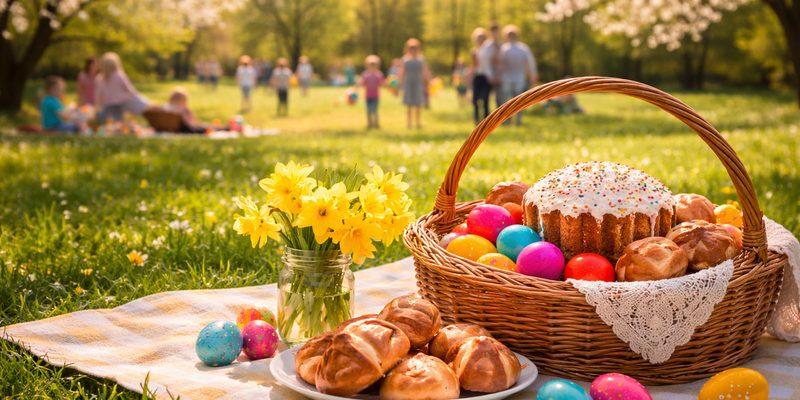
In France and parts of Germany, families often celebrate Easter Monday with picnics and outdoor meals, reflecting the arrival of spring and the festive atmosphere of the Easter season.
These examples demonstrate how Easter Monday functions as both a religious continuation of Easter and a celebration of seasonal renewal.
4.0 Easter Monday in Modern Society
4.1 A Holiday of Rest and Community
In contemporary society, Easter Monday often serves as a day of rest after the intense religious observances of Holy Week. While Good Friday and Easter Sunday remain central to Christian worship, Easter Monday provides an opportunity for communities to continue celebrating in a more relaxed setting.
This dual identity—both religious and cultural—helps explain the enduring popularity of the day. Many individuals who do not regularly attend church still participate in Easter Monday traditions such as family gatherings, outdoor activities and community events.
Scholars of cultural festivals note that holidays often evolve in this way, combining religious origins with social customs that strengthen community bonds (Etzioni and Bloom, 2004).
4.2 Easter Monday and Seasonal Celebration
Another reason for the enduring appeal of Easter Monday is its association with springtime. In the Northern Hemisphere, Easter occurs during a season traditionally linked with growth, renewal and new beginnings.
Outdoor celebrations, sporting events and picnics held on Easter Monday often reflect this seasonal symbolism. The combination of religious meaning and natural renewal gives Easter Monday a distinctive place within the wider Easter season.
5.0 Why Easter Monday Still Matters
Although it may receive less attention than Easter Sunday, Easter Monday remains an important part of the Easter celebration. It allows the joy of the resurrection to extend beyond a single day and encourages communities to reflect on the lasting meaning of Easter.
In religious terms, the day reinforces the message that the resurrection transforms ordinary life, not just sacred moments of worship. In cultural terms, Easter Monday strengthens social connections through shared meals, gatherings and traditions.
This blending of spiritual reflection and social celebration illustrates how religious festivals continue to shape modern life. Even in increasingly secular societies, holidays such as Easter Monday provide opportunities for community, rest and renewal.
∎ Easter Monday represents the continuation of the Easter celebration, bridging the sacred events of Holy Week with the everyday lives of believers and communities. Historically rooted in the early Christian observance of the Easter Octave, the day has developed into both a religious and cultural holiday across many countries.
Its significance lies not only in theology but also in tradition. Through family gatherings, outdoor events and community celebrations, Easter Monday extends the themes of hope, renewal and new life that define the Easter season.
In this way, Easter Monday demonstrates how religious festivals evolve over time, blending faith, culture and social practice. Whether observed through church services, festive meals or simple rest during a public holiday, the day continues to remind communities of the enduring message of Easter: that renewal and hope remain possible in every generation.
References
Barnett, J. (1949) Easter: Its Story and Meaning. London: Oxford University Press.
Bradshaw, P. and Johnson, M. (2012) The Origins of Feasts, Fasts and Seasons in Early Christianity. Collegeville: Liturgical Press.
Etzioni, A. and Bloom, J. (2004) We Are What We Celebrate: Understanding Holidays and Rituals. New York: New York University Press.
Leonhard, C. (2012) The Jewish Pesach and the Origins of the Christian Easter. Berlin: Walter de Gruyter.
Church of England (n.d.) The Meaning of Easter. Available at: https://www.churchofengland.org.