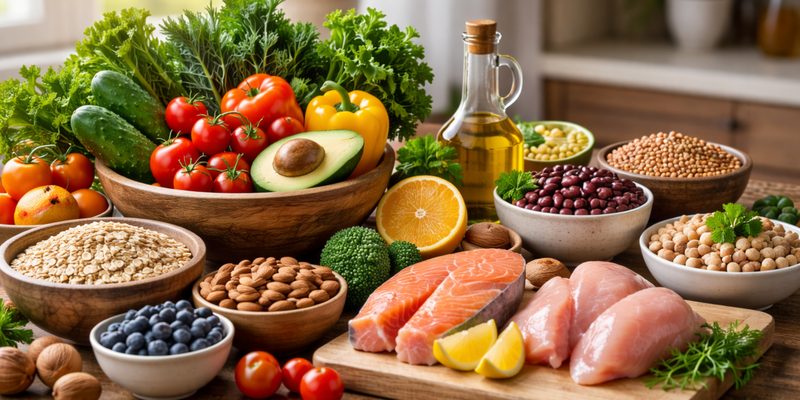
The term whole food is widely used in discussions about healthy eating, yet it is often misunderstood. In simple terms, whole foods are foods that are close to their natural state and have undergone little or no processing. They usually contain no or few added ingredients, such as sugar, salt, preservatives or artificial flavourings. Common examples include fresh fruit, vegetables, whole grains, beans, nuts, seeds, eggs and fresh fish. By contrast, highly processed items such as sugary cereals, fizzy drinks and packaged snacks are much further removed from their original form (Jones, 2019; NHS, 2023).
Interest in whole foods has grown because of concerns about diet-related illness, including obesity, type 2 diabetes and heart disease. Research increasingly suggests that diets based mainly on whole or minimally processed foods are associated with better health outcomes than diets dominated by ultra-processed foods (Elizabeth et al., 2020; Juul, Vaidean and Parekh, 2021). This article explains what whole foods are, explores their nutritional value, considers their health benefits and limitations, and shows how they can be used in everyday eating.
1.0 Understanding Whole Foods
1.1 Definition and Key Features
A whole food is generally understood as a food that remains largely intact in its natural structure. It may be washed, chopped, frozen or dried, but it is not heavily altered by industrial processing. For example, an apple is a whole food, and so are plain oats and dried lentils. A tin of tomatoes with no added sugar may also still fit within a whole-food approach because it remains nutritionally similar to the original food.
Whole foods are often rich in fibre, vitamins, minerals and phytochemicals. They also preserve what nutrition scientists call the food matrix—the natural structure in which nutrients are packaged together. This matters because nutrients can act differently when eaten as part of a whole food rather than as isolated supplements or heavily refined ingredients (Aguilera, 2019).
1.2 Whole Foods and Minimally Processed Foods
It is important not to confuse all processing with poor nutrition. Some processing is helpful and safe. For instance, frozen peas, pasteurised milk and wholemeal bread still provide important nutrients and may support a healthy diet. The more useful distinction is often between minimally processed foods and ultra-processed foods. Minimally processed foods remain recognisable as the original food, while ultra-processed foods typically contain industrial ingredients, additives and refined components designed for convenience, shelf life and taste (Monteiro et al., 2012; Gibney et al., 2017).
2.0 Nutritional Importance of Whole Foods
2.2 Rich Source of Essential Nutrients
Whole foods tend to offer a broad range of nutrients in balanced combinations. Vegetables provide vitamins, minerals and antioxidants. Whole grains supply fibre, B vitamins and slow-release carbohydrate. Beans and lentils offer protein, fibre and iron. Nuts and seeds provide healthy fats and micronutrients such as magnesium. Because these foods are not stripped down during refining, they often retain more nutritional value than their processed equivalents (Whitney et al., 2019).
For example, brown rice contains the bran and germ, which provide fibre and nutrients, whereas white rice has had these layers removed. Similarly, eating a whole orange provides fibre and natural plant compounds that orange-flavoured sweets or even some juices do not.
2.2 Satiety and Energy Balance
Whole foods may also help with fullness and appetite control. Foods high in fibre and water, such as fruit, vegetables and pulses, usually take longer to chew and digest, which can help people feel satisfied for longer. This may reduce overeating and support healthier body weight. A lunch of jacket potato, beans and salad, for instance, is likely to be more filling and nutritionally balanced than crisps and a sugary drink.
3.0 Health Benefits of a Whole-Food Diet
3.1 Reduced Risk of Chronic Disease
A dietary pattern centred on whole foods is commonly linked with improved long-term health. Evidence suggests that diets lower in ultra-processed foods and higher in unprocessed or minimally processed foods are associated with lower risks of cardiovascular disease, metabolic disorders and poorer overall diet quality (Elizabeth et al., 2020; Juul, Vaidean and Parekh, 2021). While no single food can prevent disease, the overall pattern matters greatly.
For example, someone who regularly chooses porridge oats, fruit, vegetable soups, whole grains and beans is likely to consume more fibre and fewer added sugars than someone relying mainly on packaged snacks, takeaway meals and sweetened drinks.
3.2 Support for Digestive Health
Whole foods, especially plant foods, are valuable for gut health because they provide fibre that supports healthy bowel function and feeds beneficial gut bacteria. Diets rich in legumes, whole grains, vegetables and fruit are therefore associated with better digestive wellbeing and may reduce constipation.
3.3 Better Dietary Quality Overall
Whole-food eating often improves diet quality almost automatically. When meals are built around foods such as potatoes, lentils, eggs, fish, vegetables and fruit, there is naturally less room for products high in added sugar, salt and unhealthy fats. WHO and other public health bodies consistently recommend dietary patterns based on vegetables, fruits, legumes, whole grains and nuts for overall health (WHO, 2024; NHS, 2023).
4.0 Examples of Whole Foods in Everyday Life
Simple Practical Examples
A whole-food approach does not require expensive or fashionable products. It can be very ordinary and affordable. Examples include:
Breakfast
Porridge oats made with milk, topped with banana and seeds.
Lunch
A wholegrain sandwich with egg, salad and tomato, plus an apple.
Dinner
Grilled fish, boiled potatoes and steamed vegetables.
Snack
A handful of unsalted nuts or plain yoghurt with berries.
These examples show that whole-food eating is less about perfection and more about choosing foods that remain nutritionally intact.
5.0 Limitations and Misunderstandings
5.1 Whole Food Does Not Mean Flawless
Although whole foods are beneficial, the term should not be treated as a moral label. Not every processed food is harmful, and not every whole food is suitable in every situation. For example, some people need convenient fortified foods or modified textures for medical reasons. Others may rely on tinned, frozen or packaged items because of budget, time or access. These foods can still be part of a healthy diet.
5.2 Balance Matters More Than Trends
A common misunderstanding is that healthy eating requires a completely “clean” diet. In reality, nutrition is about balance, consistency and overall dietary pattern. A diet rich in whole foods is desirable, but occasional processed foods do not automatically make a diet unhealthy. Public health guidance is more concerned with regular habits than strict dietary purity (Jones, 2019).
Whole foods are foods that remain close to their natural form and are generally minimally processed. They include staples such as fruit, vegetables, whole grains, beans, nuts, eggs and fresh animal foods. Their value lies not only in their vitamin and mineral content but also in their fibre, food structure and overall contribution to a balanced diet. Research suggests that dietary patterns based mainly on whole and minimally processed foods are linked with better health outcomes than diets high in ultra-processed products. Even so, a sensible approach is needed: not all processing is harmful, and healthy eating should remain practical, flexible and affordable. Overall, choosing more whole foods is a realistic and evidence-based way to improve nutrition and support long-term wellbeing.
References
Aguilera, J.M. (2019) ‘The food matrix: implications in processing, nutrition and health’, Critical Reviews in Food Science and Nutrition, 59(22), pp. 3612–3629. Available at: https://doi.org/10.1080/10408398.2018.1502743.
Elizabeth, L., Machado, P., Zinöcker, M., Baker, P. and Lawrence, M. (2020) ‘Ultra-processed foods and health outcomes: a narrative review’, Nutrients, 12(7), p. 1955. Available at: https://doi.org/10.3390/nu12071955.
Gibney, M.J., Forde, C.G., Mullally, D. and Gibney, E.R. (2017) ‘Ultra-processed foods in human health: a critical appraisal’, The American Journal of Clinical Nutrition, 106(3), pp. 717–724. Available at: https://doi.org/10.3945/ajcn.117.160440.
Jones, J.M. (2019) ‘Food processing: criteria for dietary guidance and public health?’, Proceedings of the Nutrition Society, 78(1), pp. 4–18. Available at: https://doi.org/10.1017/S0029665118002513.
Juul, F., Vaidean, G. and Parekh, N. (2021) ‘Ultra-processed foods and cardiovascular diseases: potential mechanisms of action’, Advances in Nutrition, 12(5), pp. 1673–1680. Available at: https://doi.org/10.1093/advances/nmab049.
Monteiro, C., Cannon, G., Levy, R.B., Claro, R., Moubarac, J.C. and Martins, A.P. (2012) ‘The food system. Ultra-processing: the big issue for nutrition, disease, health, well-being’, World Nutrition, 3(12), pp. 527–569. Available at: https://worldnutritionjournal.org/index.php/wn/article/view/358.
NHS (2023) Food guidelines and food labels. Available at: https://www.nhs.uk/live-well/eat-well/ (Accessed: 10 March 2026).
Whitney, E.N., Rolfes, S.R., Crowe, T. and Walsh, A. (2019) Understanding Nutrition. 3rd Australasian edn. Melbourne: Cengage.
World Health Organization (2024) What are healthy diets? Joint statement by the Food and Agriculture Organization of the United Nations and the World Health Organization. Geneva: WHO. Available at: https://www.who.int/publications/i/item/9789240091139.