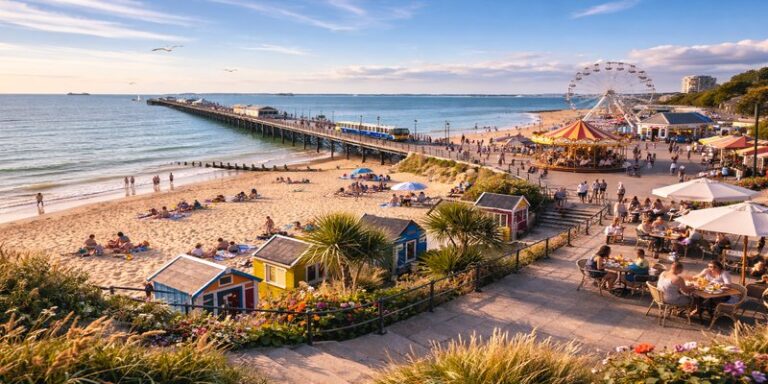
Few places capture the joyful spirit of the British seaside quite like Southend-on-Sea. As the train from London rolls towards the Essex coast, anticipation builds. Soon, the sea comes into view, the skyline opens up, and stretching boldly into the Thames Estuary stands the town’s most famous landmark — Southend Pier, the longest pleasure pier in the world. Children clutch buckets and spades, teenagers queue for rollercoasters, and families gather for fish and chips overlooking the water. Southend is lively, welcoming and unapologetically fun.
Yet beyond the arcades and amusements, Southend-on-Sea is evolving. Now a city (officially granted city status in 2022), it blends traditional seaside nostalgia with cultural renewal, coastal conservation and creative enterprise. It remains a favourite day-trip and holiday destination, particularly for Londoners, while offering increasingly diverse experiences for modern travellers.
1.0 Brief Background and History
Southend’s popularity emerged in the late eighteenth century, when sea bathing gained prominence as a health remedy. Like many British coastal towns, it flourished during the Victorian era as railways enabled mass travel from London (Walton, 2000). The original wooden pier, built in 1830 and later extended, symbolised the town’s ambition and leisure culture.
The development of amusement parks and entertainment venues during the twentieth century reinforced Southend’s identity as a pleasure resort. According to Hassan (2016), seaside towns reflected broader social changes, offering urban populations access to fresh air, recreation and affordable escapism.
In recent decades, Southend has undergone regeneration, diversifying its economy and investing in arts, heritage and environmental initiatives. This adaptive evolution aligns with Butler’s (1980) Tourism Area Life Cycle, illustrating how destinations sustain relevance through reinvention.
2.0 Accommodation: From Seafront Hotels to Boutique Stays
Southend-on-Sea offers varied accommodation catering to weekend visitors, families and business travellers. Traditional seafront hotels along Marine Parade provide convenient access to attractions and sea views. Many have been refurbished to combine heritage charm with contemporary comfort.
Guesthouses and bed-and-breakfasts offer personalised hospitality, while serviced apartments suit longer stays. The growth of boutique accommodation reflects the town’s changing visitor profile, particularly as cultural tourism expands.
Cooper et al. (2018) note that accommodation diversity strengthens competitiveness in mature destinations. Southend’s blend of classic hotels and modern stays reflects this strategic adaptation.
3.0 Food and Drink: Seaside Staples and Global Flavours
No visit to Southend would be complete without sampling traditional fish and chips, best enjoyed on the seafront with the sound of gulls overhead. Rossi Ice Cream, a local institution since 1932, remains a beloved treat.
However, Southend’s culinary scene extends beyond nostalgia. The city’s multicultural population has contributed to a vibrant array of restaurants offering Italian, Turkish, Indian and Asian cuisines. Independent cafés in Leigh-on-Sea, just west of the main resort, provide artisan coffee and locally sourced dishes.
Food tourism research highlights the importance of authentic and diverse culinary offerings in shaping destination identity (Ellis et al., 2018). Southend’s mix of tradition and global influence reflects this evolution.
4.0 Things to Do: Piers, Parks and Cultural Surprises
Southend Pier and Seafront
The 1.34-mile-long Southend Pier remains the town’s defining attraction. Visitors can walk its length or ride the historic pier railway. At its far end, panoramic estuary views create a sense of openness rare in urban England.
Adventure Island
Located adjacent to the pier, Adventure Island amusement park offers rollercoasters, family rides and arcades. It continues the town’s legacy of accessible, multi-generational entertainment.
Beaches and Nature
Southend boasts several Blue Flag beaches, including Shoebury East Beach, recognised for cleanliness and safety (Keep Britain Tidy, 2024). Chalkwell and Leigh provide quieter alternatives for those seeking relaxation.
The nearby Two Tree Island Nature Reserve offers birdwatching and walking trails, reflecting growing interest in nature-based tourism (Hall and Page, 2014).
Culture and Heritage
Southend Central Museum and Planetarium explores local history, while the Beecroft Art Gallery showcases regional and national art collections. The Old Leigh fishing village preserves maritime heritage, complete with cockle sheds and traditional boats.
5.0 When to Visit
Summer is peak season, with festivals, beach activity and extended daylight creating a festive atmosphere. The Southend Airshow and music events draw large crowds.
Spring and early autumn offer milder temperatures and fewer visitors, ideal for walking the pier or exploring Leigh-on-Sea’s historic streets. Winter brings bracing sea air and quieter charm, with coastal sunsets often particularly striking.
Butler (1980) suggests that destinations sustaining off-peak visitation enhance long-term resilience. Southend’s cultural programming and natural attractions support year-round appeal.
6.0 Sample Three-Day Itinerary
Day One – Classic Seaside Fun
Morning: Walk along Southend Pier.
Afternoon: Rides at Adventure Island.
Evening: Fish and chips on the seafront.
Day Two – Heritage and Nature
Morning: Visit Old Leigh and enjoy seafood by the harbour.
Afternoon: Explore Two Tree Island Nature Reserve.
Evening: Dinner at an independent restaurant in Leigh-on-Sea.
Day Three – Culture and Relaxation
Morning: Southend Central Museum and Beecroft Art Gallery.
Afternoon: Relax at Shoebury East Beach.
Evening: Sunset stroll along Chalkwell seafront.
This itinerary balances heritage, recreation and coastal tranquillity, showcasing Southend’s varied appeal.
7.0 Travel Tips
- Getting There: Direct trains from London Liverpool Street take under an hour.
- Pier Timing: Check tide conditions and opening hours before walking the full length.
- Peak Days: Arrive early during summer weekends to secure parking.
- Explore Beyond the Main Strip: Leigh-on-Sea offers a quieter, picturesque contrast.
- Sustainability: Use public transport where possible and respect beach cleanliness guidelines.
8.0 Why Southend-on-Sea Is Worth Visiting
Southend-on-Sea endures because it captures the spirit of accessible, joyful British seaside culture while embracing renewal. From its record-breaking pier to its evolving arts scene, it offers experiences that resonate across generations.
As Walton (2000) observes, seaside towns hold powerful emotional significance within British leisure history. Southend remains a vivid example of how heritage, entertainment and adaptation can coexist.
Whether you are seeking nostalgic funfair thrills, peaceful estuary walks or vibrant dining experiences, Southend-on-Sea delivers a coastal escape that feels both familiar and refreshingly contemporary.
References
Butler, R.W. (1980) ‘The concept of a tourist area cycle of evolution’, Canadian Geographer, 24(1), pp. 5–12.
Cooper, C., Fletcher, J., Fyall, A., Gilbert, D. and Wanhill, S. (2018) Tourism: Principles and Practice. 6th edn. Harlow: Pearson.
Ellis, A., Park, E., Kim, S. and Yeoman, I. (2018) ‘What is food tourism?’, Tourism Management, 68, pp. 250–263.
Hall, C.M. and Page, S.J. (2014) The Geography of Tourism and Recreation. 4th edn. London: Routledge.
Hassan, J. (2016) The Seaside, Health and the Environment in England and Wales Since 1800. London: Routledge.
Keep Britain Tidy (2024) Blue Flag Beach Awards. Available at: https://www.keepbritaintidy.org.
Walton, J.K. (2000) The British Seaside: Holidays and Resorts in the Twentieth Century. Manchester: Manchester University Press.