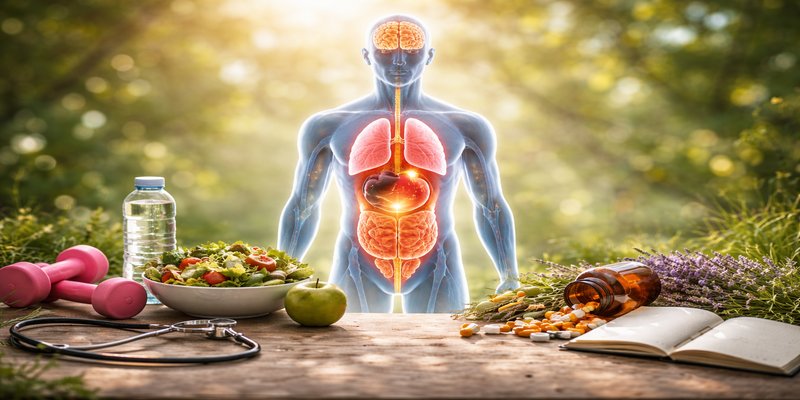
A wide body of interdisciplinary research across physiology, health psychology, public health, and clinical medicine demonstrates that human well-being depends upon the integrated functioning of body systems rather than isolated organs. Textbooks in anatomy and physiology emphasise homeostasis, the body’s ability to maintain internal balance (Colbert et al., 2009; Peate and Hill, 2022), while health psychology literature situates bodily processes within broader biopsychosocial models (Snooks, 2009). Reviews in medical and health sciences further show that lifestyle behaviours such as physical activity, nutrition, and environmental exposure directly influence multiple organ systems and overall well-being (Vuori, 1998; Zhu and Owen, 2017; Monteiro Pereira, Costa and Verhagen, 2022). Collectively, the evidence highlights that human well-being is multidimensional, encompassing physical, mental and social health, as defined by the World Health Organization (WHO, 1948, cited in Snooks, 2009).
1.0 The Cardiovascular System and Circulatory Well-Being
The heart and blood vessels are fundamental to sustaining life by transporting oxygen, nutrients and hormones throughout the body. According to Colbert et al. (2009), efficient cardiovascular functioning supports cellular respiration and metabolic balance. Poor cardiovascular health, by contrast, increases risks of hypertension, stroke and coronary artery disease.
Regular physical activity significantly enhances cardiovascular efficiency. Vuori’s (1998) review demonstrates that exercise improves cardiac output, vascular elasticity and lipid metabolism, reducing morbidity and promoting psychological well-being. For example, brisk walking for 30 minutes daily strengthens the myocardium and lowers resting heart rate, illustrating how behavioural choices directly influence bodily systems.
Furthermore, sedentary behaviour has been associated with cardiovascular dysfunction and metabolic disorders (Zhu and Owen, 2017). Thus, the cardiovascular system exemplifies how body parts function collectively within lifestyle contexts to determine well-being outcomes.
2.0 The Respiratory System and Oxygenation
The lungs and respiratory tract facilitate gas exchange, supplying oxygen essential for cellular metabolism. Peate and Hill (2022) note that disruptions in respiratory physiology—such as asthma or chronic obstructive pulmonary disease—compromise oxygen delivery, leading to fatigue, reduced cognitive clarity and diminished quality of life.
Environmental factors also play a significant role. Research on urban biodiversity and health suggests that access to green environments improves respiratory outcomes by reducing air pollution exposure and enhancing immune regulation (Marselle et al., 2021). For example, urban parks not only encourage exercise but may also reduce inflammatory responses through cleaner air and microbial diversity.
Thus, respiratory well-being is shaped by both biological function and environmental context, reinforcing the interconnectedness of body systems and surroundings.
3.0 The Nervous System and Psychological Well-Being
The brain, spinal cord and peripheral nerves coordinate bodily responses and cognitive processes. Health psychology perspectives argue that mental states influence physiological regulation through neural and endocrine pathways (Snooks, 2009).
Stress, for instance, activates the hypothalamic–pituitary–adrenal (HPA) axis, increasing cortisol production. Chronic activation can impair immune function and cardiovascular stability (Fox, 2018). Conversely, positive psychological well-being is associated with healthier physiological stress responses (Fox, 2018).
Meditation and stress-reduction interventions have demonstrated measurable effects on neural plasticity and immune functioning (Stenfors and Horwitz, 2018). This illustrates how mental well-being is biologically embedded, with the nervous system acting as a mediator between psychological experiences and bodily health.
4.0 The Musculoskeletal System and Functional Independence
The bones, muscles and joints enable movement, posture and protection of vital organs. From a well-being perspective, mobility is closely linked to autonomy and quality of life.
Exercise physiology research indicates that resistance training enhances muscle mass, bone density and metabolic regulation (Ivy, 2007). For example, weight-bearing exercises reduce osteoporosis risk in ageing populations. Sedentary lifestyles, however, contribute to muscular atrophy and joint stiffness (Zhu and Owen, 2017).
Moreover, esports and prolonged screen time have been associated with musculoskeletal strain and postural problems (Monteiro Pereira, Costa and Verhagen, 2022). Hence, maintaining musculoskeletal health is essential not only for physical capacity but also for social participation and psychological resilience.
5.0 The Digestive System and Nutritional Health
The stomach, intestines, liver and pancreas process nutrients necessary for cellular function. Digestive efficiency influences immune health, hormonal balance and mental well-being.
Nutritional science reviews highlight the importance of polyunsaturated fatty acids (PUFAs) for cardiovascular and neural functioning (Timilsena et al., 2017). Adequate nutrition supports neurotransmitter synthesis and inflammatory regulation, linking gut health to mood stability.
Additionally, conditions such as dysphagia (difficulty swallowing) significantly affect quality of life, demonstrating how a single digestive dysfunction can impact emotional and social well-being (Swan et al., 2015). Therefore, digestive health extends beyond nutrient absorption to encompass holistic life satisfaction.
6.0 The Endocrine and Immune Systems: Regulation and Defence
The endocrine glands secrete hormones that regulate growth, metabolism and reproduction, while the immune system protects against pathogens. These systems operate in delicate balance.
Chronic stress disrupts hormonal regulation and suppresses immune competence (Fox, 2018). Conversely, physical activity enhances immune surveillance and reduces systemic inflammation (Vuori, 1998). Biodiversity exposure may also positively influence immune functioning through microbiome diversity (Marselle et al., 2021).
This interplay demonstrates that well-being is dynamic, dependent upon regulatory systems that respond continuously to internal and external stimuli.
7.0 A Biopsychosocial Perspective on Body Systems
Modern health psychology integrates biological systems with psychological and social factors (Snooks, 2009). The WHO definition of health as encompassing physical, mental and social well-being reflects this integrative model (WHO, 1948, cited in Snooks, 2009).
For example, hearing loss not only affects auditory organs but also social communication and emotional well-being (Lasak, Allen and McVay, 2014). Similarly, chronic disease management requires understanding physiological processes alongside patient experience and lifestyle context (Peate and Hill, 2022).
Thus, body parts cannot be viewed in isolation. Each system interacts through feedback loops, neural pathways and hormonal signalling to maintain equilibrium. Disruption in one area often reverberates throughout the organism.
From a human well-being perspective, body parts function as components of an integrated system, sustaining life through coordinated physiological processes. The cardiovascular and respiratory systems maintain oxygenation and circulation; the nervous and endocrine systems regulate stress and adaptation; the digestive and immune systems sustain nourishment and defence; and the musculoskeletal system ensures mobility and independence.
Scientific evidence consistently demonstrates that lifestyle behaviours, environmental exposure, and psychological states influence these systems collectively. Therefore, promoting well-being requires a holistic approach grounded in the biopsychosocial model, recognising that health is not merely the absence of disease but a state of balanced, adaptive functioning.
Ultimately, human well-being emerges from the dynamic harmony of body systems, shaped by biological integrity and lived experience.
References
Colbert, B.J., Ankney, J., Steggall, M., Lee, K.T. and Dingle, M. (2009) Anatomy and physiology for nursing and health professionals. Pearson Education.
Fox, S. (2018) Well-being and physiological reactivity to stress. ProQuest Dissertations Publishing.
Ivy, J.L. (2007) ‘Exercise physiology: a brief history and recommendations regarding content requirements for the kinesiology major’, Quest, 59(1), pp. 34–45.
Lasak, J.M., Allen, P. and McVay, T. (2014) ‘Hearing loss: diagnosis and management’, Primary Care: Clinics in Office Practice, 41(1), pp. 19–31.
Marselle, M.R., Lindley, S.J., Cook, P.A. and Bonn, A. (2021) ‘Biodiversity and health in the urban environment’, Current Environmental Health Reports, 8, pp. 146–156. https://doi.org/10.1007/s40572-021-00313-9.
Monteiro Pereira, A., Costa, J.A. and Verhagen, E. (2022) ‘Associations between esports participation and health: a scoping review’, Sports Medicine, 52, pp. 1209–1228. https://doi.org/10.1007/s40279-022-01684-1.
Peate, I. and Hill, B. (2022) Fundamentals of critical care: a textbook for nursing and healthcare students. Wiley.
Snooks, M. (2009) Health psychology: biological, psychological and sociocultural perspectives. Jones & Bartlett.
Stenfors, C. and Horwitz, E.B. (2018) ‘Meditation programmes for psychological stress and well-being’, in Textbook of Nature and Public Health. Springer.
Swan, K., Speyer, R., Heijnen, B.J. and Wagg, B. (2015) ‘Living with oropharyngeal dysphagia: effects on health-related quality of life—a systematic review’, Quality of Life Research, 24, pp. 133–146. https://doi.org/10.1007/s11136-015-0990-y.
Timilsena, Y.P., Wang, B., Adhikari, R. and Adhikari, B. (2017) ‘Advances in microencapsulation of polyunsaturated fatty acids-rich plant oils’, Food Hydrocolloids, 69, pp. 369–381.
Vuori, I. (1998) ‘Does physical activity enhance health?’, Patient Education and Counseling, 33(Suppl 1), pp. S95–S103.