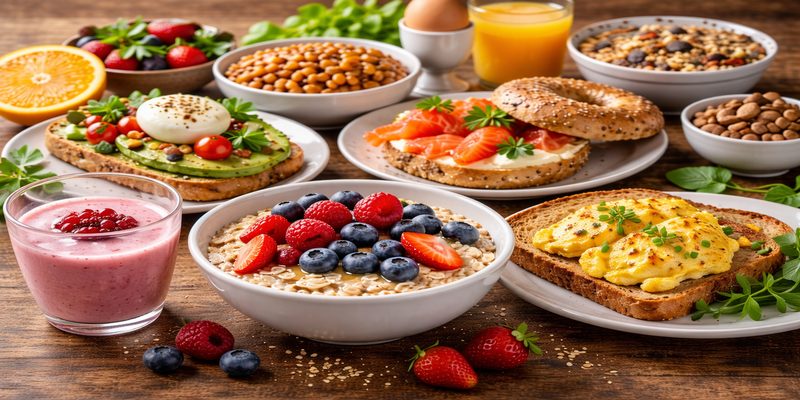
Breakfast is often described as the most important meal of the day, and for good reason. After an overnight fast of eight to ten hours, the body requires energy and nutrients to restore blood glucose levels, support cognitive performance and sustain physical activity (Mann and Truswell, 2017). Research suggests that regular breakfast consumption is associated with improved nutrient intake, better weight management and enhanced concentration (Betts et al., 2014; Harvard T.H. Chan School of Public Health, 2023).
Below are ten healthy breakfast options, each supported by nutritional science and practical examples, to help build a balanced and energising start to your day.
1.0 Porridge and Berries
Oats are a rich source of complex carbohydrates and soluble fibre, particularly beta-glucan, which has been shown to lower cholesterol and improve glycaemic control (Mann and Truswell, 2017). Oats also have a low Glycaemic Index (GI), meaning they release glucose slowly into the bloodstream, promoting satiety and stabilising appetite.
Adding berries such as strawberries, raspberries or blueberries increases intake of antioxidants and vitamin C, supporting immune function (WHO, 2023). Preparing porridge with skimmed or semi-skimmed milk adds calcium and protein. While a drizzle of honey can enhance flavour, moderation is essential due to its sugar content.
2.0 Beans on Toast
Beans, including baked beans, kidney beans and borlotti beans, are naturally low GI and high in soluble fibre, which supports digestive health and cholesterol reduction (Public Health England, 2016). Fibre also enhances fullness, which may assist weight management.
Serving beans on wholegrain or granary toast provides additional fibre and B vitamins. Avoiding butter reduces saturated fat intake. This combination offers plant-based protein and complex carbohydrates, making it a balanced and affordable breakfast option.
3.0 Bagel with Reduced-Fat Cream Cheese and Smoked Salmon
Bagels provide starchy carbohydrates, replenishing glycogen stores after overnight fasting. Smoked salmon is rich in omega-3 fatty acids, particularly EPA and DHA, which support cardiovascular health and brain function (Calder, 2015).
Many Western diets contain excess saturated fat and insufficient omega-3 fats. Incorporating oily fish into breakfast helps correct this imbalance. Choosing reduced-fat cream cheese limits saturated fat while maintaining flavour.
4.0 Fruit and Yoghurt
Low-fat natural yoghurt combined with fresh fruit delivers a blend of protein, calcium and probiotics. Dairy foods are essential for maintaining bone density and dental health (Whitney and Rolfes, 2019).
Fruit contributes fibre and antioxidants, reducing the risk of chronic diseases (WHO, 2023). For example, adding sliced banana and blueberries provides potassium and vitamin C. Opt for unsweetened yoghurt to minimise added sugars.
5.0 Grilled Bacon, Tomatoes, Beans, Mushrooms and Toast
A traditional cooked breakfast can be made healthier by adjusting cooking methods. Grilling instead of frying reduces fat content. Including grilled tomatoes and mushrooms increases vegetable intake and fibre.
Using lean bacon and limiting portion sizes helps control saturated fat. Paired with wholegrain toast and beans, this breakfast can provide protein, fibre and micronutrients without excessive calories.
6.0 Crumpets with Fruit Spread
Crumpets are a source of starchy carbohydrates, providing quick energy. The key is mindful topping choices. Replacing butter with a fruit spread reduces saturated fat intake.
Although fruit spreads still contain sugars, they generally have lower fat content than butter. Balance is important—pairing crumpets with a piece of fresh fruit improves nutrient density.
7.0 Muesli with Soya or Low-Fat Milk
Traditional Swiss-style muesli combines oats, nuts and dried fruit, offering fibre and micronutrients. Some varieties contain added milk powder, increasing calcium content.
Adding calcium-enriched soya milk or semi-skimmed milk supports bone health (Whitney and Rolfes, 2019). The combination of whole grains and healthy fats from nuts promotes sustained energy release.
Be cautious of sugar-laden commercial varieties; choose unsweetened options for optimal health benefits.
8.0 Iron-Fortified Cereal with Pure Fruit Juice
Iron deficiency remains one of the most common nutritional deficiencies worldwide (WHO, 2023). Many breakfast cereals are fortified with iron. Consuming them with vitamin C-rich fruit juice enhances iron absorption, particularly non-haem iron (Mann and Truswell, 2017).
For example, bran flakes or sultana bran paired with a glass of orange juice create a practical and nutrient-rich combination. However, limit juice to one small glass daily due to natural sugar content.
9.0 Smoothie
A smoothie is ideal for those with limited morning appetite. Blending fruits such as berries, bananas and apples with milk or yoghurt creates a nutrient-dense drink rich in vitamins, fibre and antioxidants.
Smoothies can support fruit intake targets, but they should not replace whole fruit entirely, as blending reduces fibre structure (Harvard T.H. Chan School of Public Health, 2023). Avoid adding syrups or sweetened juices.
Adding spinach or oats enhances nutrient content without compromising taste.
10.0 Scrambled or Poached Egg on Granary Toast
Eggs are a valuable source of high-quality protein, vitamin B12, choline and selenium (Whitney and Rolfes, 2019). Contrary to earlier concerns, moderate egg consumption is not strongly associated with increased cardiovascular risk in healthy individuals (Harvard T.H. Chan School of Public Health, 2023).
Poaching or scrambling with minimal added fat preserves nutritional value. Serving eggs on wholegrain toast provides fibre and sustained energy release.
Compared with fried egg sandwiches, this preparation significantly reduces added fat and calorie intake.
Why Breakfast Matters
Breakfast consumption has been linked to improved cognitive performance, particularly in children and adolescents (Betts et al., 2014). It also contributes significantly to daily nutrient intake, especially fibre, calcium and iron.
Skipping breakfast may lead to overeating later in the day for some individuals, although evidence varies (Betts et al., 2014). What remains clear is that a nutrient-rich morning meal supports metabolic balance and overall health.
Key Principles for a Healthy Breakfast
- Include fibre (whole grains, fruit, legumes).
- Incorporate protein (eggs, yoghurt, beans, fish).
- Limit added sugars and saturated fats.
- Choose whole foods over processed options.
- Hydrate with water, tea or moderate juice intake.
A balanced breakfast contributes to meeting the UK’s Eatwell Guide recommendations and supports long-term health outcomes (Public Health England, 2016).
A healthy breakfast does not require complexity or expense. Whether choosing porridge with berries, beans on toast or scrambled eggs, the goal is to combine complex carbohydrates, quality protein, healthy fats and fibre.
By making mindful choices and prioritising nutrient density, breakfast becomes more than just a meal—it becomes the foundation for sustained energy, cognitive clarity and long-term well-being.
References
Betts, J.A. et al. (2014) ‘The causal role of breakfast in energy balance and health’, American Journal of Clinical Nutrition, 100(2), pp. 539–547.
Calder, P.C. (2015) ‘Marine omega-3 fatty acids and human health’, Biochimica et Biophysica Acta, 1851(4), pp. 469–484.
Harvard T.H. Chan School of Public Health (2023) The Nutrition Source. Available at: https://www.hsph.harvard.edu/nutritionsource/.
Mann, J. and Truswell, A.S. (2017) Essentials of Human Nutrition. 5th edn. Oxford: Oxford University Press.
Public Health England (2016) The Eatwell Guide. London: PHE.
Whitney, E. and Rolfes, S.R. (2019) Understanding Nutrition. 15th edn. Boston: Cengage Learning.
World Health Organization (2023) Healthy diet. Available at: https://www.who.int/news-room/fact-sheets/detail/healthy-diet.