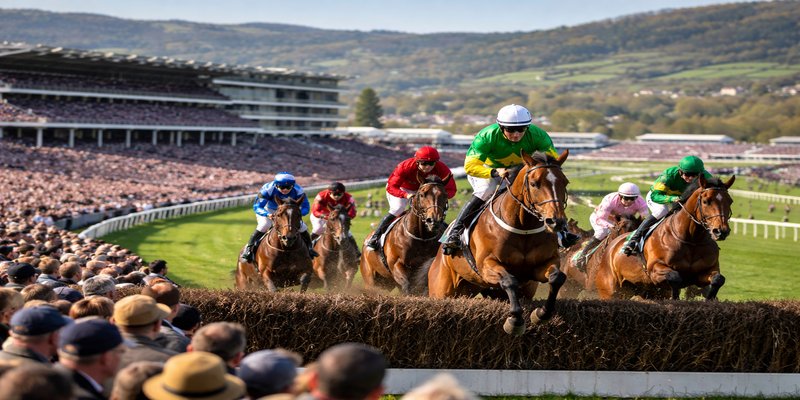
The Cheltenham Festival is the kind of event that seems to stir the air before the first race has even begun. In March, the grandstands fill, the roar rises, and the Cotswold hills become the backdrop to four days of anticipation, tradition and drama. There is mud on the turf, polish on the shoes, steam in the morning air and a palpable sense that something bigger than an ordinary race meeting is about to happen. For racing fans, it is a sporting highlight. For many visitors, it is also a social occasion, a travel experience and a vivid expression of British event culture.
What makes The Cheltenham Festival so compelling is that it blends elite competition with ritual and atmosphere. It is not only about who wins the Champion Hurdle, Queen Mother Champion Chase or the Cheltenham Gold Cup. It is also about the sound of the crowd, the shared habits of racegoers, the fashion, the hospitality and the feeling of stepping into a tradition that has been refined over generations. As studies of sport tourism and event culture suggest, major sporting gatherings can become powerful markers of place identity and communal memory (Zauhar, 2004; Page and Connell, 2012). That helps explain why The Cheltenham Festival continues to draw such loyalty and fascination.
1.0 Brief Background and History
The roots of The Cheltenham Festival stretch back to the nineteenth century, when organised jump racing developed into a major British sporting tradition. Cheltenham itself became strongly associated with National Hunt racing, and the Festival gradually emerged as the season’s most prestigious meeting. The modern Festival is often traced to the early twentieth century, with the event becoming firmly established at Prestbury Park and growing steadily in status and scale (Oakley, 2014).
Part of its staying power lies in continuity. The great races have become annual reference points in the sporting calendar, and generations of owners, trainers, jockeys and spectators have treated Cheltenham as the place where reputations are made. Racing scholarship notes that horse racing in Britain has long combined tradition, status, technical expertise and public spectacle (Fox, 2017; McManus, Albrecht and Graham, 2012). Cheltenham sits at the centre of that blend.
The Festival also carries the memory of disruption. The 2001 cancellation, linked to the foot-and-mouth crisis, underlined its economic and emotional importance to the region and to British sport more broadly (Miller and Ritchie, 2003). That interruption only reinforced how deeply embedded The Cheltenham Festival had become in national sporting life.
2.0 Cultural Significance of The Cheltenham Festival
2.1 More Than a Race Meeting
At first glance, The Cheltenham Festival may seem simply like a major sporting event. In reality, it operates as a cultural performance shaped by ritual, belonging and place identity. Research on festivals and urban promotion shows that large recurring events often become part of how a town or region imagines itself and is marketed to others (Bradley and Hall, 2006; Gold and Gold, 2020). Cheltenham is a clear example. The Festival is central to the town’s public image in March, drawing visitors, media attention and a particular form of prestige.
It also represents a broader British affection for events that combine seriousness and sociability. The racing is highly competitive and technically demanding, yet the mood around it includes reunion, performance, hospitality and occasion. This mix is one reason the event appeals beyond racing purists.
2.2 Tradition, Class and Modern Spectatorship
Like many long-established British sporting occasions, The Cheltenham Festival carries associations with tradition, dress, and social display. Yet it would be too narrow to reduce it to an elite spectacle. Modern Cheltenham brings together committed punters, occasional visitors, international fans, hospitality guests and local businesses. Fox (2017) describes racing culture as a distinctive subculture with its own rules, language and rituals, but one that also opens itself to a broader public during major race days.
That openness matters. It helps explain why The Cheltenham Festival works not just as a niche racing event but as a wider cultural experience, where sport, tourism and social theatre meet.
3.0 Racing Highlights and Festival Traditions
The sporting heart of The Cheltenham Festival lies in its championship races. Each day has its own shape and prestige, but together they build towards a week of escalating drama. The Champion Hurdle opens with flair and speed, the Queen Mother Champion Chase offers brilliance over fences, and the Stayers’ Hurdle rewards endurance and rhythm. Then comes the race many people wait for above all others: the Cheltenham Gold Cup, widely seen as the crown jewel of National Hunt racing.
Yet the Festival’s power does not come only from race titles. It also comes from traditions. One of the best known is the famous Cheltenham roar, the release of noise as the opening race gets under way. Oakley (2014) highlights how this crowd ritual captures excitement, relief and expectation all at once. It is an emotional signature of the week.
Another defining feature is the strong Irish presence. Irish trainers, jockeys and racegoers are deeply woven into the atmosphere, giving the Festival an international but still intimate feel. St Patrick’s Thursday, in particular, adds a distinctive celebratory mood. For many spectators, these recurring patterns are as meaningful as the results themselves.
4.0 Food and Drink
Food and drink are an important part of the overall experience of The Cheltenham Festival. While racing takes centre stage, the event also functions as a full-day social occasion, and hospitality has become part of its identity. Visitors can find everything from quick racecourse classics to more polished dining experiences, depending on ticket type and preference.
Traditional British race-day fare still has its place: pies, sandwiches, hot drinks and champagne bars remain part of the visual and social landscape. More contemporary options reflect the broader evolution of event catering, where food contributes to the sense of occasion rather than serving merely as a practical extra (Rotherham, 2008).
For many racegoers, eating and drinking at Cheltenham is not incidental. It is built into the rhythm of the day: breakfast before arrival, a drink between races, lunch timed around the card, and a celebratory glass after a winner or a near miss. That pattern adds to the event’s sense of ritual.
5.0 Things to Do and See
Even for people who do not follow racing closely, The Cheltenham Festival offers plenty to absorb. The obvious focal point is the live racing itself, where the pace, jumps and shifting field positions are far more gripping in person than on television. Watching horses thunder up the hill towards the finish is one of the event’s great spectacles.
Beyond the track, there is much to notice. Fashion is part of the theatre, ranging from classic tweed and tailored coats to modern race-day style. The paddock area offers closer views of horses, trainers and pre-race preparation. The betting ring, meanwhile, gives visitors a glimpse of the sport’s traditional commercial energy.
The town of Cheltenham also plays a role. Cafés, pubs and hotels fill with visitors throughout race week, and the atmosphere spills beyond the racecourse. Research on event-led place promotion suggests that festivals often animate the wider town as much as the core venue (Bradley, 2019). That is certainly true here.
6.0 When to Attend
The Cheltenham Festival is held in March, usually over four days, and each day has a slightly different identity. Tuesday often feels electric because it marks the opening release of anticipation. Wednesday and Thursday maintain momentum, while Friday, with Gold Cup Day, delivers peak prestige and emotion.
The best day depends on what you want. Serious racing fans may choose a card based on championship preferences. Social visitors often favour Thursday or Friday for atmosphere. Those attending for the first time may enjoy Tuesday because the energy of the opening day is especially memorable.
Weather is part of the Cheltenham experience too. March conditions can shift quickly, so visitors should be prepared for cold mornings, wind, showers and muddy ground.
7.0 Travel Tips
A little planning goes a long way at The Cheltenham Festival. Book accommodation early, as race week places heavy pressure on local rooms and transport. Check official guidance from Cheltenham Racecourse and The Jockey Club for travel arrangements, gates and timing.
Wear layers and sensible footwear. Cheltenham style can be polished, but comfort matters, especially if conditions are wet. Arriving early is usually worthwhile, giving you time to orient yourself, explore the course and avoid the last-minute rush.
It also helps to decide in advance what kind of day you want. Some visitors focus on the racing, some on hospitality, some on socialising, and others on a mix of all three. Having a loose plan makes the day smoother and more enjoyable.
8.0 Why It’s Worth Experiencing
What makes The Cheltenham Festival worth experiencing is its rare combination of sporting excellence, atmosphere and tradition. It delivers top-level competition, but it also offers the wider pleasures of an event that feels deeply rooted in place and memory. Studies of festivals and sport tourism show that recurring events gain their meaning not only from what happens on the programme, but from what they come to represent for visitors and host communities (Finkel and Platt, 2020; Page and Connell, 2012).
Cheltenham represents anticipation, prestige and seasonal rhythm. It is the point in the year when National Hunt racing feels at its most intense and most public. Even those with limited knowledge of form books or fencing technique can recognise the pull of the moment when the crowd rises and the field charges towards the line.
In a crowded events calendar, The Cheltenham Festival stands out because it still feels distinctively itself: rooted in racing history, shaped by local identity and alive with contemporary energy.
The Cheltenham Festival remains one of Britain’s great sporting occasions because it offers more than competition alone. It brings together history, ritual, tourism, fashion, hospitality and the simple thrill of live sport at the highest level. From the opening roar to the final race of Gold Cup Day, it creates a shared experience that is both intensely personal and unmistakably public.
For racing devotees, it is a week of judgement and glory. For casual visitors, it is an unforgettable introduction to the drama and culture of jump racing. And for Cheltenham itself, it is a defining event that turns a racecourse into a national stage. That is why The Cheltenham Festival continues to endure: not just as a meeting, but as an experience people want to return to, talk about and remember.
References
Bradley, A. (2019) Media Representations of Cultural and Sports Festivals, the Marketing of Place Image and Local Economic Development: Cheltenham. Cheltenham: University of Gloucestershire.
Bradley, A. and Hall, T. (2006) ‘The festival phenomenon: Festivals, events and the promotion of small urban areas’, in Bell, D. and Jayne, M. (eds.) Small Cities. Abingdon: Routledge, pp. 166–181.
Finkel, R. and Platt, L. (2020) ‘Cultural festivals and the city’, Geography Compass, 14(9), e12498.
Fox, K. (2017) The Racing Tribe: Portrait of a British Subculture. London: Nicholas Brealey.
Gold, J.R. (2016) Cities of Culture: Staging International Festivals and the Urban Agenda, 1851–2000. Abingdon: Routledge.
Gold, J.R. and Gold, M.M. (2020) Festival Cities: Culture, Planning and Urban Life. Abingdon: Routledge.
McManus, P., Albrecht, G. and Graham, R. (2012) The Global Horseracing Industry: Social, Economic, Environmental and Ethical Perspectives. Abingdon: Routledge.
Miller, G.A. and Ritchie, B.W. (2003) ‘A farming crisis or a tourism disaster? An analysis of the foot and mouth disease in the UK’, Current Issues in Tourism, 6(2), pp. 150–171.
Oakley, R. (2014) The Cheltenham Festival: A Centenary History. London: Racing Post Books.
Page, S.J. and Connell, J. (2012) The Routledge Handbook of Events. Abingdon: Routledge.
Rotherham, I.D. (2008) ‘From haggis to high table: A selective history of festival and feast as mirrors of British landscape and culture’, in Hall, C.M. and Sharples, L. (eds.) Food and Wine Festivals and Events Around the World. Oxford: Butterworth-Heinemann, pp. 35–50.
Zauhar, J. (2004) ‘Historical perspectives of sports tourism’, Journal of Sport & Tourism, 9(1), pp. 5–101.
Cheltenham Racecourse (n.d.) The Cheltenham Festival. Available at: https://www.thejockeyclub.co.uk/cheltenham/events-tickets/the-cheltenham-festival/ (Accessed: 27 March 2026).
Visit Cheltenham (n.d.) Guide to Cheltenham Festival. Available at: https://www.visitcheltenham.com/whats-on/cheltenham-festival/ (Accessed: 27 March 2026).