Born on 13 December 1989 in Reading, Pennsylvania, Taylor Swift has evolved from a teenage country singer into one of the most influential cultural figures of the twenty-first century. Her trajectory reflects not only artistic reinvention but also strategic branding, fan engagement, media literacy and economic foresight. As Harris (2018) observes, Swift’s early appeal lay in her diaristic songwriting, yet her sustained relevance derives from a sophisticated understanding of identity construction and industry power dynamics. By 2026, Swift’s impact extends beyond music charts into academia, politics, fashion and global economics.
1.0 Early Life and Country Foundations
Swift’s formative years on a Pennsylvania Christmas tree farm have become part of her carefully curated origin narrative. Relocating to Nashville at age 14 to pursue a recording career, she signed with Big Machine Records and released her self-titled debut album in 2006. The album’s blend of country instrumentation and autobiographical storytelling introduced her hallmark lyrical style (Harris, 2018; Wikipedia, 2025).
Scholars note that her early songwriting resonated because it foregrounded adolescent authenticity, a theme central to youth-oriented popular music (Bennett, 2013). Songs such as Tim McGraw and Teardrops on My Guitar framed vulnerability as strength, establishing a relational intimacy with listeners that would later underpin her global brand.
2.0 Genre Transition and the Legitimisation of Fluidity
Swift’s shift from country to pop was not abrupt but gradual. Albums such as Red (2012) signalled experimentation, while 1989 (2014) marked a definitive transition into mainstream synth-pop. According to the Johnson & Wales University Student Archive (2023), this pivot legitimised genre hybridity within commercial music, challenging rigid industry categorisations.
Reynolds (2011) argues that contemporary pop thrives on reinvention and intertextuality; Swift mastered both. Her adoption of polished pop production did not abandon narrative songwriting but reframed it for global markets. This move expanded her demographic reach and positioned her as a cross-genre innovator rather than a niche country artist.
3.0 Branding, Authenticity and Strategic Control
Swift’s career offers a compelling case study in authenticity-driven branding. Khanal (2024), in The Economics of Authenticity, argues that Swift’s commercial success stems from aligning personal narrative with brand strategy. Her direct communication with fans via social media fosters perceived intimacy while maintaining professional control.
The University of Oregon (2024) highlights Swift’s mastery of long-term brand architecture, noting her meticulous album “eras” concept—each characterised by distinct aesthetics, themes and visual identities. This segmentation not only refreshes her artistic image but also sustains consumer engagement across cycles.
4.0 Re-Recording and Artist Autonomy
A pivotal moment in Swift’s career was her decision to re-record her early catalogue following disputes over master recordings. The release of “Taylor’s Version” albums—beginning with Fearless (Taylor’s Version)—represented an unprecedented act of artistic reclamation (Wikipedia, 2025).
From an industry perspective, this move redefined artist ownership in the streaming era. It galvanised fan loyalty and generated renewed commercial success for previously released material. Evers (2025) argues that this strategy illustrates strategic genius: transforming contractual adversity into a profitable and symbolic statement about creative rights.
5.0 The Eras Tour: Economic and Cultural Impact
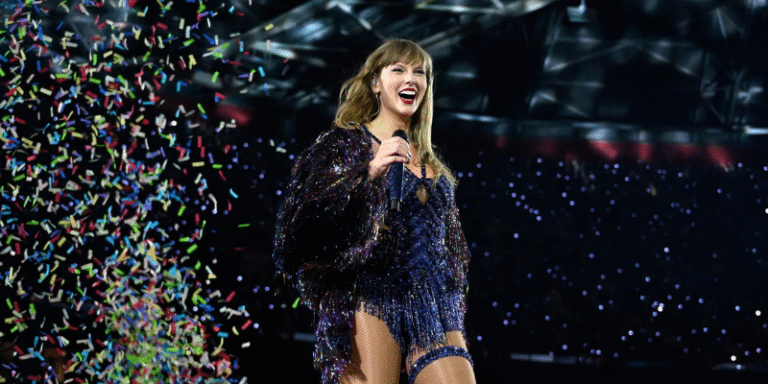
Swift’s Eras Tour, launched in 2023, has been described as the highest-grossing tour in history, surpassing US$2 billion (Wikipedia, 2025). Structured around distinct musical eras, the tour functioned as a retrospective narrative spectacle.
Economically, cities hosting tour dates reported substantial boosts in hospitality and retail sectors—a phenomenon widely termed the “Taylor Swift effect” (University of Oregon, 2024). Beyond financial impact, the tour reinforced the concept of experiential fandom, wherein concerts become immersive storytelling environments rather than standalone performances.
6.0 Academic Engagement and Scholarly Analysis
Swift’s cultural significance has inspired extensive academic inquiry. Digital Science (2024) reports over 240 scholarly publications analysing her music, brand and fan communities. Universities including Harvard and the University of Florida have introduced courses examining her lyrical craft, media strategy and socio-cultural influence (EW, 2023).
Academic perspectives span disciplines:
- Rhetorical studies analyse her public persona (ACU, 2023).
- Media studies explore digital fandom and narrative control (Pressbooks, 2022).
- Marketing scholarship examines authenticity and brand equity (Khanal, 2024).
This interdisciplinary interest underscores her status as a subject of legitimate scholarly attention.
7.0 Persona, Media Literacy and Narrative Control
Swift’s evolving public persona demonstrates acute awareness of media ecosystems. Minnesota State University (2021) identifies her as an exemplar of strategic self-presentation, leveraging interviews, documentaries and social media to recalibrate public perception.
The Netflix documentary Miss Americana (2020) marked a turning point, portraying vulnerability and political awareness. ACU (2023) argues that such transparency functions rhetorically to strengthen fan identification while reasserting narrative agency.
8.0 Fan Culture and Parasocial Bonds
The “Swifties” community represents one of the most organised and digitally active fandoms in modern entertainment. Wikipedia (2025) describes the fanbase as highly coordinated, capable of mobilising streaming campaigns and charitable initiatives.
Parasocial relationship theory suggests that fans form perceived emotional bonds with media figures (Horton and Wohl, 1956). A study referenced in Social Science & Medicine found that Swift’s candid discussion of body image struggles positively influenced fan self-perception (The Guardian, 2024; Health.com, 2024). While intense fandom can risk over-identification, evidence suggests predominantly empowering outcomes.
9.0 Fashion, Identity and Cultural Spillover
Swift’s influence extends into fashion and consumer trends. Her signature red lipstick, “cottagecore” aesthetics and retro styling have driven measurable sales increases for brands ranging from Jimmy Choo to independent designers (Wikipedia, 2025).
Fashion journalists attribute this to Swift’s aesthetic coherence, aligning visual presentation with musical themes. Such integration reinforces brand consistency while stimulating secondary markets.
10.0 Mental Health Advocacy and Social Discourse
Swift has publicly addressed issues including eating disorders and anxiety. According to reporting in The Guardian (2024), her openness contributes to broader conversations on body positivity and mental health awareness. Scholars emphasise that celebrity disclosures can shape normative attitudes, though media framing remains influential.
Taylor Swift’s evolution from country prodigy to global icon illustrates the interplay of musical reinvention, strategic branding, fan mobilisation and cultural literacy. Her ability to navigate genre boundaries, reclaim artistic ownership and harness digital ecosystems positions her as a defining figure of contemporary popular culture.
Beyond record-breaking sales and tours, Swift exemplifies how a musician can become an interdisciplinary case study—bridging economics, media theory, cultural studies and sociology. In doing so, she has transformed not only her career trajectory but also the structural expectations placed upon artists in the twenty-first century.
References
ACU (2023) A Rhetorical Analysis of Taylor Swift’s Persona. Abilene Christian University.
Bennett, A. (2013) Music, Style, and Aging: Growing Old Disgracefully? Philadelphia: Temple University Press.
Digital Science (2024) The Research Eras Tour – the Scholarly Side of Taylor Swift. Digital Science Blog.
Evers, K. (2025) The Strategic Genius of Taylor Swift. Harvard Business Review Press.
Harris, E. (2018) Taylor Swift: A Biography. Barnes & Noble.
Health.com (2024) ‘Taylor Swift’s influence on body image research’.
Horton, D. and Wohl, R. (1956) ‘Mass communication and parasocial interaction’, Psychiatry, 19(3), pp. 215–229.
Khanal, K. (2024) ‘Taylor Swift’s branding strategy: The economics of authenticity’, in The Economics of Authenticity. Westcliff University.
Minnesota State University (2021) Celebrity, Music, and Public Persona: A Case Study of Taylor Swift.
Pressbooks (2022) Analysing Taylor Swift’s “Midnights” Fans on Social Media. eCampusOntario.
Reynolds, S. (2011) Retromania: Pop Culture’s Addiction to Its Own Past. London: Faber & Faber.
The Guardian (2024) ‘Taylor Swift’s candid talk about body image inspires fans’.
University of Oregon (2024) ‘How Taylor Swift Masterminded Global Success’.
Wikipedia (2025) Public image of Taylor Swift.
Wikipedia (2025) The Eras Tour.
Wikipedia (2025) Swifties.